
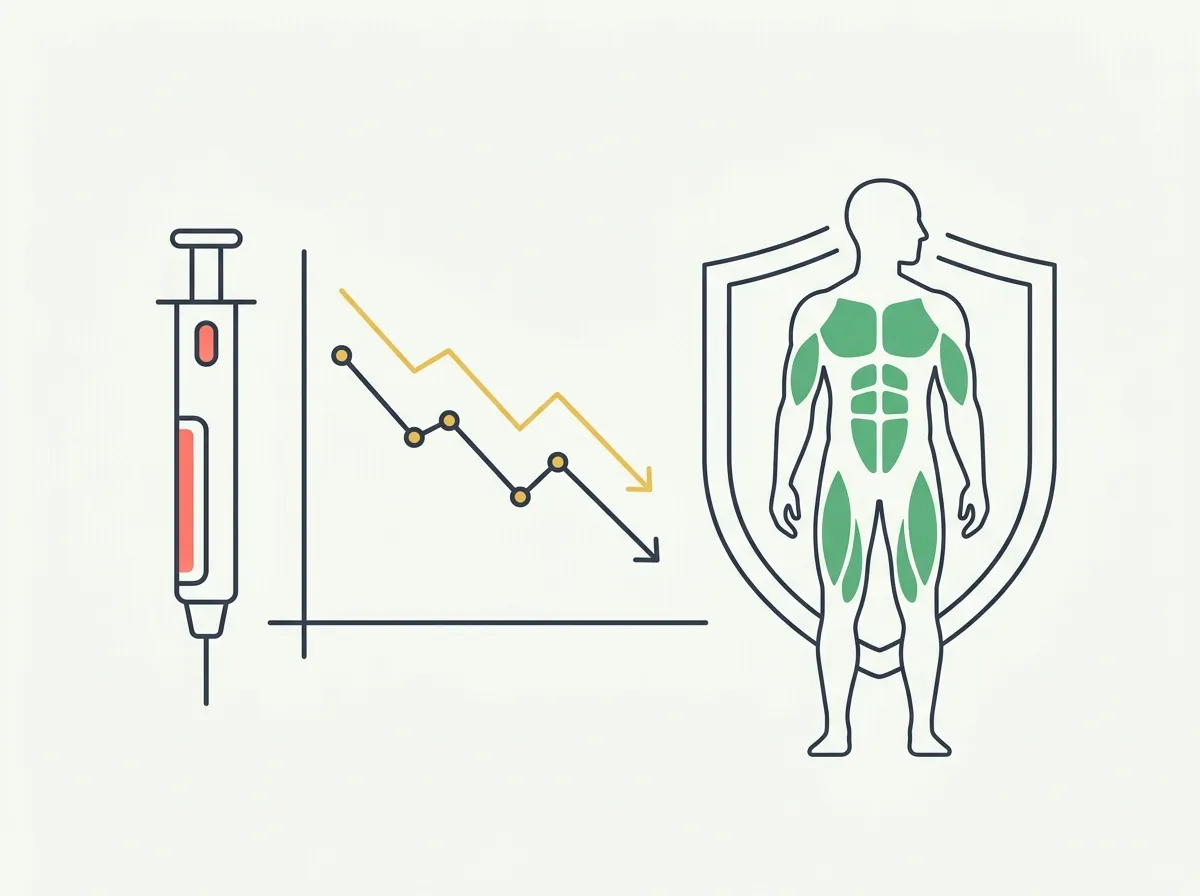
Quick answer: The scale can't tell fat loss from muscle loss — a real concern on GLP-1s, where studies report a meaningful share of weight lost is lean mass. The best tracking stack: GainFrame for visual muscle scores from photos, MacroFactor for the protein that protects muscle, Hevy for the strength signal, and a lean-mass scale or periodic DEXA for composition estimates.
GLP-1 medications do the thing the scale celebrates: the number drops, fast. What the scale can't tell you is what the loss is made of — and research on these medications consistently reports that some of it is lean mass, with the share depending on dose, protein intake, and whether you're strength training.
This isn't a reason to panic, and it isn't medical advice — it's a measurement problem. The preventable part of muscle loss is prevented by training and protein. The tracking exists so you know whether it's working. One tool can't see the whole picture; here's the stack that can, and which app covers which blind spot.
What should you actually track on a GLP-1?
Four signals, in order of how directly they answer "am I keeping my muscle?":
| App | Signal it tracks | Price | Catches |
|---|---|---|---|
| GainFrame | Visual muscle change (photos) | Free / $5.99 mo | Where you're flattening vs leaning out |
| MacroFactor | Protein intake | ~$12/mo | The #1 preventable cause |
| Hevy | Strength trend | Free / Pro | Falling lifts = early warning |
| Lean-mass BIA scale | Composition estimate | ~$30–230 | Daily lean-mass trend (noisy) |
| DEXA (periodic) | Clinical composition | ~$100–200/scan | The ground truth, quarterly |
1. GainFrame — Best for seeing what kind of weight you're losing
Platform: iOS App Store · Price: Free (25 photos) with Pro at $5.99/mo or $39.99/yr
The visual question is the one GLP-1 users actually care about: am I getting leaner, or just smaller? GainFrame answers it from weekly photos — an estimated body fat %, FFMI (the muscle-per-height metric that falls when lean mass falls), and individual ratings for 12 muscle groups tracked over time.
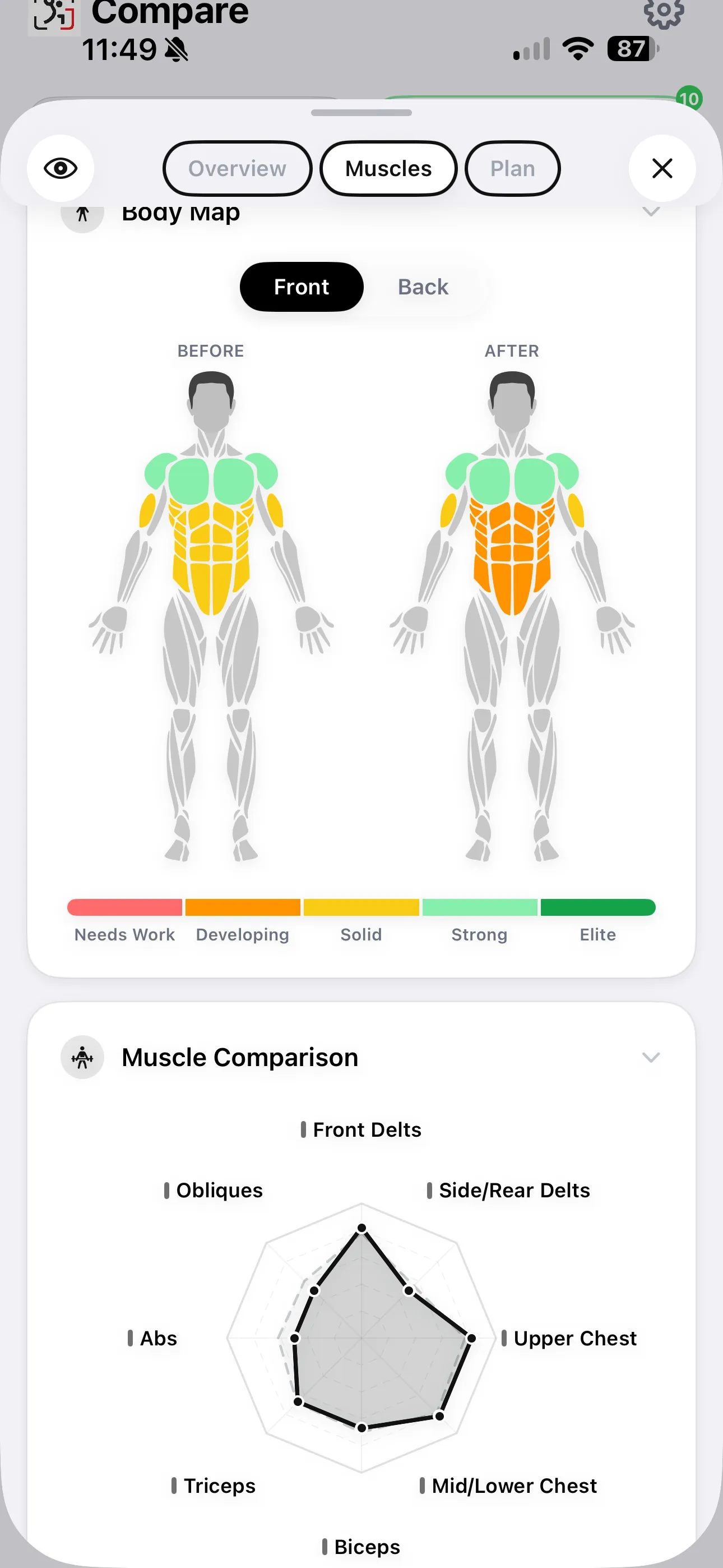
The signal that matters on a GLP-1: are the muscle-group scores holding while the body fat drops?
The pattern to watch: body fat trending down while muscle scores hold = the good outcome. Scores dropping alongside the weight = time to look at protein and training. Weight tracking with milestones is built in, so the scale number lives next to the visual verdict on it.
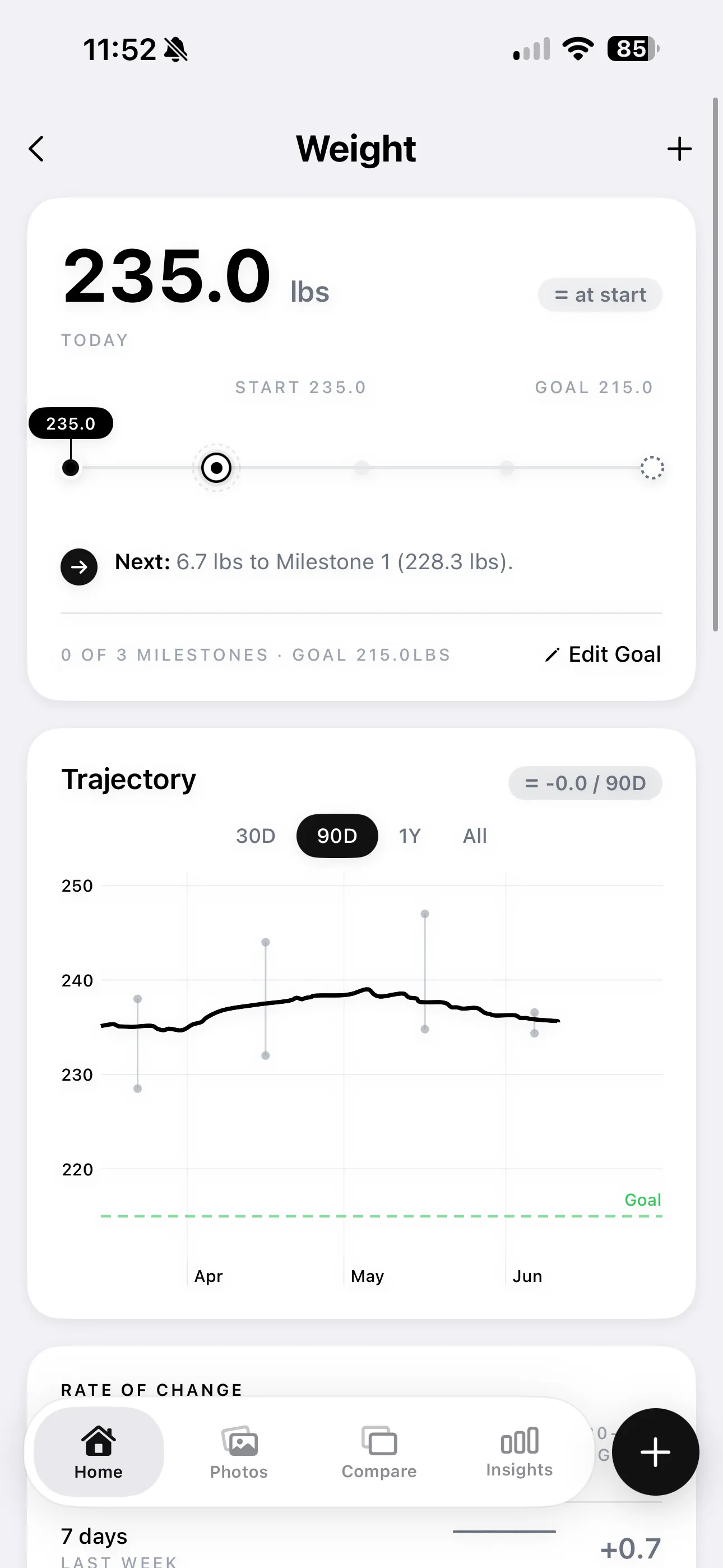
Weight and milestones — with the photo evidence of what the loss is made of sitting alongside.
Best for: the weekly "is this fat or muscle?" verdict, no hardware. Limitations: iOS only; estimates from photos, not clinical measurement.
2. MacroFactor — Best for the protein side
Platform: iOS & Android · Price: ~$12/mo
Appetite suppression is the mechanism of GLP-1s — and protein intake is the first casualty. Under-eating protein is the most preventable cause of lean loss, which makes a serious food logger more important on these medications, not less. MacroFactor's adaptive targets and fast logging are the category benchmark; any logger you'll actually use daily works.
Best for: hitting protein targets your appetite no longer reminds you about. Limitations: subscription-only; tracking food takes discipline that GLP-1 appetite can undermine.
3. Hevy — Best for the strength signal
Platform: iOS & Android · Price: Free tier; Pro optional
Resistance training is the other muscle-protecting lever, and your log is a leading indicator: lifts holding steady through a big cut strongly suggest muscle is staying; lifts sliding at equal effort are an early warning that arrives before any scan shows it. Hevy's free tier covers everything a GLP-1 user needs (our full Hevy vs Strong comparison).
Best for: the earliest warning signal available. Limitations: indirect — strength can dip for reasons besides muscle loss (calories, sleep, stress).
4. A lean-mass BIA scale — Best daily estimate (with caveats)
Platform: device + app · Price: ~$30 (Renpho) to ~$230 (Hume Body Pod)
BIA scales report lean mass daily, and on a months-long GLP-1 timeline the trend is informative even though individual readings swing with hydration. Weigh under consistent conditions and read weekly averages, not days. If the readings frustrate you, our Renpho alternatives guide explains why and what improves on it.
Best for: an automatic daily lean-mass series. Limitations: hydration noise is amplified during rapid weight loss — trust trends only.
5. Periodic DEXA — Best ground truth
Platform: clinics · Price: ~$100–200 per scan
For a medication with real body-composition stakes, a DEXA every 3–4 months is the anchor: clinical-grade fat mass and lean mass numbers you can bring to your prescriber. Everything else on this list tracks the trend between anchors.
Best for: the numbers your clinician will actually want to see. Limitations: cost and scheduling; pointless more than quarterly.
The minimal stack that covers it
- Weekly photo check-in (GainFrame or plain progress photos) — the visual verdict on what the loss is made of.
- Protein target you actually hit — tracked, because GLP-1 appetite won't remind you.
- Two to three strength sessions a week, logged — both the protection and the early-warning signal.
- Optional anchor: DEXA quarterly if you want clinical numbers for your prescriber.
Our deeper guides cover the how: tracking body composition on a GLP-1 and cutting without losing muscle.
Frequently asked questions
Do you lose muscle on Ozempic and other GLP-1s?
Some lean mass loss accompanies any rapid weight loss, and studies of GLP-1 medications generally report that a meaningful share of total weight lost is lean mass rather than fat — figures vary by study, dose, and whether patients strength train and eat adequate protein. It's manageable, not inevitable: resistance training and protein intake are the two levers consistently shown to protect muscle. Discuss specifics with your prescriber.
How can I tell if I'm losing muscle or fat on a GLP-1?
The scale alone can't distinguish them. Practical signals: progress photos (muscle loss shows as flattening, not just shrinking), strength in the gym (dropping lifts at stable effort suggest lean loss), lean-mass estimates from a BIA scale or periodic DEXA, and AI photo analysis that scores muscle groups over time. Using two of these together catches what any single one misses.
What is the best app for tracking muscle on GLP-1 medication?
There's no single app that does everything. GainFrame tracks the visual side — muscle-group scores and FFMI from weekly photos. MacroFactor handles the protein intake that protects muscle. Hevy logs the strength signal. A lean-mass scale adds a daily estimate. Most people on GLP-1s do well with a photo tracker plus a protein tracker.
How much protein should you eat on a GLP-1 to keep muscle?
Common guidance for people losing weight ranges around 1.2–1.6 g per kg of body weight daily, with some clinicians recommending more for those strength training — but appetite suppression on GLP-1s makes hitting even moderate targets genuinely hard, which is why tracking intake matters more on these medications, not less. Get a personal target from your prescriber or a dietitian.
Is losing some muscle on a GLP-1 a reason to stop taking it?
That's a conversation for your prescriber, not an app roundup — but context helps: substantial fat loss usually improves health markers even with some lean loss, and the preventable part is addressed with training and protein, not by stopping medication. Tracking exists so you and your clinician can see whether the preventable part is actually being prevented.
Know what your weight loss is made of
GainFrame scores your weekly photos — body fat, FFMI, and 12 muscle-group ratings — so you can see whether the weight coming off is fat or muscle. Free to start on iOS.
Download GainFrame Free