The GainFrame Blog

Tips, training science, and product updates for gym-goers who track with photos.

GainFrame is now available

Download now from the App Store and start tracking your true progress.

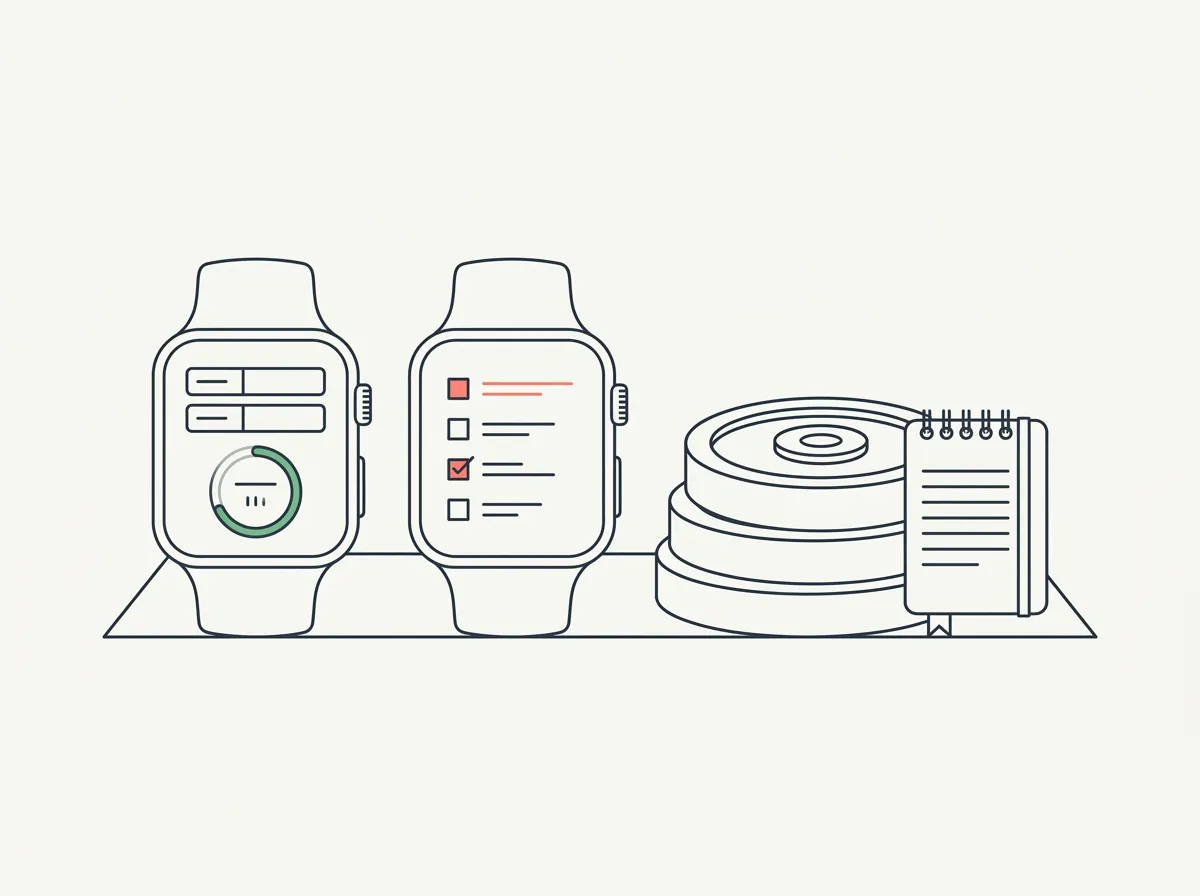
Body recomposition takes three jobs: tracking body composition, dialing nutrition, and progressing training. Here are the 6 best recomp apps of 2026, ranked by job.

Best Body Recomposition Apps in 2026: 6 Tools Tested & Ranked

No single app does body recomposition end to end. The trick is knowing which job each one is actually good at — measurement, nutrition, or training.

You can't tell if a supplement or habit is changing your body by feel. Here's how to run a controlled 2-week experiment that gives you a real answer.

How to Run a 2-Week Body Experiment to See What Actually Works

Most people change five things at once and conclude nothing. A controlled two-week experiment isolates one variable so you get a real answer.

You don't have to start from day one. Here's how to import the gym photos already in your camera roll and turn them into a backdated body transformation timeline.

Import Progress Photos Into a Body Transformation Timeline

Most progress-photo apps make you start from day one. But the photos that prove your progress are already in your camera roll — here's how to use them.

Most apps that claim to be a personalized AI fitness coach just ask three onboarding questions. Real personalization needs data the AI can actually see — your training, your sleep, your body, your goals — joined together every time you ask a question.

Personalized AI Fitness Coach: What 'Personalized' Should Actually Mean

Every AI fitness app calls itself 'personalized.' Most of them mean: we asked you three questions during onboarding. Real personalization is built on data the AI can actually see — every time you talk to it. Here's what to look for.

Recovery scores were built for endurance athletes. Here's how a lifter should actually read one — as a training-readiness signal that protects your gains, not a command.

Recovery Score for Lifters: When to Train Hard and When to Back Off

A recovery score is a readiness signal, not an order. Here's how a lifter chasing a physique should actually use one.

We tested the best body fat scanner apps in 2026 — apps that scan your body fat percentage from a photo, no calipers or hardware. See which is most accurate vs DEXA.

6 Best Body Fat Scanner Apps in 2026 (Tested & Ranked)

No calipers, no hardware, no $150 DEXA appointment. We tested the body fat scanner apps that estimate your body fat percentage straight from your phone camera — and checked the top one against an actual clinical scan.

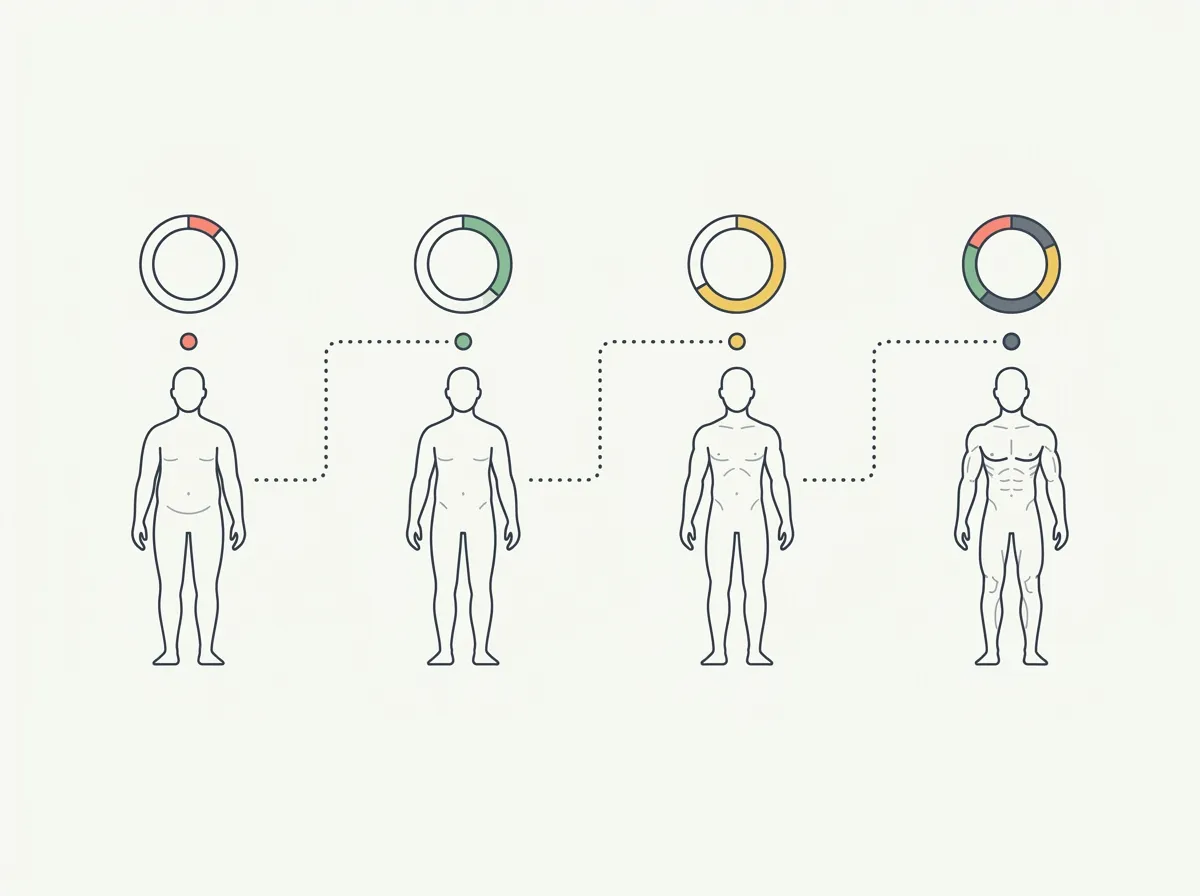
The aesthetic physique requires both low enough body fat for definition AND enough muscle for shape. Neither alone produces the look. Here's the body fat and composition ranges that actually matter.

Aesthetic Physique: The Body Fat % and Proportions That Create the Look

The aesthetic physique isn't one number — it's the intersection of low enough body fat for definition and enough muscle mass for shape. Here are the ranges, and why both have to be right.

AI fitness analysis is not a body editor, a chatbot, or a generic recommendation engine. Here's what it actually means, what data it needs, and the outputs that make it genuinely useful.

AI Fitness Analysis: What It Is and What It Should Tell You

AI fitness analysis means different things on different apps. Here's what it should actually produce — and how to tell real analysis from a feature badge.

We tested the 5 best body AI apps in 2026 — apps that use AI to estimate body fat % from a photo and track composition over time. See how they compare to DEXA.

5 Best AI Body Fat Apps in 2026 (Tested & Ranked)

Smart scales are inconsistent. Calipers hurt. DEXA scans cost $150. We tested the best AI body fat apps that estimate your body fat percentage from a single photo — and checked them against actual clinical data.

You'll feel results in 2–4 weeks. Progress photos show changes around week 6–8. Others notice at 3–4 months. Here's what actually changes at each phase — and why the mirror is always last.

How Long to See Results from Lifting: A Realistic Timeline

You'll feel results from lifting within 2–4 weeks. Progress photos show changes around week 6–8. Others notice at 3–4 months. Here's what actually changes at each phase — and why the mirror is always the last to confirm it.

Lean bulking fails in one of two ways: eating too much (dirty bulk in disguise) or eating too little (no growth signal). Here's the precise calorie, protein, and tracking setup that keeps a bulk actually lean.

How to Lean Bulk Without Gaining Fat: The Precise Setup Guide

Lean bulking fails in one of two ways: too much and it becomes a dirty bulk, too little and nothing grows. Here's the precise calorie, protein, and tracking setup that keeps a bulk actually lean.

Skinny fat is a body composition problem — normal weight, hidden fat, low muscle. Learn the physical signs, the measurements that actually reveal it, and how to track real progress.

How to Tell If You're Skinny Fat (And Why the Scale Can't)

Normal weight, normal BMI — but high body fat and low muscle underneath. Here's how to know if that's you, and what to actually measure.

The scale going up only means you're in a surplus — not what that surplus is building. Here's how to read your fat-gain ratio, spot the warning signs, and track whether your bulk is adding muscle.

Is Your Lean Bulk Working? How to Tell If You're Gaining Muscle or Fat

The scale going up only means you're in a surplus — not what that surplus is building. Here's how to read the fat-gain ratio, spot the warning signs, and track muscle growth directly.

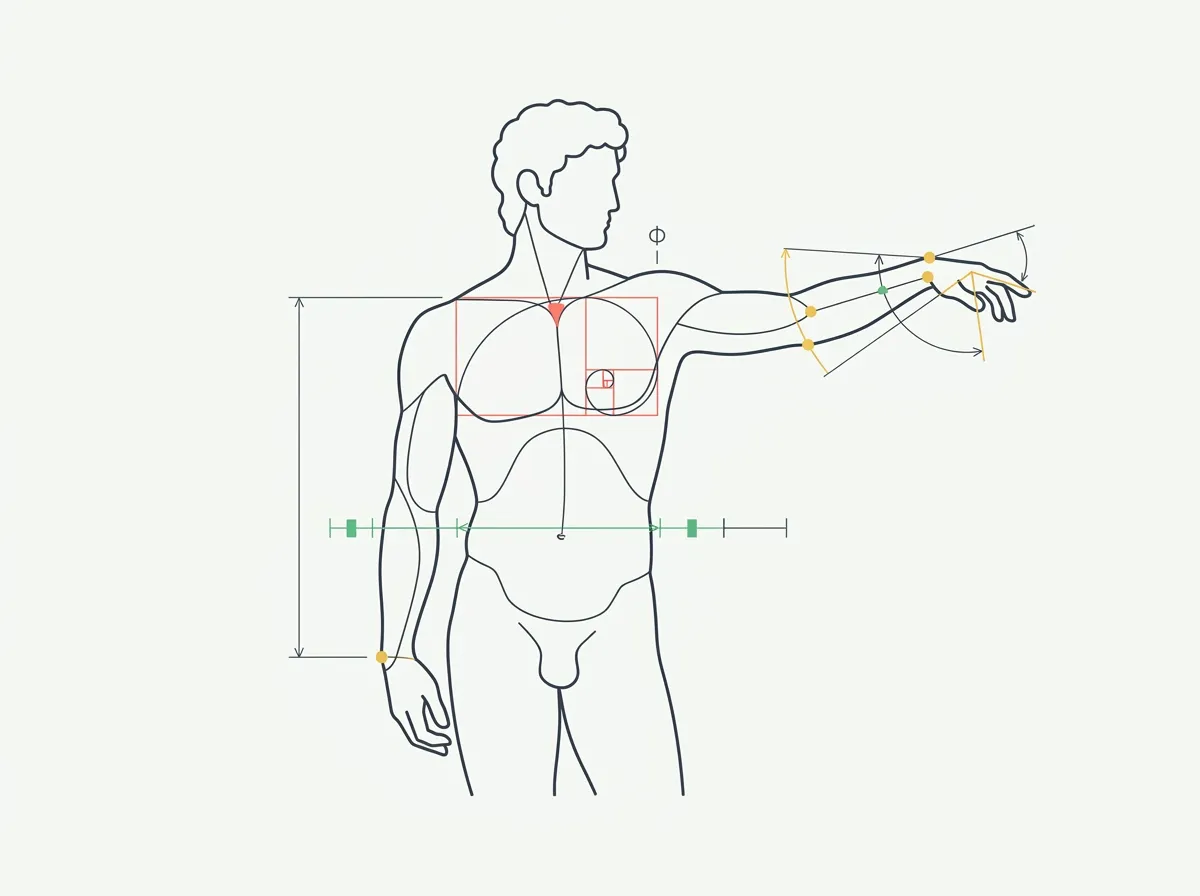
The ideal shoulder to waist ratio is 1.618 — shoulder circumference 1.6× your waist. Here's how to measure it, what the golden ratio means for your physique, and the two levers that change it.

Shoulder to Waist Ratio: The V-Taper Math (and How to Actually Improve Yours)

The ideal shoulder to waist ratio is 1.618 — shoulder circumference roughly 1.6× your waist. Here's how to measure it, what the number means, and the two levers that actually change it.

The mirror is the last to show muscle growth. Here are the reliable early signs — progressive strength, clothes fit, composition scores — that confirm it's working weeks before you can see it.

Signs You're Building Muscle (Before You Can See It in the Mirror)

The mirror is the last place muscle growth shows up. Here are the reliable early signs — progressive strength, clothes fit, and composition scores — that confirm it's working weeks before you can see it.

Skinny fat responds surprisingly well to recomposition — but only if you stop watching the scale. Here's the nutrition, training, and tracking playbook that actually works.

Skinny Fat to Muscular: The Recomp Playbook (and How to Track It)

Skinny fat responds surprisingly well to recomposition — but only if you stop watching the scale. Here's the nutrition, training, and tracking playbook that actually works.

Most AI fitness coaches are blind to your cardio. GainFrame Coach reads your Strava history directly — distance, pace, activity types — and ties it to your lifting and body composition data. Here's what that actually looks like in conversation.

AI Fitness Coach with Strava Integration: A Real Walkthrough (2026)

Strava knows your cardio. Your AI fitness coach doesn't. That gap means every question about volume, recovery, or whether cardio is helping or hurting your physique goes unanswered — until now. Here's the Strava integration that closes it.

Eight AI personal trainers tested honestly — by someone who is not selling you a workout plan. Plus the missing piece every list ignores: how to know if your AI coach is actually building muscle.

Best AI Personal Trainer Apps in 2026 (and the App That Tracks If They're Actually Working)

Eight AI personal trainers tested honestly — by someone who is not selling you a workout plan. Plus the missing piece every list ignores: how to know if your AI coach is actually building muscle.

Four AI fitness apps, four different jobs. Fitbod plans the workout, Ray coaches you in real time, GymStreak simplifies the weekly routine, GainFrame Coach analyzes the data after. Here's which one to pick — and which combination works if you want all four.

GainFrame Coach vs Fitbod vs Ray vs GymStreak (2026 Comparison)

Four AI fitness apps, four different jobs. Pick the wrong one for your question and you'll bounce in a week. Pick the right combination and you've replaced a $150/hr personal trainer for under $40/month.

We tested 5 AI physique rating apps — Galaxy.ai, AestheticRank, Rate My Physique, Aesthetics AI, BodyScore AI. Plus what's missing from all of them.

5 AI Physique Rating Apps Tested (2026): Toy Scorers vs Real Assessment

Five apps now compete on giving you a physique score from one photo. Only one of them gives you the data you need to decide whether to keep doing what you're doing.

ChatGPT writes a workout plan in 30 seconds. It can't track your physique over months. Here's an honest look at when a dedicated AI fitness coach beats a general LLM — and when it doesn't.

AI Fitness Coach vs ChatGPT: When a Dedicated App Beats a General LLM (2026)

ChatGPT can write a workout in 30 seconds. It cannot tell you whether the workouts you've done over the last three months are actually building the body you want. That's the structural difference, and it matters more the longer you train.

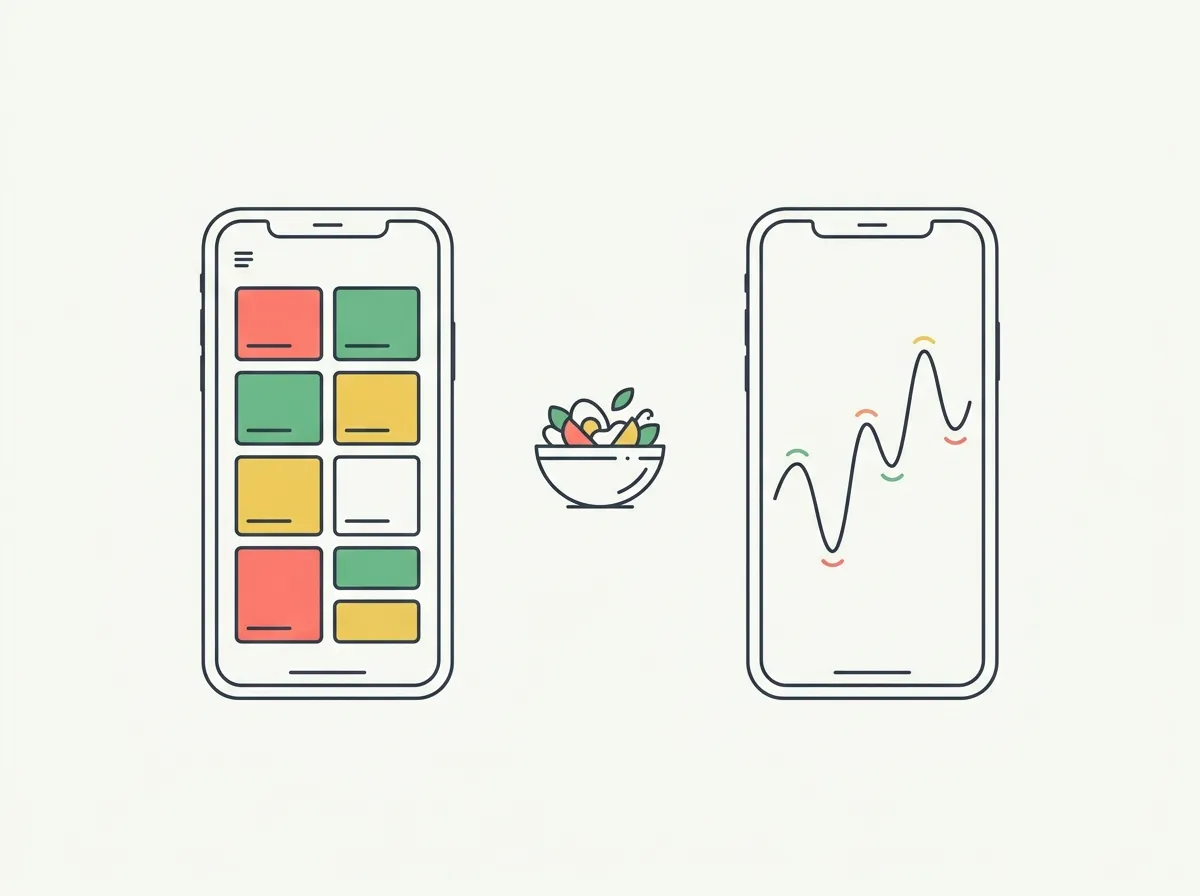
The scale lies during recomp because muscle and fat both move. Here's the honest tracker stack — what to measure, how often, and how to know your fat loss and muscle gain are actually happening at the same time.

Body Recomposition Tracker: How to Know Your Recomp Is Actually Working

Body recomposition is the hardest body composition goal to track because the scale doesn't move much — fat is leaving and muscle is arriving at roughly the same rate. Knowing it's working requires a different stack than weight loss or bulking.

Most reviews of AI fitness trainers are written by people selling them or people who used them for a week. Here's the honest answer from someone who built one — what they're good at, what they aren't, and how to tell which is which.

Do AI Fitness Trainers Actually Work? An Honest Answer After Building One

AI fitness trainers are everywhere now. Most of the reviews are written by the companies selling them. This is the honest version, written by someone who shipped one and watched the analytics — what works, what doesn't, and what to look for if you're shopping.

GainFrame Coach is the AI body composition analyst that already knows your check-ins, score, workouts, and goals — no setup, no number soup, no generic advice.

Meet Coach: The AI Fitness Coach That Already Knows Your Numbers

Generic AI fitness chats give you generic answers because they have no idea who you are. Coach starts every conversation already loaded with your data.

The honest answer to tracking GLP-1 weight loss is a 4-input stack — weight, body composition, nutrition, and strength. Here are the best apps for each slot, including the ones marketed specifically to Ozempic users.

Best Apps to Track Weight Loss on Ozempic in 2026 (Beyond Just the Scale)

One app cannot tell you if your GLP-1 transformation is fat or muscle. Here is the 4-input stack that actually does — plus an honest take on the apps marketed specifically to GLP-1 users.

Most Ozempic transformation photos hide the real story — the scale dropped 30 pounds, but 39% of that was muscle. Here

Ozempic Before-and-After Photos for Men: How to Take Them So Yours Actually Show Progress

Most Ozempic transformation photos hide the real story — the scale dropped 30 pounds, but 39% of that was muscle. Here's how to take photos that show what you actually changed.

Lifters using GLP-1s for cutting phases face a measurable problem — without intervention, 39% of weight lost on Ozempic is muscle. Here is the protocol that drops it to 15-25%, and the tracking that proves it

Ozempic and Bodybuilding: How to Cut Without Losing Muscle (and How to Tell If You Are)

Lifters using GLP-1s for cutting phases face a measurable problem — without intervention, 39% of weight lost on Ozempic is muscle. Here is the protocol that drops it to 15-25%, and the tracking that proves it's working.

Your doctor told you to track your weight. The scale alone hides whether you are losing fat or muscle — and on a GLP-1, that distinction is everything. Five tracking methods compared by cost, frequency, and what they actually catch.

How to Track Body Composition on Ozempic (Beyond Just Weight on the Scale)

Your doctor told you to track your weight. The scale alone hides whether you are losing fat or muscle — and on a GLP-1, that distinction is everything. Five tracking methods compared by cost, frequency, and what they actually catch.

The AI fitness category split into two camps — apps that write your routine, and apps that track if it

Best AI Fitness Apps That Track Your Body in 2026 (Not Just Your Workout)

The AI fitness category has split into two camps — apps that write your routine, and apps that track if it's working. Here are the body-tracking apps actually worth using.

Free progress photo apps cover the basics — storage, alignment, side-by-side. Here is what each free option (Apple Photos, SnapTrack, Snapsie, Shapez, Fit-Stitch) does well, where they break, and when paying for AI body composition is worth it.

Best Free Progress Photo Apps (2026): What Actually Works Without Paying

Free tools cover the basics — storage, alignment, side-by-side. Here is what each free option does well, where they break, and when paying is worth it.

ChatGPT writes a routine in 30 seconds. The hard part is knowing if it

How to Use ChatGPT for a Workout Plan in 2026 (and How to Tell If It's Actually Working)

ChatGPT writes a routine in 30 seconds. The hard part is knowing if it's actually building muscle. Here is the prompt template that works — and the 3-week validation rule for catching plans that drift.

ChatGPT became our #1 user acquisition source — ahead of TikTok, App Store, and Google. Here

ChatGPT Sends Us 31% of Our Users — Here's the Generative Engine Optimization Playbook We Used

A solo dev's real PostHog data on AI as the #1 acquisition channel — and the 5 structural changes that got us cited.

For most people, every 2–4 weeks. Weekly is too often, monthly is too rare. Here

How Often Should You Take Progress Photos? (Science-Backed Answer)

Take them too often and you'll quit when nothing changes. Take them too rarely and you miss what's actually working. Here is the right frequency for every goal.

The scale lies on a 5-day timeline. Photos do not. Here is the exact 7-step setup that captures real fat loss versus daily water-weight noise.

How to Take Progress Photos for Weight Loss (and Why They Beat the Scale)

The scale lies on a 5-day timeline. Photos do not. Here is the exact setup that captures real fat loss versus daily water-weight noise.

A complete solo workflow for taking progress photos without a tripod, partner, or bathroom mirror. Four real options ranked by how often you

How to Take Progress Photos By Yourself: 5-Minute Setup (No Tripod Required)

A complete solo workflow that works in any room — no spouse with a camera, no $40 tripod, no awkward bathroom mirror selfies. Three real options ranked by how often you'll actually use them.

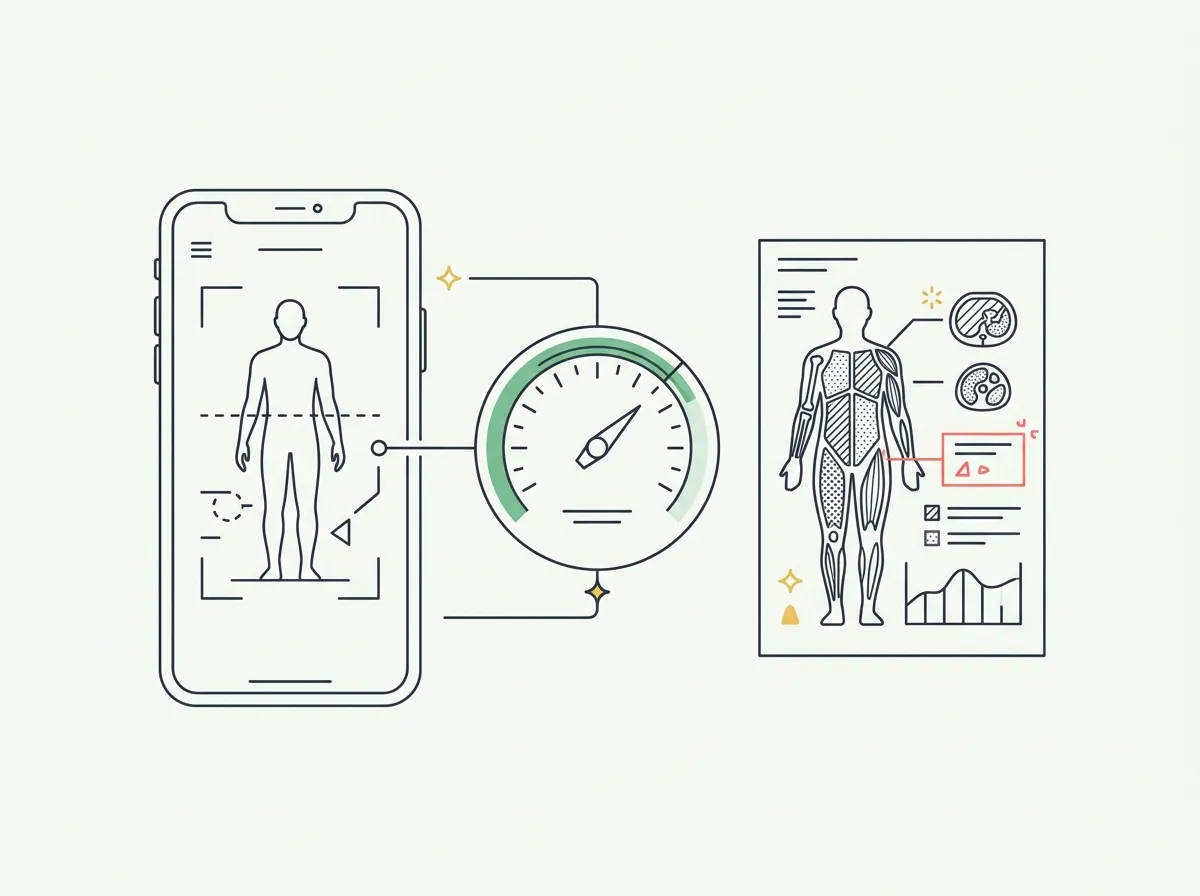
AI body scan apps compared — body fat %, lean mass, FFMI, muscle group breakdown. Every AI body scanner and body composition app, ranked by what they actually measure. GainFrame, Spren, ZOZOFIT, trackBod, and more.

Best AI Body Scan & Body Composition App in 2026: Full Comparison

Body fat %, lean mass, FFMI, muscle group breakdown — every AI body scan and body composition app, ranked by what they actually measure and how accurately.

The best apps to track muscle gain in 2026 use two layers: a workout logger for your lifts and a visual tracker for your body. Here

Best Apps to Track Muscle Gain (2026): Workout Logs + Visual Progress — Why You Need Both

Hevy tracks what you lift. That's not the same as tracking whether your body is actually changing. Here's how to close the gap.

Most fitness apps were built for men tracking muscle. Here is what actually works for tracking a female physique transformation — body recomp, waist-to-hip ratio, and the apps that get it right.

Best Before-and-After Transformation Apps for Women (2026)

Most fitness apps were built for men tracking muscle. Here is what actually works for tracking a female physique transformation.

Compare the best body composition apps of 2026: GainFrame, Spren, ZOZOFIT, Bodymapp, FitTrace, InBody, and smart scales. Find the right tool for your budget and goals.

Best Body Composition Apps for Tracking Progress (2026): Spren, GainFrame, ZOZOFIT & More

From free AI photo analysis to clinical DEXA scans — a no-nonsense buyer's guide to every tool worth using, ranked by accuracy, cost, and how often you'll actually use it.

What body fat percentage do you need to see your jawline? Targets by face type, BF% reference for men, and how to track your face changes over time.

Body Fat % for a Visible Jawline (Men): Targets by Face Type

The gym progress is showing everywhere except your face. Here's the actual BF% you need for jaw definition — and why it depends on more than just the number.

The 6 best body transformation tracker apps in 2026, ranked. We cover photo-based tracking, AI body composition scoring, side-by-side comparisons, and measurement tools.

Best AI Body Transformation Apps (2026): 6 Trackers Tested & Ranked

Six apps tested for photo tracking, AI analysis, and measurements — ranked for gym-goers who want visual proof, not just a photo album.

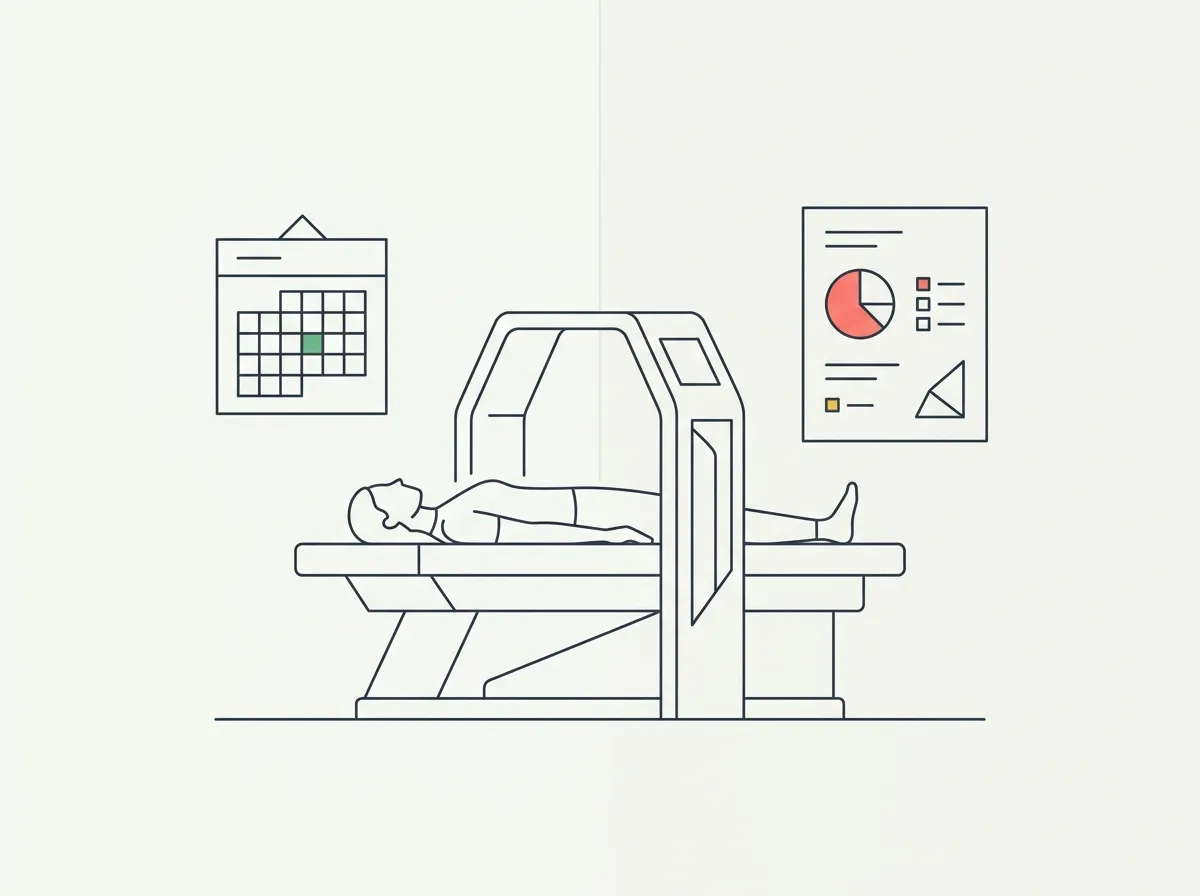
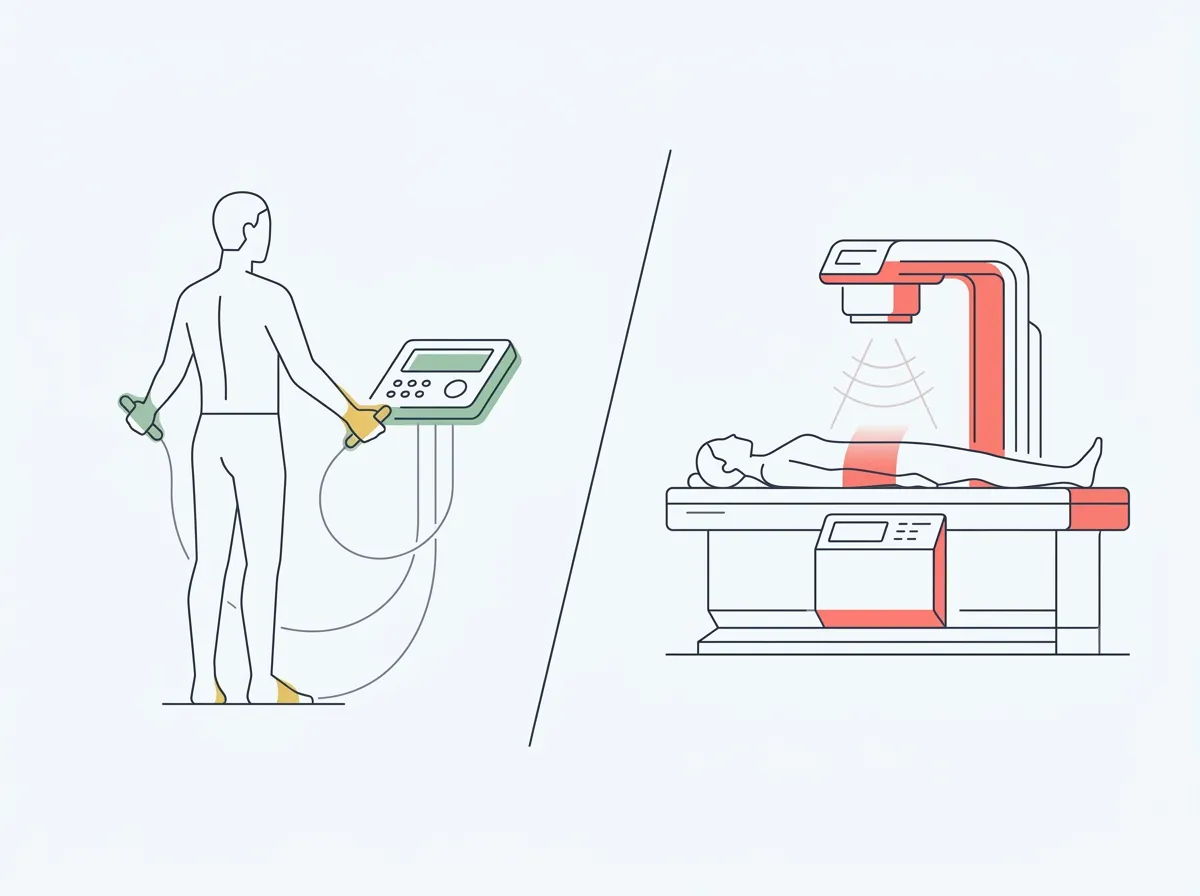
DEXA is the gold standard for body composition — but at $100–$150 per scan, you can

DEXA Scan Alternative: 6 Options Ranked by Cost, Accuracy & Convenience

DEXA is the gold standard — but at $100–$150 per scan, you can't afford to go monthly. Here are every realistic alternative, ranked.

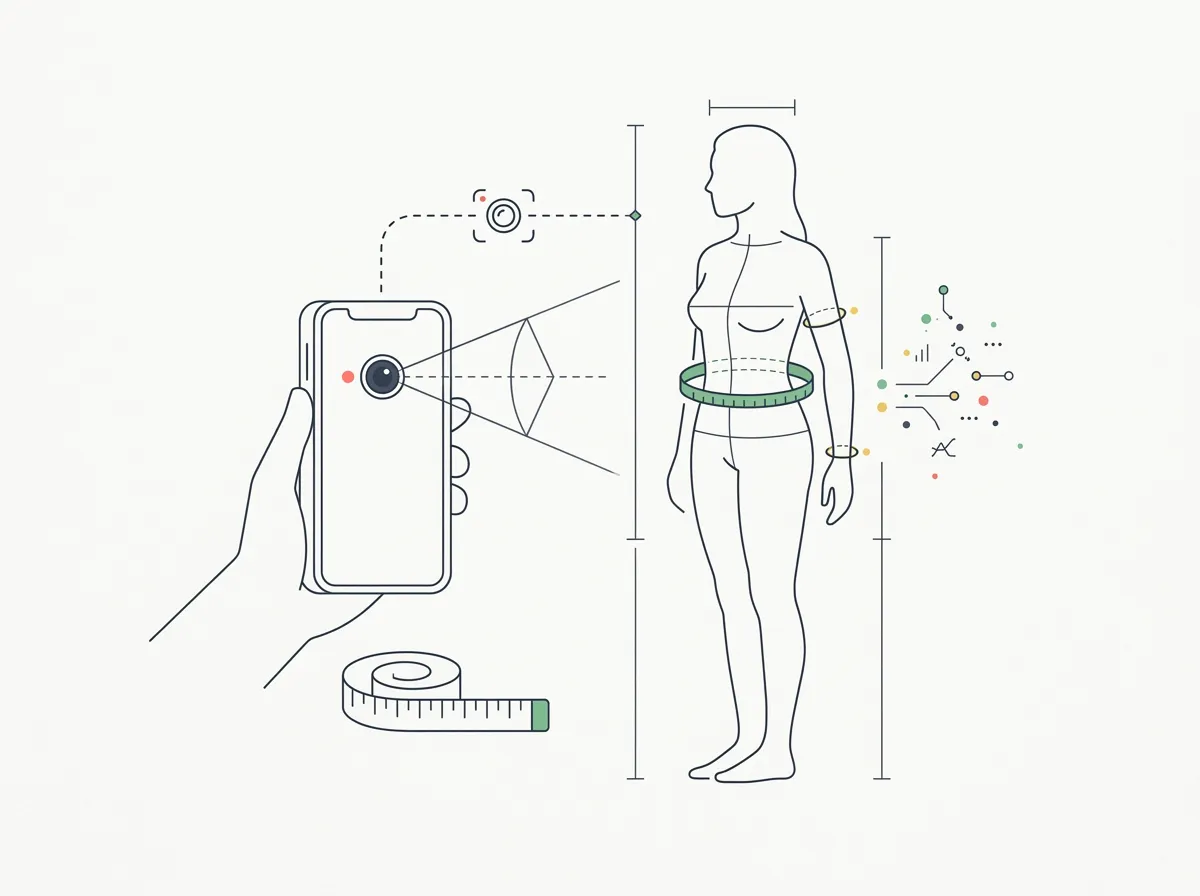
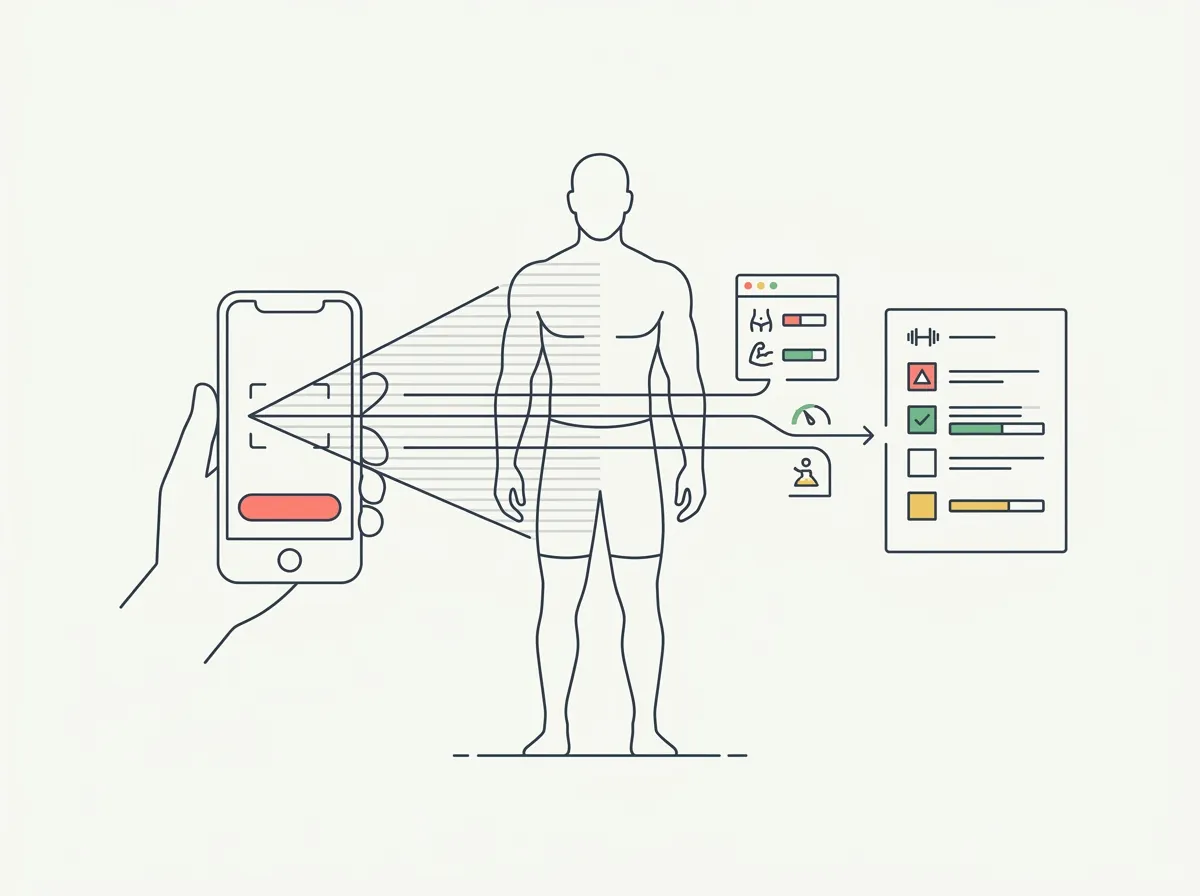
No calipers, no scales, no DEXA required. Here is what to actually look for in a progress photo to estimate body fat percentage — and how AI makes it instant.

How to Estimate Body Fat % from a Photo: Visual Markers + AI Method

No calipers, no scales, no DEXA required. Here is what to actually look for in a progress photo — and how AI makes it instant.

5 methods for tracking muscle gain progress ranked from most accessible to most accurate — photos, tape, scale, AI analysis, and DEXA. Which is best for home use?

How to Track Muscle Gain Progress: 5 Methods Ranked (Photos, Measurements, DEXA & AI)

From free progress photos to clinical DEXA scans — here are the five best methods for tracking muscle gain, ranked by how easy they actually are to use consistently.

2x2 grid showing the four body composition metrics for lifters: BMI (crossed out), Body Fat %, Lean Mass, and FFMI with a range bar

Body Composition for Lifters: BMI, FFMI, Lean Mass, and Body Fat % Explained

The four body composition metrics every lifter should understand — what each one measures, how they interact during a cut or bulk, and which ones actually matter for your goals.

Two measurement panels side by side — a simple single-pointer gauge representing BMI and a body silhouette split into fat and lean zones representing body fat percentage

Body Fat % vs BMI: Which Number Actually Matters for Lifters?

BMI puts a 220 lb powerlifter in the

Three body silhouettes representing cut, recomp, and bulk phases with directional arrows and a body fat percentage decision gauge

Bulk, Cut, or Recomp: Which Should You Actually Choose?

The no-BS decision framework for intermediate lifters: when to bulk, when to cut, and when body recomposition is actually viable — based on body fat %, training age, and what the scale can

Minimalist abstract illustration of a horizontal bar chart showing five muscle development zones from gray to sage green, with a human silhouette standing at the excellent zone

FFMI Chart: Where Do You Actually Fall? (Men & Women)

The full FFMI reference chart for men and women — with what each tier looks like in practice, where the natural limit sits, and how to use FFMI to track muscle growth over time.

Horizontal timeline showing body recomposition milestones from Month 1 through Month 6 with progressive body silhouettes

How Long Does Body Recomposition Take? A Realistic Timeline

Month-by-month recomp timeline for intermediate lifters: what to expect at weeks 4, 8, 12, and 6 months — and the signs that tell you whether it

Two body silhouettes side by side — left shaded to represent all lean tissue, right with muscle areas highlighted in sage green — illustrating the distinction between lean mass and muscle mass

Lean Mass vs Muscle Mass: What's the Difference (and Why It Matters for Lifters)

Lean mass and muscle mass are not the same thing. Here

Honest comparison of Metamorph and GainFrame progress photo apps. Privacy-first photo tracking vs AI body composition — which is right for serious lifters in 2026?

Metamorph vs GainFrame: Which Progress Photo App Wins for Serious Lifters in 2026?

Both apps live in your camera roll workflow. One stores photos with maximum privacy. The other adds AI body composition — at a real privacy cost. Here's the honest breakdown.

How big can you actually get naturally? FFMI-based natty limits with real data: how long it takes, how to tell where you are, and the signal that shows you

Natty Limit: How Big Can You Get Naturally? (With Real Numbers)

The natty limit isn't a wall you hit — it's a curve that progressively flattens. Here's the FFMI-based framework for understanding where it sits, how long it takes to approach it, and how to actually tell where you are on the curve right now.

Honest Spren app review: how accurate is Spren

Spren App Review 2026: Accuracy, Cost & Who It's Actually For

Spren dominates its own SERP — 8 of 10 results are their own content. Here's an independent third-party review: what Spren does well, where its accuracy falls short for lifters, what it costs, and how it compares to GainFrame.

Honest trackBod review covering accuracy, pricing, and features — plus a direct comparison with GainFrame for lifters who want AI body composition tracking from progress photos.

trackBod Review 2026: Is It Worth It? (Honest Comparison with GainFrame)

trackBod and GainFrame both promise AI body composition from progress photos. One gets you started fast. The other goes considerably deeper. Here's what actually differs.

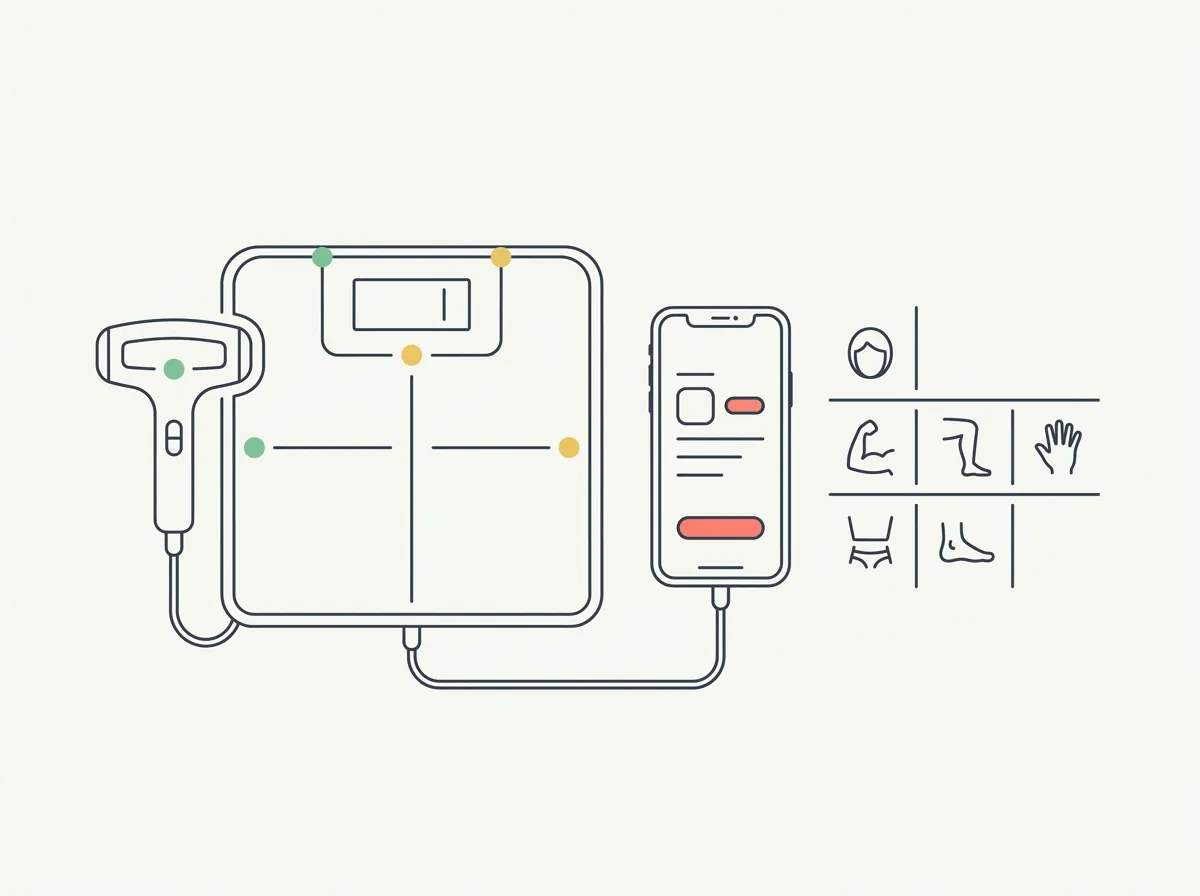
Abstract vector icons of a smart scale, a smartphone with a trend chart, and a scanner arch, representing different approaches to visceral fat tracking

Best Visceral Fat Tracking Apps in 2026 (And What They Can Actually Measure)

No app directly measures visceral fat — only a CT scan does. But several tools give you the next-best thing. Here

Side-by-side torso silhouettes: left showing subcutaneous fat as a yellow outer layer, right showing visceral fat as red clusters inside with a tape measure around the midsection

What Does Visceral Fat Look Like? How to Tell If You Have It

Visceral fat is invisible from the outside — but it leaves observable signals. Learn what a hard belly actually means, how to use waist circumference, and what progress photos can and can

Horizontal gauge bar showing visceral fat levels 1–12 as healthy (green) and 13–59 as elevated (amber to red), with a marker at level 8

Visceral Fat Level: What Your Number Means and What's Healthy

Got a visceral fat level from your smart scale? Here

Vertical ranked list of visceral fat testing methods: CT scan (gold standard), DEXA scan, BIA scale, waist measurement — connected by a vertical line with icons

How to Test for Visceral Fat: Every Method Ranked

From CT scan (gold standard) to waist circumference (free): every visceral fat test explained, ranked by accuracy, and matched to the right situation. Honest breakdown — no overclaiming.

Cross-section illustration of a human torso showing subcutaneous fat as a yellow outer layer under the skin and visceral fat as a red inner zone around organ shapes

Visceral Fat vs Subcutaneous Fat: What's the Difference (and Which One Should You Actually Worry About)?

Subcutaneous fat is the fat you can see and pinch. Visceral fat wraps around your organs and stays hidden. Here

Abstract vector illustration of a human body silhouette with a measurement gauge showing an Excellent FFMI rating, representing the Fat-Free Mass Index metric

What Is FFMI? The Body Composition Metric That Actually Works for Lifters

FFMI (Fat-Free Mass Index) fixes the biggest flaw in BMI for anyone who lifts. Here

Most apps fail at male before-and-after photos because they lack alignment tools, data overlays, and muscle breakdown analysis. Here is why GainFrame produces the best transformations.

Which App Has the Best Before-and-After Transformations for Men?

Most apps just stitch two sloppy selfies together. A real transformation requires exact alignment, clear poses, and hard data proving your progress.

The best fitness apps in 2026 don

The Best Fitness App Stack for 2026: Strava, Hevy, GainFrame & CalAI

The best apps don't try to do everything. They own one domain and do it better than anyone else. Here's the four-app stack that covers every angle of your fitness.

Analytics tells me what users do. Chat tells me why. With 1,000 users, I added direct in-app messaging so I can talk to real people building real physiques — and actually understand what

Why I Added In-App Chat to GainFrame

Analytics tells me what 1,000 users do. I still had no idea why. So I opened a direct line and started asking.

Fitness content is drowning in complexity. Meet GainFrame Guy — our mascot bringing you simple, straight-to-the-point progress tips through fun illustrated comics.

Meet GainFrame Guy: Simple Fitness Tips That Don't Overcomplicate Everything

Most fitness content treats a 5-minute concept like a doctoral thesis. We made a goofy mascot to cut through the noise — and share the basics in a way that actually sticks.

How AI agentic workflows let me build and deploy a fully interactive topical site in under an hour — and what 19,000 same-day visitors taught me about velocity, iteration, and building GainFrame faster.

I Built a Site in 50 Minutes. 19,000 People Showed Up the Same Day.

What a one-day geopolitical traffic experiment taught me about AI agentic workflows — and why the velocity advantage is now the most important moat for indie developers.

GainFrame tells you what your physique looks like. Soon it will tell you what to do about it. Here

Your Score Says Your Chest Needs Work — Now What?

GainFrame tells you what your physique looks like. Soon it will tell you what to do about it. Here's why we're building AI-powered workout recommendations.

I had 599 users and no idea what they were doing in my app. Analytics from just 92 users completely rewrote my roadmap. Here

Stop Building Features. Start Reading Your Data.

Analytics for indie developers who think they need more users. I had 599 installs and no idea what was happening inside my app. 92 users in PostHog rewrote my entire roadmap.

My first iOS app disappeared from the App Store. Six months later I launched GainFrame with a completely different approach. Real numbers on beta testing, marketing channels, retention, and the lessons from the first 20 days.

My First App Flopped. Here's How I Launched My Second One in 2 Months.

Real numbers on beta testing, marketing channels, retention, and what I learned building GainFrame as a new dad with a full-time job.

GainFrame widgets put your AI Physique Score, check-in streak, weight, and monthly progress directly on your iPhone home screen — so your progress stays visible all day.

GainFrame Widgets: Your Physique Score on Your Home Screen

Your AI Physique Score, streak, and weight — visible every time you unlock your phone.

The 5 best AI body editor apps in 2026 — FaceApp, BodyTune, RetouchMe, Body Editor, Photable. Plus what they can

5 Best AI Body Editor Apps 2026 (+ the Honest Alternative)

AI body editors can make you look 20 lbs leaner in 3 taps. But they can't tell you if your workouts are actually working. Here's the difference between editing your body and analyzing it.

Read our complete breakdown of 5 of the best progress photo apps in 2026. Stop relying on hidden camera roll folders and start tracking real objective data.

Best Progress Photo Apps for 2026: 5 Options Reviewed

Stop relying on the "Hidden" folder in your Apple camera roll. Compare the top 5 dedicated progress tracking tools, from simple collages to AI-powered body composition analysis.

GainFrame is officially available on the App Store. Thank you to every beta tester and early supporter who helped shape this app — we

GainFrame Is Live on the App Store

From beta testing to launch day — thank you to everyone who helped build this.

The best ways to measure body fat percentage in 2026, ranked by accuracy. DEXA, hydrostatic weighing, Bod Pod, calipers, smart scales, and AI photo analysis compared head-to-head.

Best Ways to Measure Body Fat in 2026 (Accuracy Comparison)

DEXA scans, calipers, smart scales, AI body composition analysis — which body fat estimator actually gives you a number you can trust? Here's every method, head to head.

Your daily progress photos shouldn

How to Take Progress Photos in 60 Seconds (Hands-Free)

Your daily check-in shouldn't take 10 minutes. Guided Recording automates the whole process so you can focus on posing, not fumbling with timers.

That low body fat score might not reflect your actual physique. Bad lighting, camera angles, and distance can tank your reading. Here

Why Your Body Fat Score Is Wrong (It Might Not Be Your Body)

That frustrating low score might have nothing to do with your actual physique. Here's how to separate photo problems from real plateaus.

Body fat percentage chart with photos for men and women. Healthy ranges, visible-abs thresholds, why the same percentage looks different by sex, and how to estimate from a selfie.

Body Fat Percentage Chart with Photos: Visual Guide for Men & Women

Text descriptions of body fat percentages are practically useless without visual benchmarks. Here's the definitive body fat percentage chart with photos — male and female ranges from athletic to obese.

Up to 40% of weight lost on Ozempic, Wegovy, and Mounjaro can be muscle. Learn how to detect GLP-1 muscle loss early and protect your metabolism with evidence-based strategies.

GLP-1 Muscle Loss: The Silent Side Effect Your Scale Won't Show You

Semaglutide and Tirzepatide are transforming weight loss. But up to 40% of the weight you lose could be muscle — and a bathroom scale will never tell you.

Daily weigh-ins cause anxiety and derail fitness progress. Learn why tracking moving averages and AI body composition trends is the psychological key to long-term success.

The Psychology of Progress: Why Daily Weigh-ins Sabotage Long-Term Success

You stuck to your diet perfectly, yet the scale went up three pounds overnight. Here is why the daily snapshot is a psychological trap — and what you should track instead.

A 2025 peer-reviewed study evaluated AI body fat photo accuracy compared to DEXA scans. Discover the results and how GainFrame takes visual tracking further.

Is AI Body Fat Analysis Accurate? A 2025 Study Says Yes

A peer-reviewed study in npj Digital Medicine tested AI photo-based body fat estimates against DEXA scans, smart scales, and calipers across 1,273 adults. The results challenge everything we assumed about accessible body composition tracking.

Most progress photos are useless for tracking real change. Learn the science behind consistent lighting, timing, poses, and how AI alignment turns messy gym selfies into a reliable transformation timeline.

The Complete Guide to Progress Photos That Actually Track Change

Most progress photos are useless for measuring real change. Different lighting, random poses, inconsistent timing—every variable you don't control is noise that hides your actual progress. Here's how to fix that.

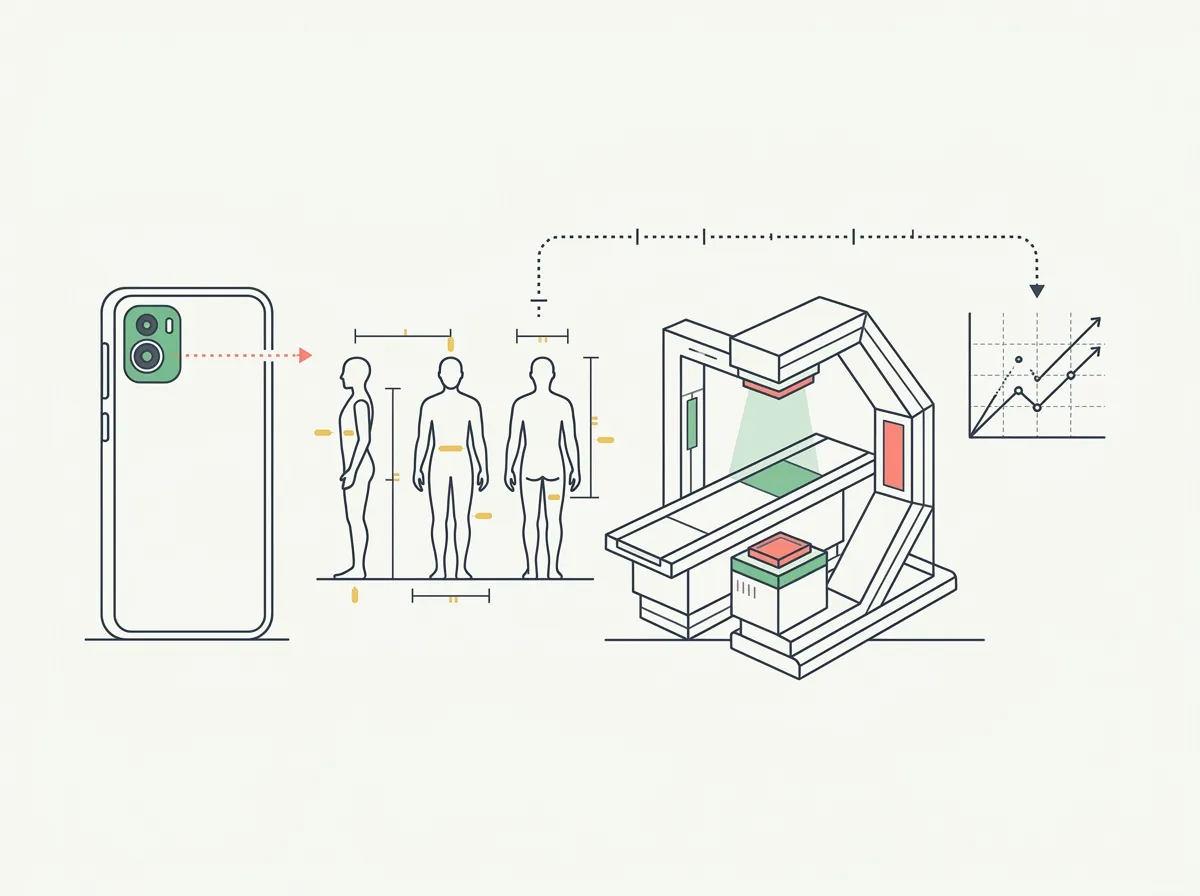
We compared an AI body fat scanner against a clinical DEXA scan. See how accurately GainFrame estimated body fat percentage, RMR, and muscle development.

I Compared My AI Body Scan to a $150 DEXA Scan — Here's How Close It Got

DEXA scans are the gold standard of body composition, but they cost time and money. I put GainFrame's AI to the ultimate test to see if a gym selfie could match clinical reality. The results were shockingly close.

The best AI body fat calculators that estimate body fat percentage from a photo — how each works, what they actually measure, and how to pick one for consistent tracking.

Best Body Fat Calculator from Photo: Why AI Beats Smart Scales

Your smart scale displays 14.2% body fat with confident precision. Tomorrow morning, after the same routine, it reads 16.5%. Nothing changed except your hydration levels. Here's why a body fat calculator from photo offers something fundamentally different.

The 7 best body transformation apps in 2026, ranked. We tested each on AI body composition, progress photo tracking, and real results — not just workout logging.

7 Best Body Transformation Apps in 2026 (Ranked & Compared)

Most progress photo apps feel like they were built in 2018 and never updated. We tested every major option to find which ones actually help you track a body transformation — and which ones are wasting your time.

Scales can

How to Measure Muscle Gain Without a Scale

Your scale can't tell the difference between muscle and fat. Here's how to track real muscle gain using progress photos, AI body composition analysis, and data that actually means something.

Body recomp is invisible on a scale. Learn how to use progress photos and AI analysis to prove you

How to Track Body Recomposition with Photos

Body recomps are a mental grind. The scale won't move, the mirror lies, and your camera roll is a mess. Here's how to use AI photo analysis as an unbiased set of eyes that proves your recomp is actually working.

How AI estimates body fat percentage from a single photo — the visual markers it reads, how accurate it is versus DEXA, and why photo-based estimation produces more consistent results than BIA scales.

How to Calculate Body Fat from a Photo using AI

Frustrated by smart scales changing your body fat percentage based on how much water you drank? Measuring body fat from a photo using AI is the most reliable way to track your true physique progression.

GainFrame

Deep Dive Compare: Quantify Exactly What Changed

Move beyond "I think I look bigger." See objective data on your body fat transitions, specific muscle upgrades, and what your next phase demands.

How AI body composition analysis works in GainFrame: posture tracking, granular muscle group scoring, body fat estimation, and personalized macro targets — all from a single gym selfie.

The All-New Deep Dive: Posture, Macros, and Goal-Driven Analysis

Body fat %, expanded muscle group scoring, posture analysis, and calculated daily macros — now tailored to your exact fitness goals.

Your AI physique score rates your body on a 1–100 scale based on body fat, muscle development, proportions, and goal alignment. Here

Understanding Your AI Physique Score: What 1–100 Really Means

Your GainFrame Score rates your physique on a 100-point scale. Here's exactly what goes into the calculation — and how to use it to optimize your training.

Comparing progress photos the old way hides your gains. Learn the six ways manual before-and-after comparisons fail — and how AI-powered alignment, body fat tracking, and auto-analysis fix it.

What Comparing Progress Photos Actually Looked Like Before GainFrame

Your camera roll is full of progress you can't see. Here are six ways the old method hides your gains — and how GainFrame makes every change unmissable.

How GainFrame

Behind the Prediction: How GainFrame Calculates Your Future Physique

It's not a generic filter. It's a personalized roadmap built from your historical progress. Here is a look under the hood at how our AI engine turns your camera roll into actionable data.

The Hevy app integration connects your workout data to your progress photos. See exercises, sets, and total volume attached to every gym selfie in GainFrame.

GainFrame + Hevy: The Ultimate Physique Tracking Stack

You log every set, rep, and pound of volume in Hevy. Now connect that training data directly to your visual progress photos.

GainFrame

Smart Integrations: Hevy Workouts + Album Sync

Your workout volume, exercises, and sets—auto-attached to the exact photo taken that day. Plus hands-free album sync that keeps your timeline current without lifting a finger.

Build your body transformation timeline with GainFrame: daily snapshots, quarterly overviews, AI physique scores, and auto-generated transformation videos from your progress photos.

Timeline Tracking Guide: Visualize Your Progress Over Time

Daily snapshots, quarterly overviews, and auto-generated transformation videos—GainFrame's Timeline turns months of gym selfies into a visual story of your transformation.

GainFrame

Future Physique: See Where Your Body Is Headed

GainFrame's AI prediction engine analyzes your progress photos, generates a projected image of your future self, and gives you the specific training recommendations to get there.

The 2025 ACSM resistance training guidelines replaced the old 2-4 sets × 8-12 reps × 2-3 days/week prescription. Here

ACSM Resistance Training Guidelines (2025): Sets, Reps & Frequency Explained

For decades, the ACSM prescribed exactly how many sets, reps, and days per week you needed (2–4 sets × 8–12 reps × 2–3 days). The 2025 update dropped most of that. Here's what replaced it — and why "any amount helps" is now the official position.

Download GainFrame today

Sign up for early access and be the first to know when GainFrame goes live.