
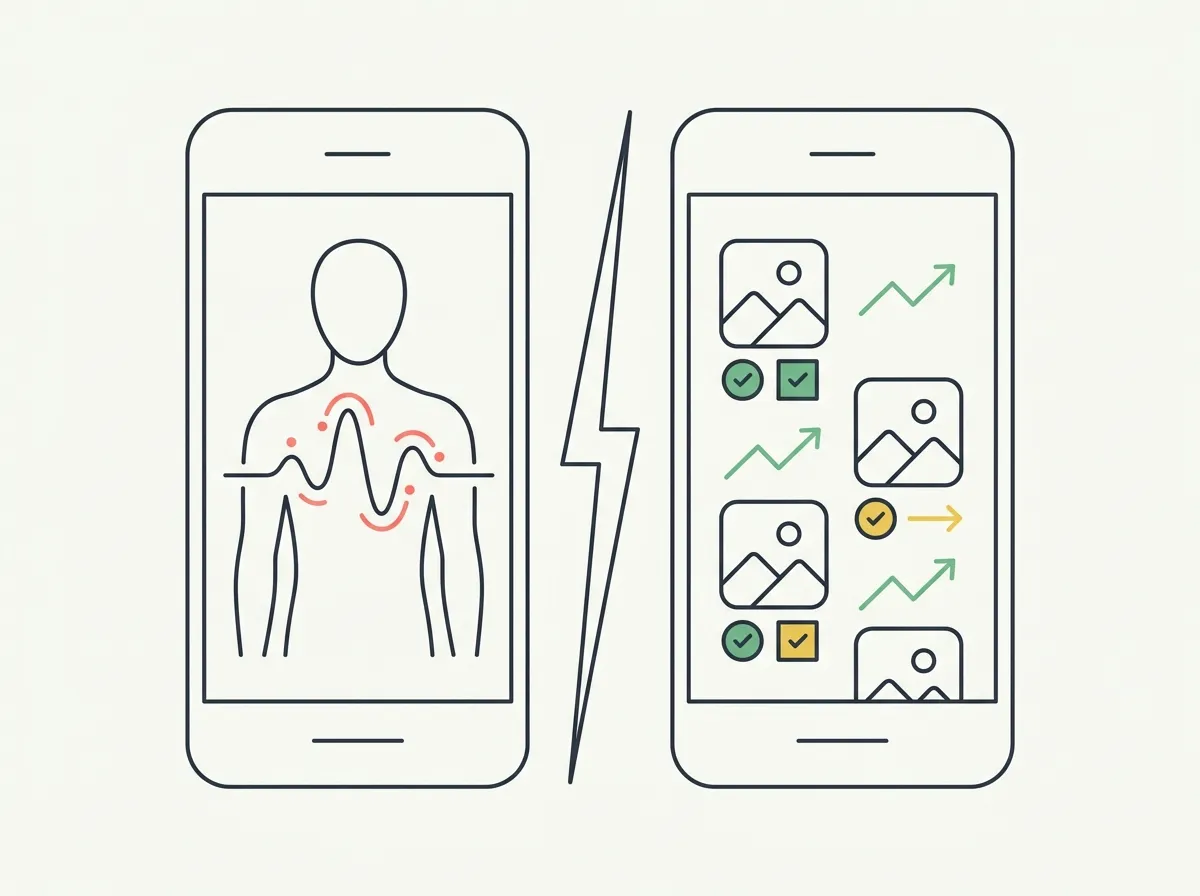
Quick answer: Spren is a quick body-composition scan — point your camera, get body fat and BMI. GainFrame is a scored photo timeline — every check-in gets a physique score, body fat, FFMI, and 12 muscle ratings, compared across months. Both estimate from images. Pick Spren for a fast number; pick GainFrame if the question is whether your training is working.
We reviewed Spren on its own and the verdict holds: if you want a quick scan and a number, Spren works. This post answers the follow-up question readers keep asking — how it stacks against GainFrame when both live on the same phone.
The comparison is unusually direct. Both are iOS apps. Both estimate body composition from your camera. Neither needs hardware. The difference is entirely in what happens after the estimate.
What does Spren do well?
Spren's design goal is speed to a reading: scan, get body fat %, BMI, and related metrics, done. Around 1,500 App Store ratings at ~4.7 say the flow works. It's aimed at general fitness users — the person who wants a periodic composition check without adopting a photo habit.
The honest caveats from our review: its DEXA-comparable accuracy claims are vendor-published rather than independently validated, and the app is a readout, not a record — there's no physique timeline, no muscle-level detail, nothing that shows where change happened.
What does GainFrame do differently?
GainFrame assumes the number alone was never the point. Every photo becomes a scored check-in — body fat %, FFMI, a 1–100 physique score, 12 muscle-group ratings — stacked into a timeline you can compare across.
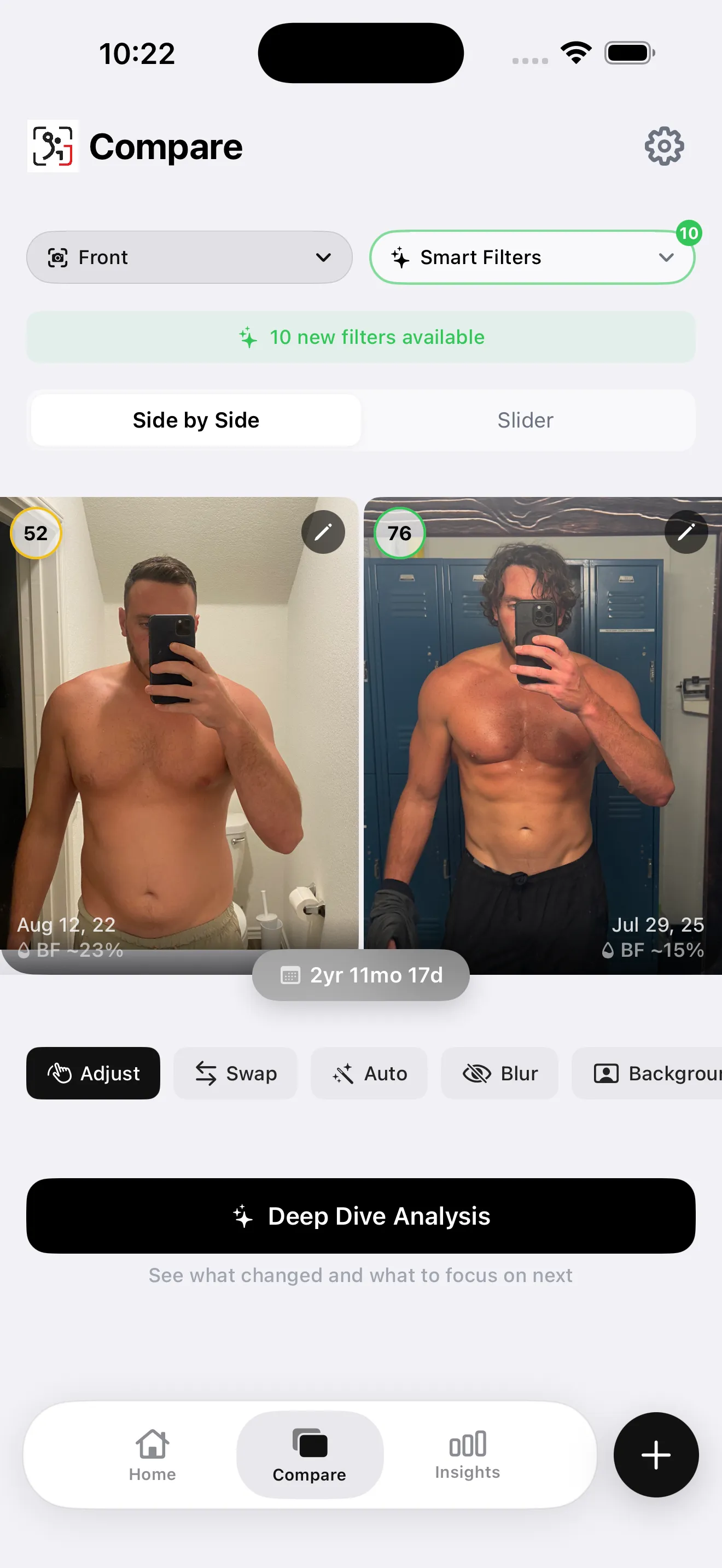
The comparison view: two check-ins, auto-aligned, with the deltas quantified — the question a single scan can't answer.
Point it at your camera roll and on-device AI backfills months of existing gym photos into the record. Photos are analyzed by AI but never stored on a server.
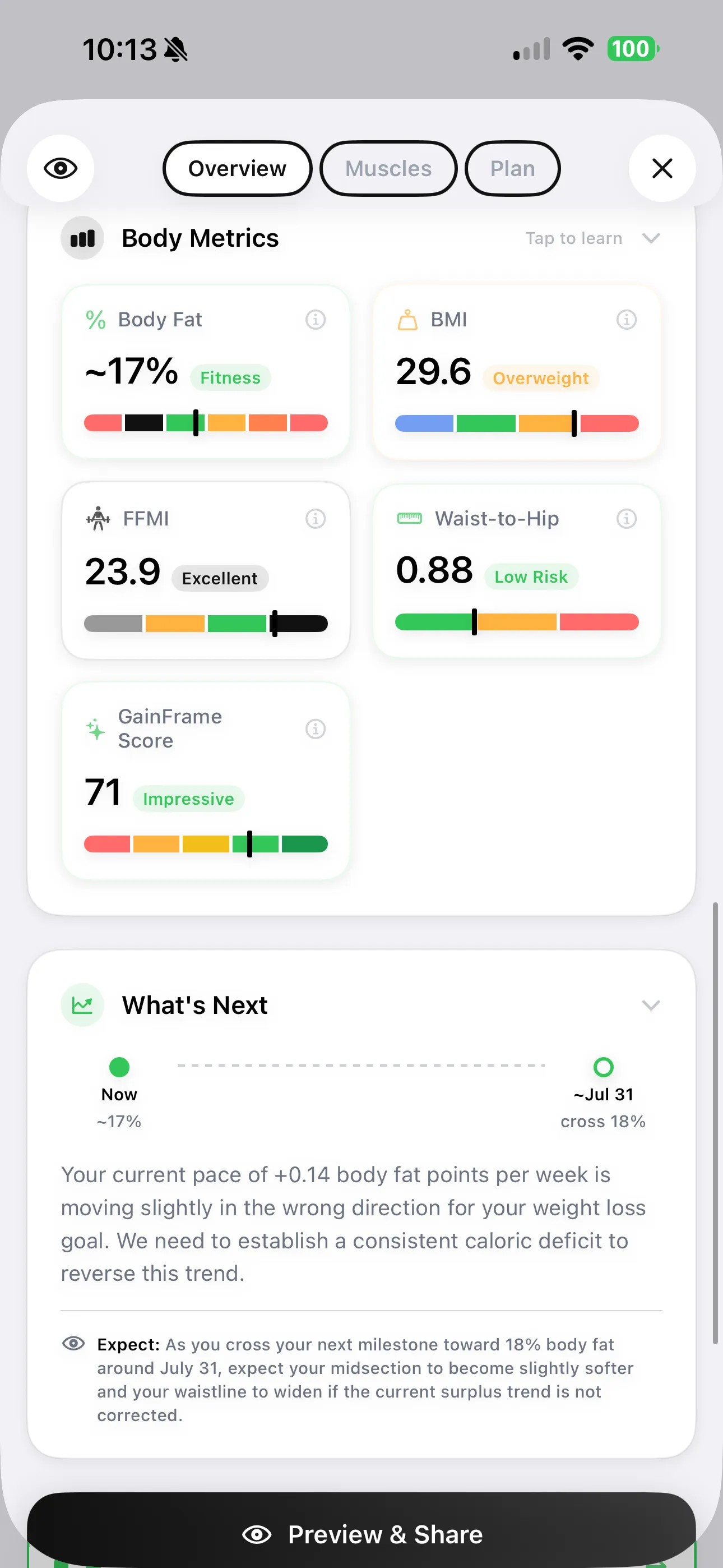
Beyond the number: FFMI, proportions, and where the body-fat trend is actually heading.
Caveats, equally honest: iOS only, 25 photos on the free tier, and its numbers are estimates from images — same fundamental class as Spren's, differently applied.
Spren vs GainFrame: feature comparison
| Feature | Spren | GainFrame |
|---|---|---|
| Core output | Body fat + BMI reading | Scored photo timeline |
| Body fat estimate | + FFMI + 1–100 score | |
| 12 muscle-group ratings | Every check-in | |
| Photo before/after comparison | Auto-aligned + deltas | |
| Camera-roll import | Auto pose-sorted | |
| Workout integration | Hevy | |
| Audience | General fitness | Lifters / recomp |
| Pricing | Free + subscription (check listing) | Free tier; $5.99/mo or $39.99/yr |
| Platform | iOS | iOS |
Which should you use?
Choose Spren if: you want a periodic body-composition reading with minimum ceremony, and you'd never build a photo habit anyway.
Choose GainFrame if: you train with intent and the question is "is it working?" — muscle-level scoring, photo comparisons, and the imported history answer that; a standalone number doesn't.
Unlike most pairings we cover, running both adds little — they estimate the same thing from the same camera. Pick by the question you actually ask.
Frequently asked questions
What is Spren?
Spren is an iOS app that uses your phone camera as a body composition scanner — a quick scan returns body fat percentage, BMI, and related metrics, with marketing that positions results as comparable to DEXA. It grew out of camera-based biometrics technology and is aimed at general fitness users who want a fast reading without hardware.
Is Spren accurate?
Spren's estimates are camera-based, so the honest framing is the same as every photo method: reasonable agreement with clinical methods under good conditions, with lighting and positioning affecting results. Its DEXA-comparable claims come from the vendor rather than independent labs. Treat readings as trend data, and keep scan conditions consistent.
Which is better for lifters, Spren or GainFrame?
GainFrame, in most cases — not because the estimate is magically better, but because lifters need more than a number. GainFrame scores 12 muscle groups, tracks FFMI, compares photos side by side, and imports camera-roll history. Spren suits people who want a quick composition reading without building a photo timeline.
Can I use Spren and GainFrame together?
You can, but there's more overlap here than in most pairings — both estimate body composition from your phone camera. Running both mainly gives you a second opinion on body fat. Most people pick based on the question they ask more often: "what's my number?" (Spren) or "is my physique changing?" (GainFrame).
Do Spren and GainFrame both have free versions?
Both are free to download with paid tiers. GainFrame's free tier includes AI scoring for 25 photos with no account required; Pro is $5.99/month or $39.99/year. Spren's free and paid feature split has changed over time — check the current App Store listing before deciding.
More than a number
GainFrame turns every photo into a scored check-in — body fat, FFMI, physique score, 12 muscle ratings — and shows exactly what changed between any two. Free to start on iOS.
Download GainFrame Free