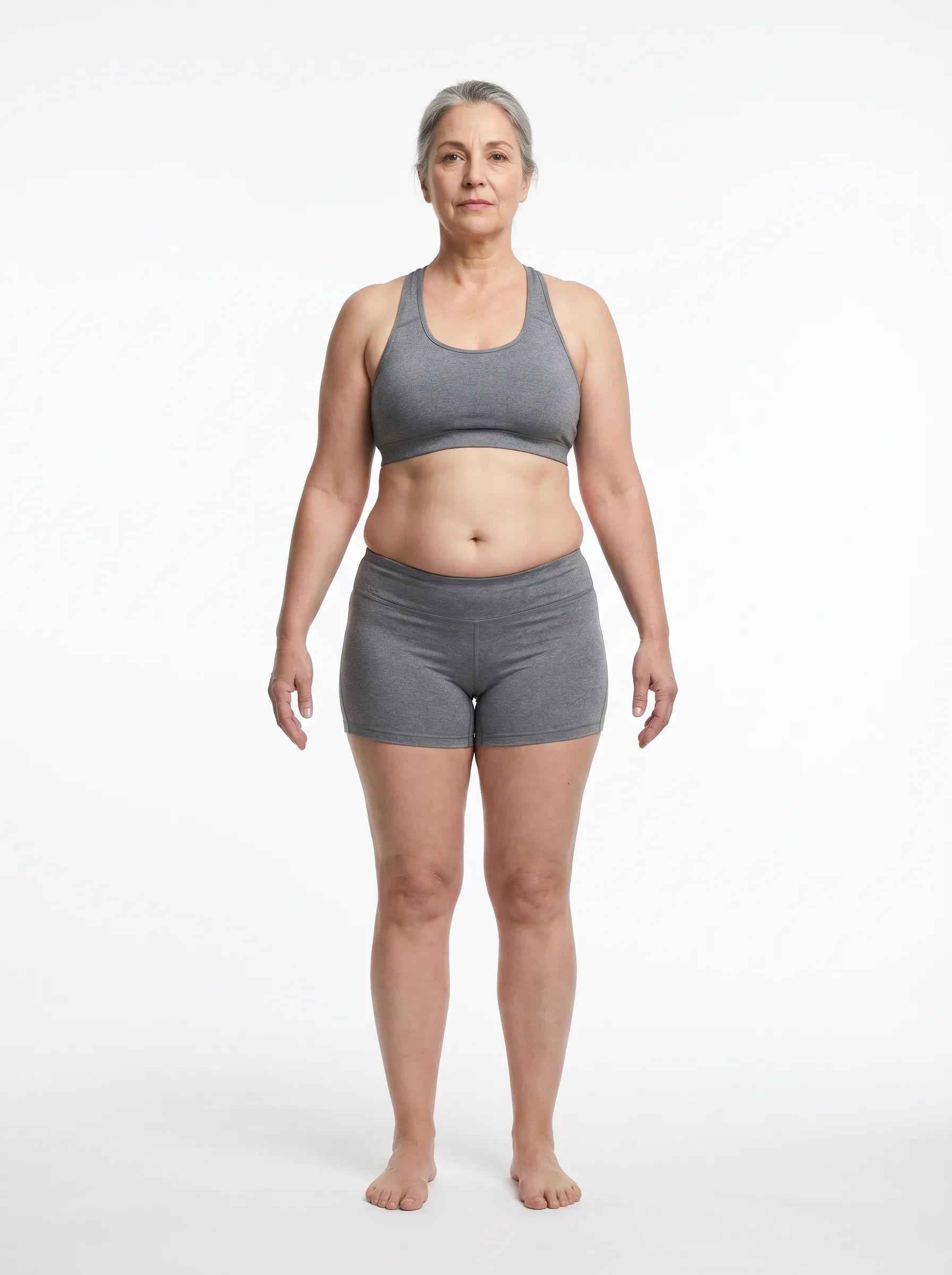
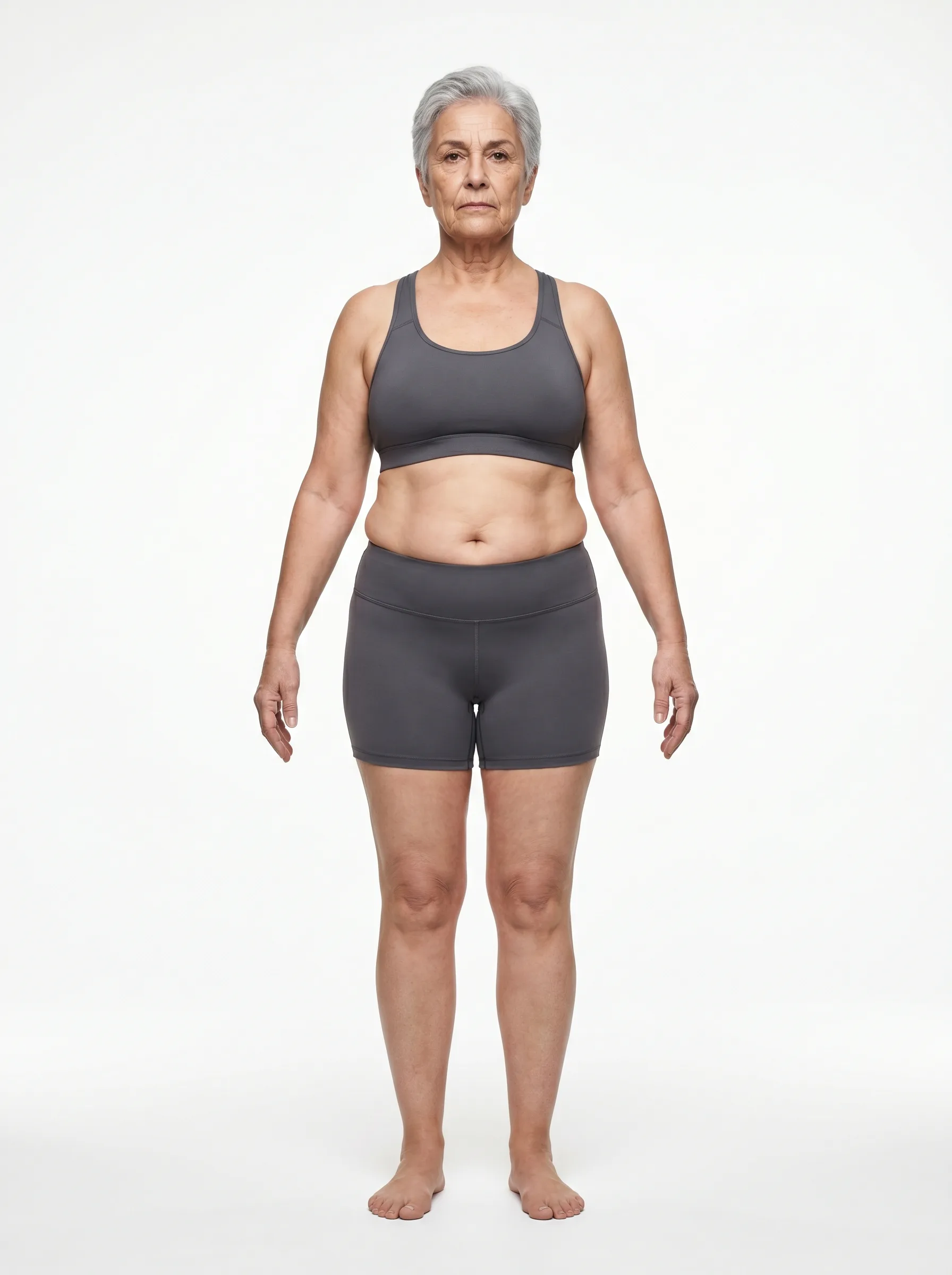
At 35% body fat, softness is the dominant visual note: a rounded stomach, full hips and thighs, and a fuller face. Clothes size is set by the hips or waist, and muscle tone doesn't show at rest anywhere.
35% is past the ACE threshold where health risk starts to build for women — but it's also a starting point with unusually fast early returns. The first two months of consistent habits produce changes that are visible weekly.
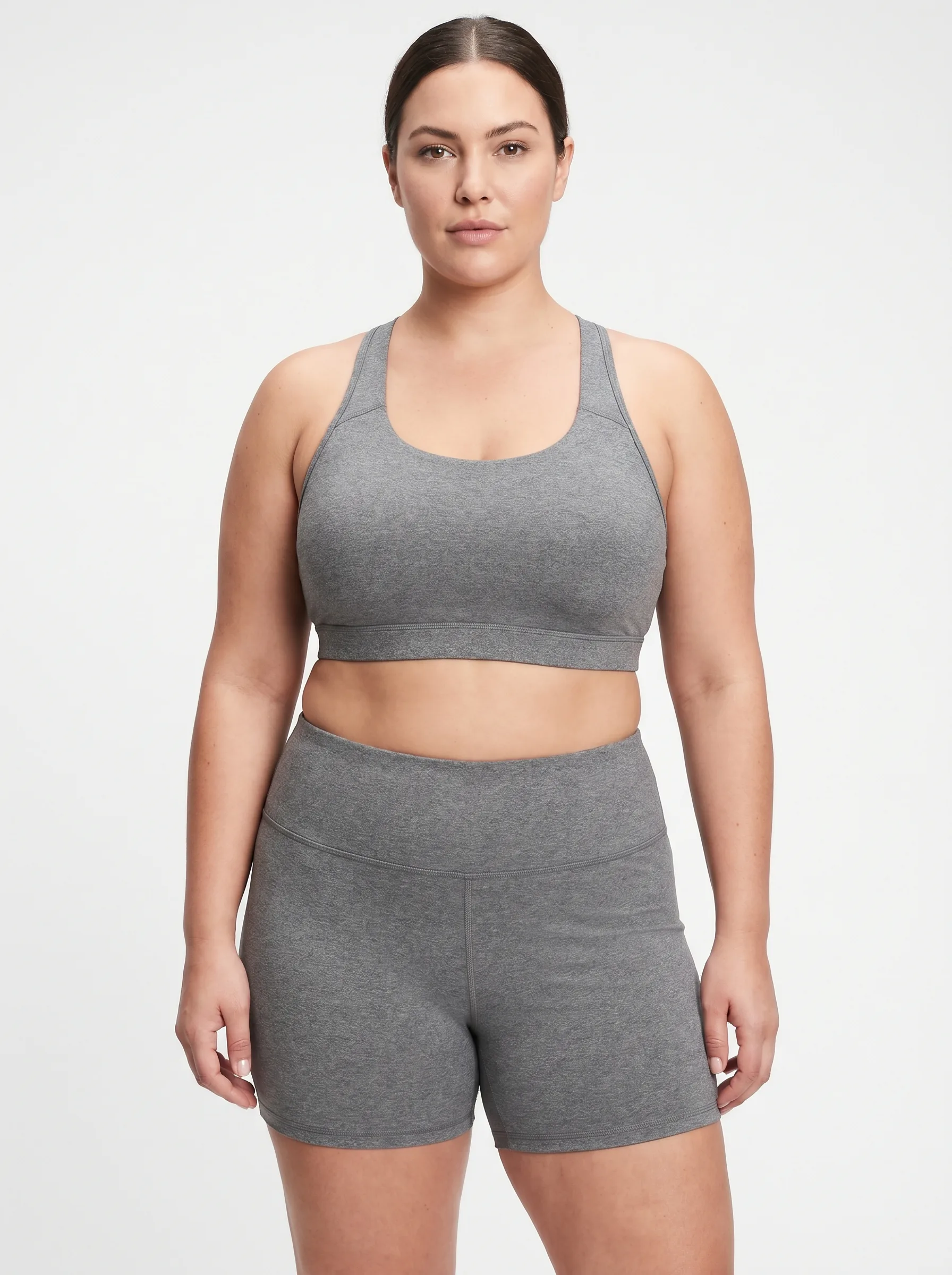
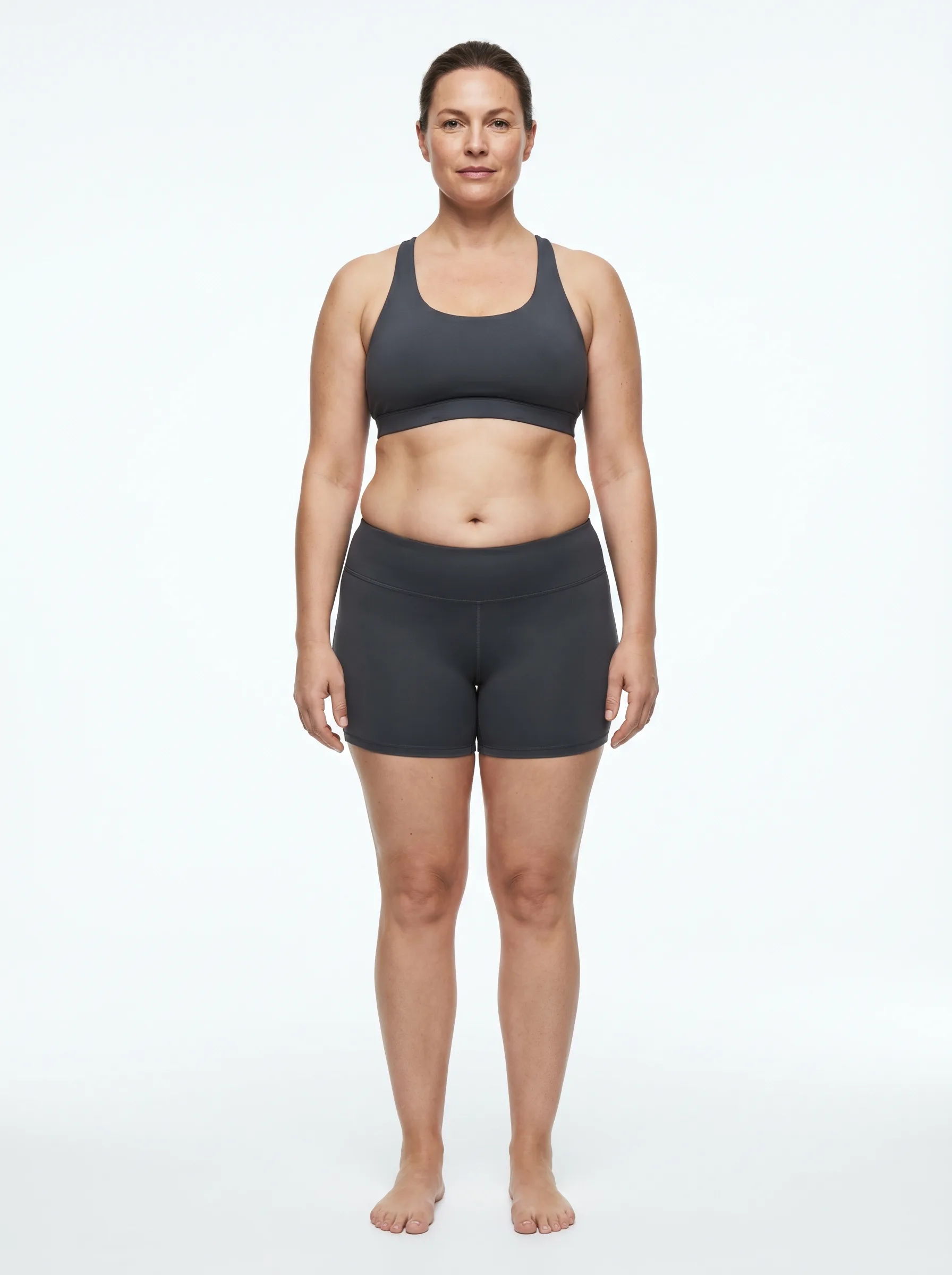
35% falls between the visualizer's 32% and 37% reference frames, closer to the 37% look. Both are shown; the by-age grid uses the 37% reference.
What you can see at 35% body fat
- Rounded stomach that shows through fitted clothing
- Full hips, thighs, and upper arms with a soft texture
- Waist definition is minimal; torso reads as one width
- Fuller face and neck
- Bra-line, back, and underarm fat are established
35% body fat by age (women 20s–60s)
The same body fat percentage looks different at 25 and at 60 — skin elasticity, muscle mass, and fat distribution all shift with age. These references show the 37% frame across five decades.
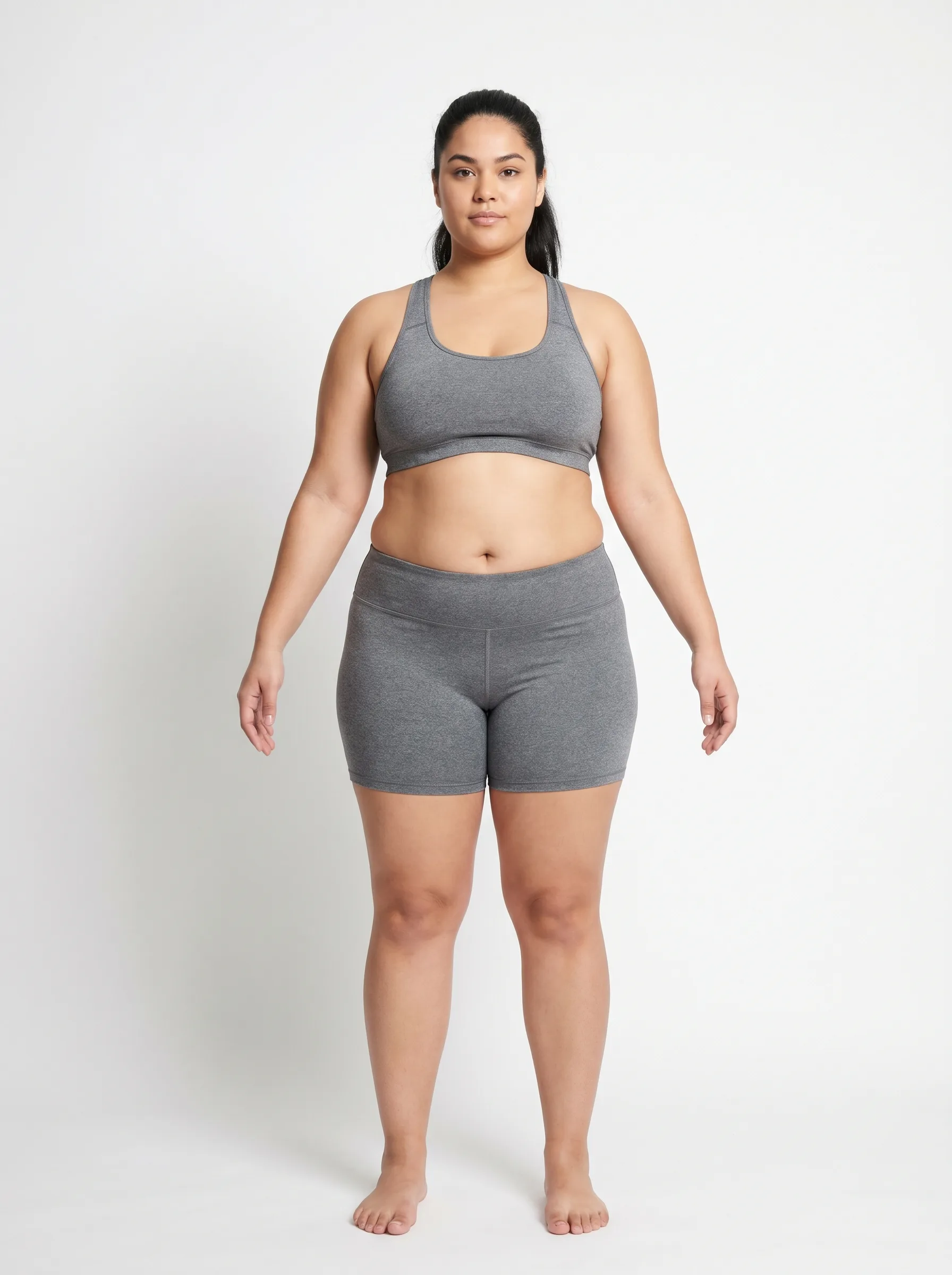
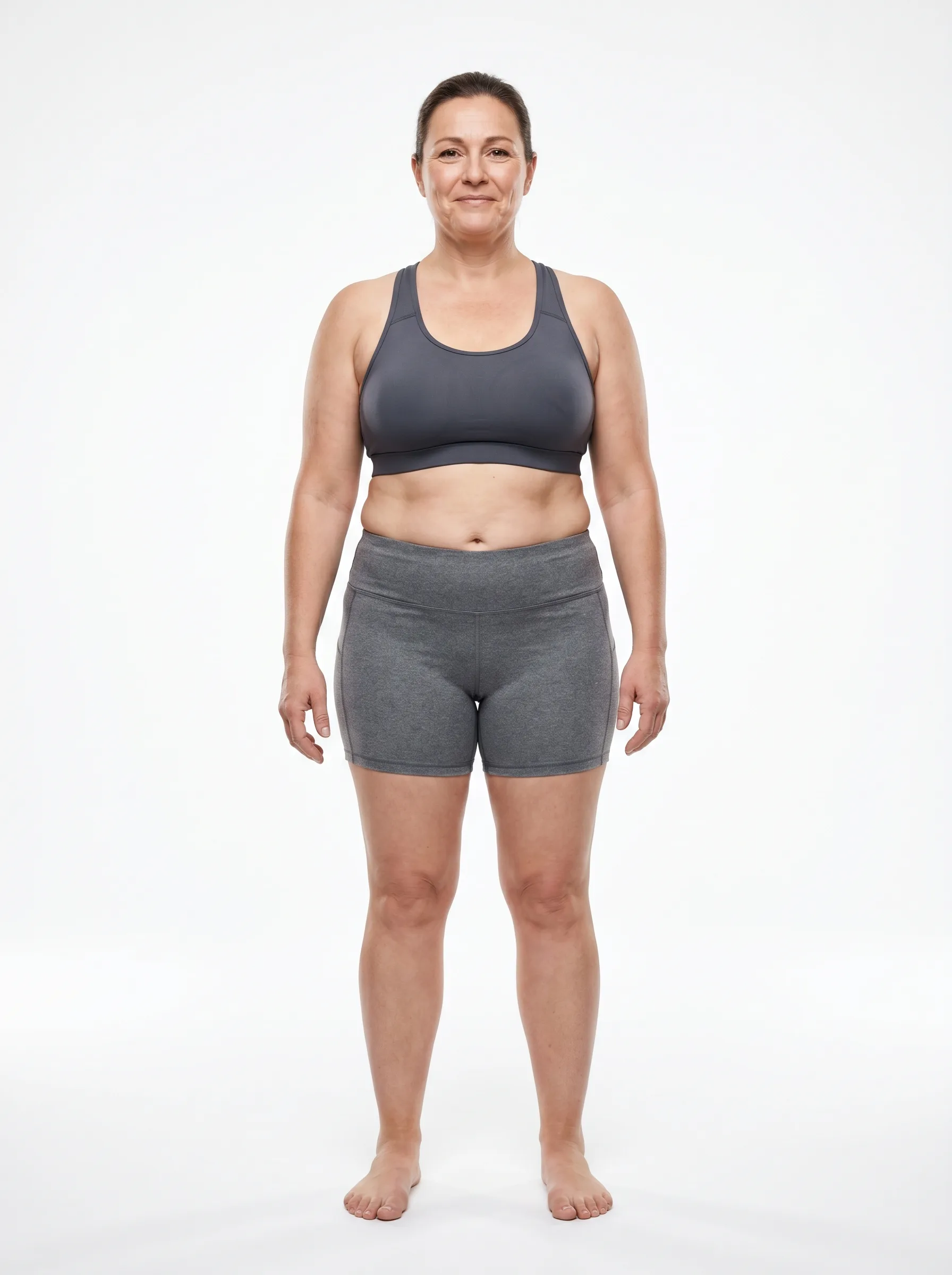
Want to explore every percentage and age combination interactively? Use the free body fat visualizer.
Where 35% sits on the scale
ACE marks 32%+ as the obese range for women, so 35% sits a few points inside it. As with men, the practical concern is visceral fat and its downstream effects on blood sugar and blood pressure — a waist measurement over 35 inches is the simplest flag worth acting on. Small, sustained changes move these markers quickly.
How to check your own body fat percentage
- AI photo estimate → Upload one photo, get a directional body fat number in seconds. Free, one scan per day, no signup.
- U.S. Navy tape-measure calculator → Neck, waist, and hip measurements — validated to roughly ±3% and perfectly repeatable for tracking change.
- AI body transformation → See what a year of consistent training could look like rendered on your own photo.
Frequently asked questions
Is 35% body fat bad for a woman?
It's a few points into the range where health risk climbs (ACE marks 32%+ as obese for women), but far from an emergency. Fat stored on hips and thighs — the typical female pattern — carries less metabolic risk than belly fat. A sustained modest deficit moves most women back under 32% within two to three months.
Where do women lose fat first when cutting from 35%?
Usually face and waist first, hips and thighs last — the reverse of the order it arrived. This is genetic and can't be spot-targeted. Progress photos catch the early face-and-waist changes weeks before the scale convinces you anything is happening.
Do I need a gym to start from 35%?
No. The deficit does the fat loss, and walking plus basic home resistance work (squats, hinges, push-ups, rows with bands) protects muscle. A gym helps later, when heavier progressive loading matters more. Start with food, steps, and photos.