Deload Before You Break

Recovery comic · June 27, 2026 · 6 slides

Deloading is a crucial strategy to prevent physical breakdown and overcome training plateaus. By recognizing warning signs like dropping performance and joint aches, lifters can strategically reduce their training volume. This intentional pullback acts as a ramp to restart progress and return to lifting heavier weights safely.

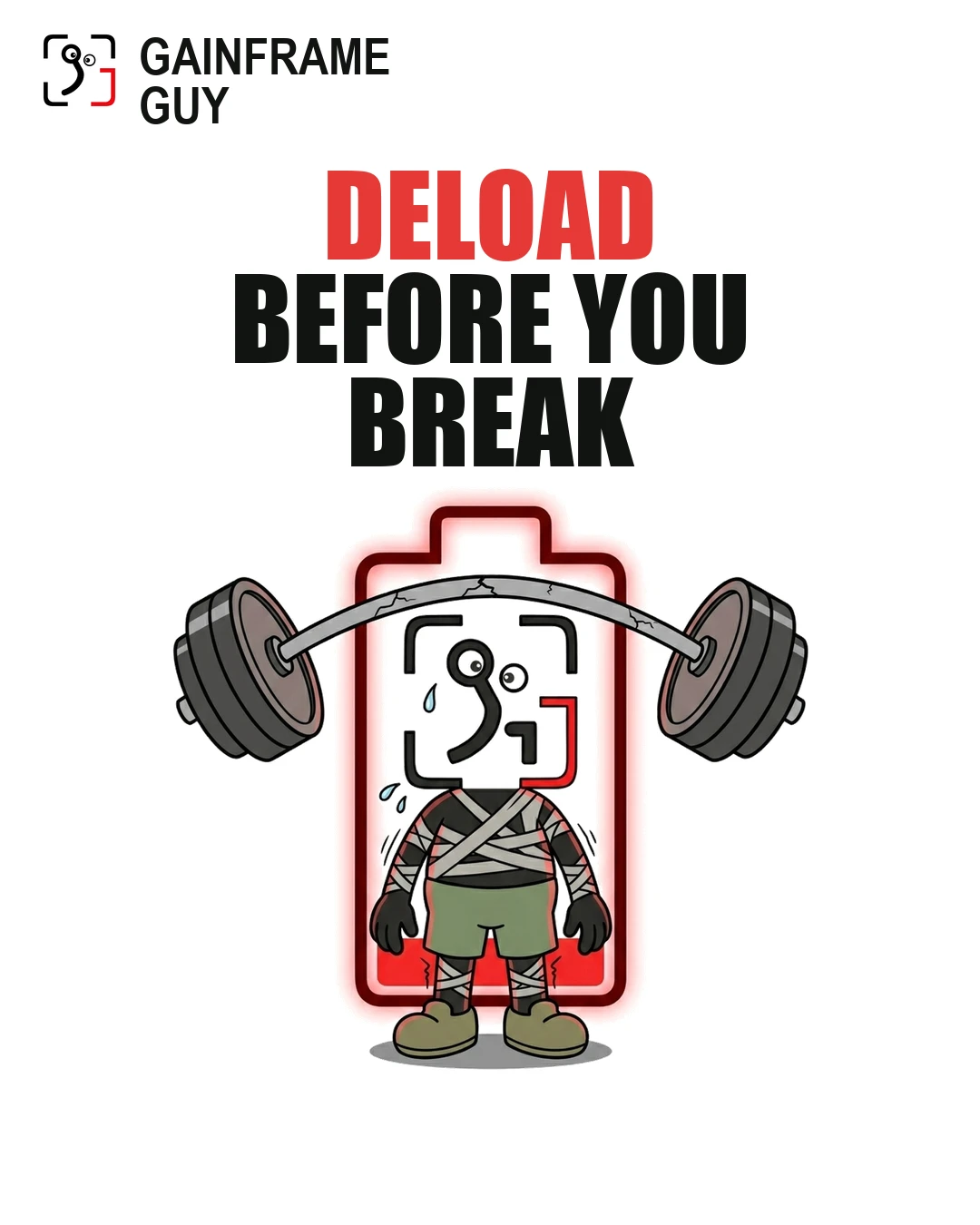
The GainFrame mascot stands bandaged and struggling under a bending barbell in front of a low battery symbol, illustrating the need to deload before experiencing physical breakdown.
Gainframe Guy. Deload before you break.
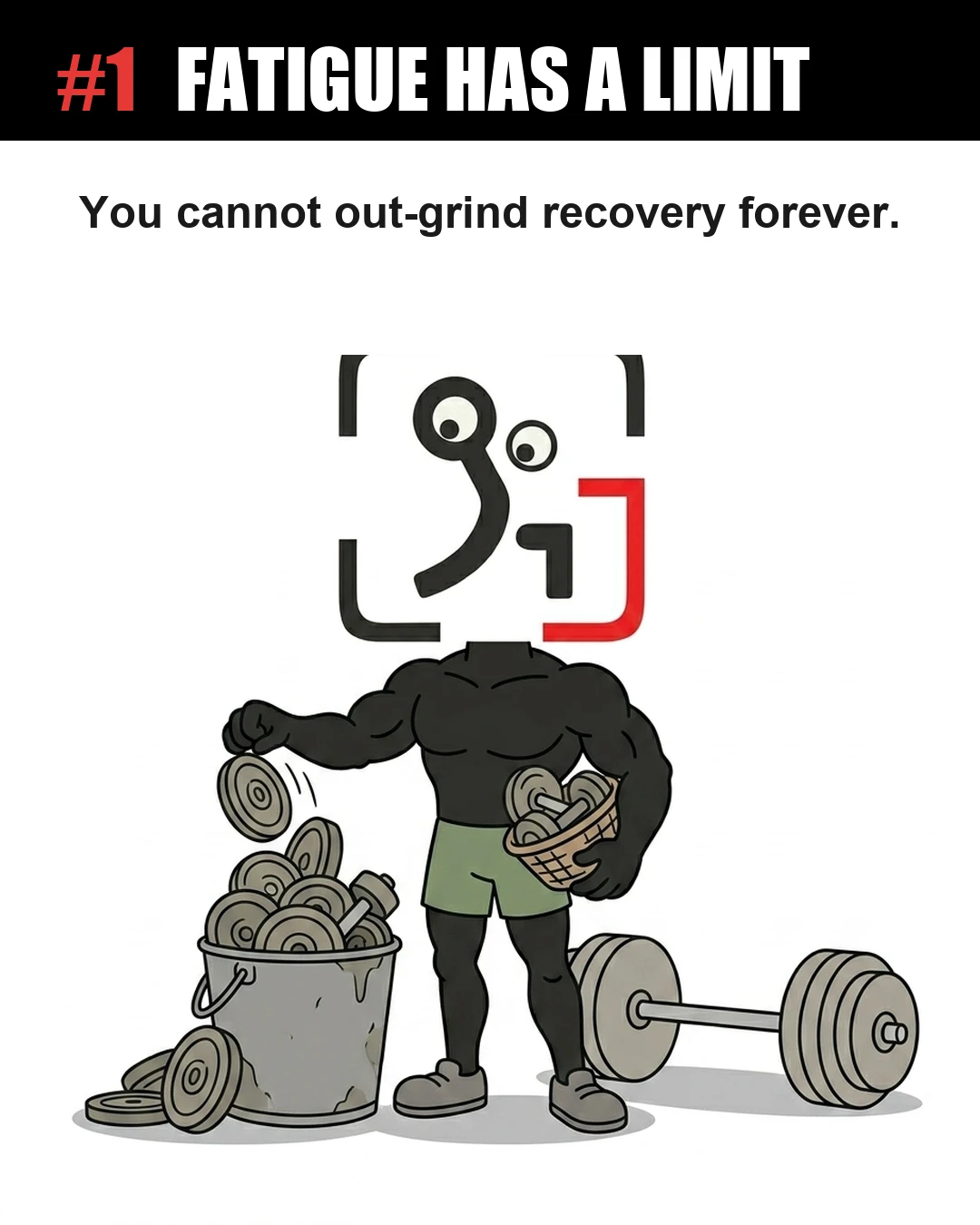
The GainFrame mascot fills an already overflowing bucket with weight plates, representing how fatigue accumulates and cannot be out-recovered indefinitely.
#1 Fatigue has a limit. You cannot out-grind recovery forever.
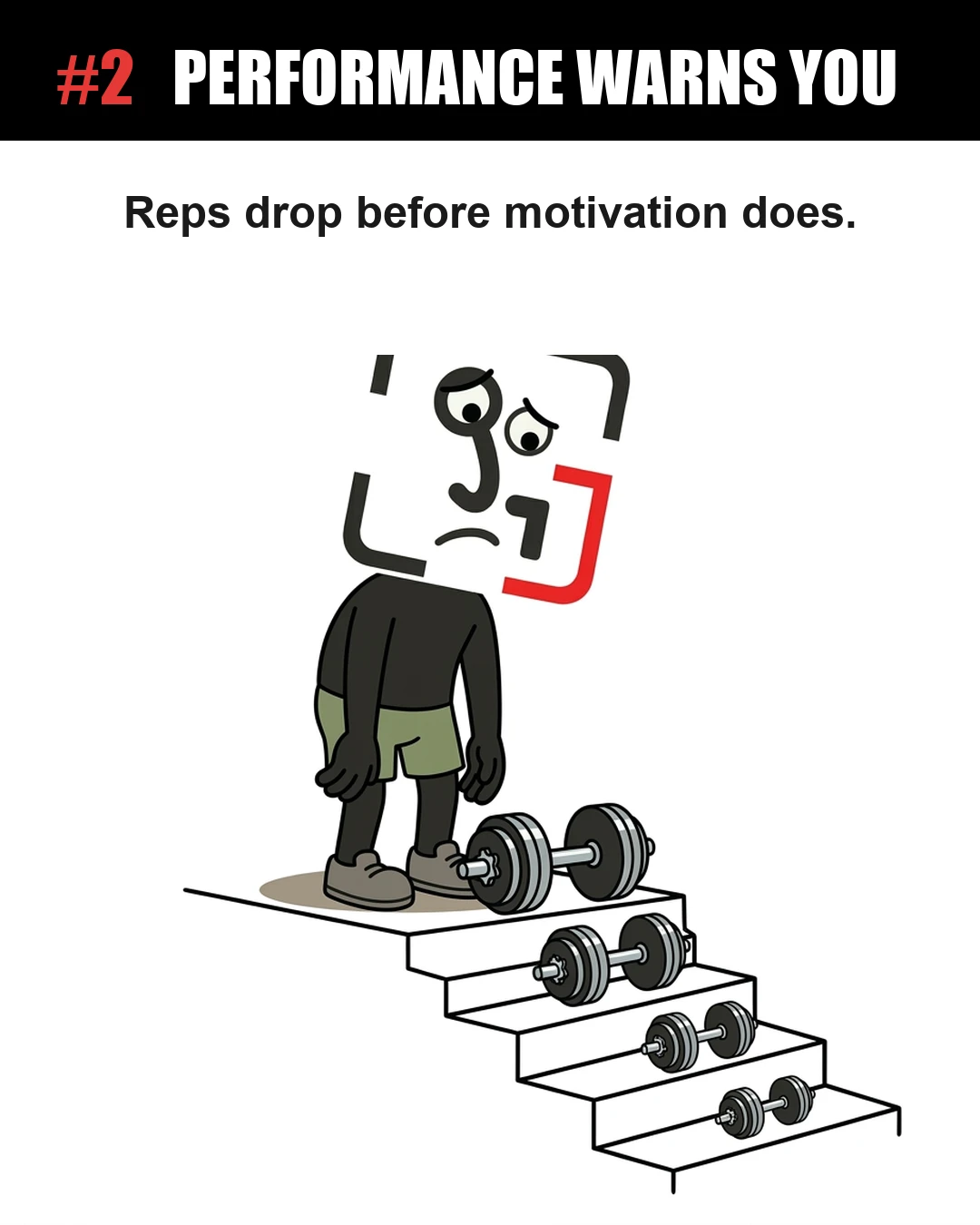
The GainFrame mascot stands looking exhausted at the top of a staircase of shrinking dumbbells, showing that a drop in performance is an early warning sign of overtraining.
#2 Performance warns you. Reps drop before motivation does.
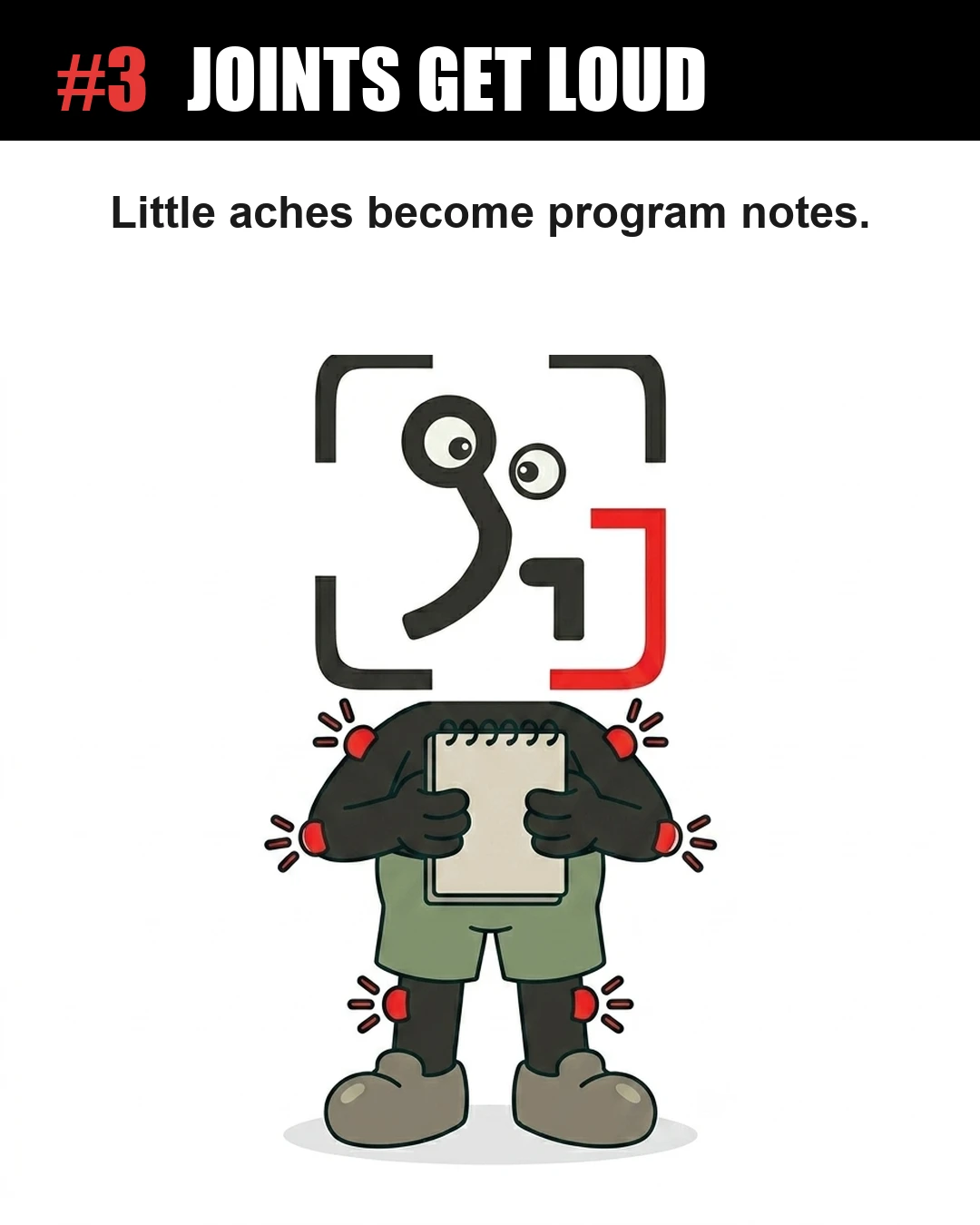
The GainFrame mascot holds a notepad with red glowing indicators highlighting joint pain, illustrating that persistent aches are signals to adjust your training program.
#3 Joints get loud. Little aches become program notes.
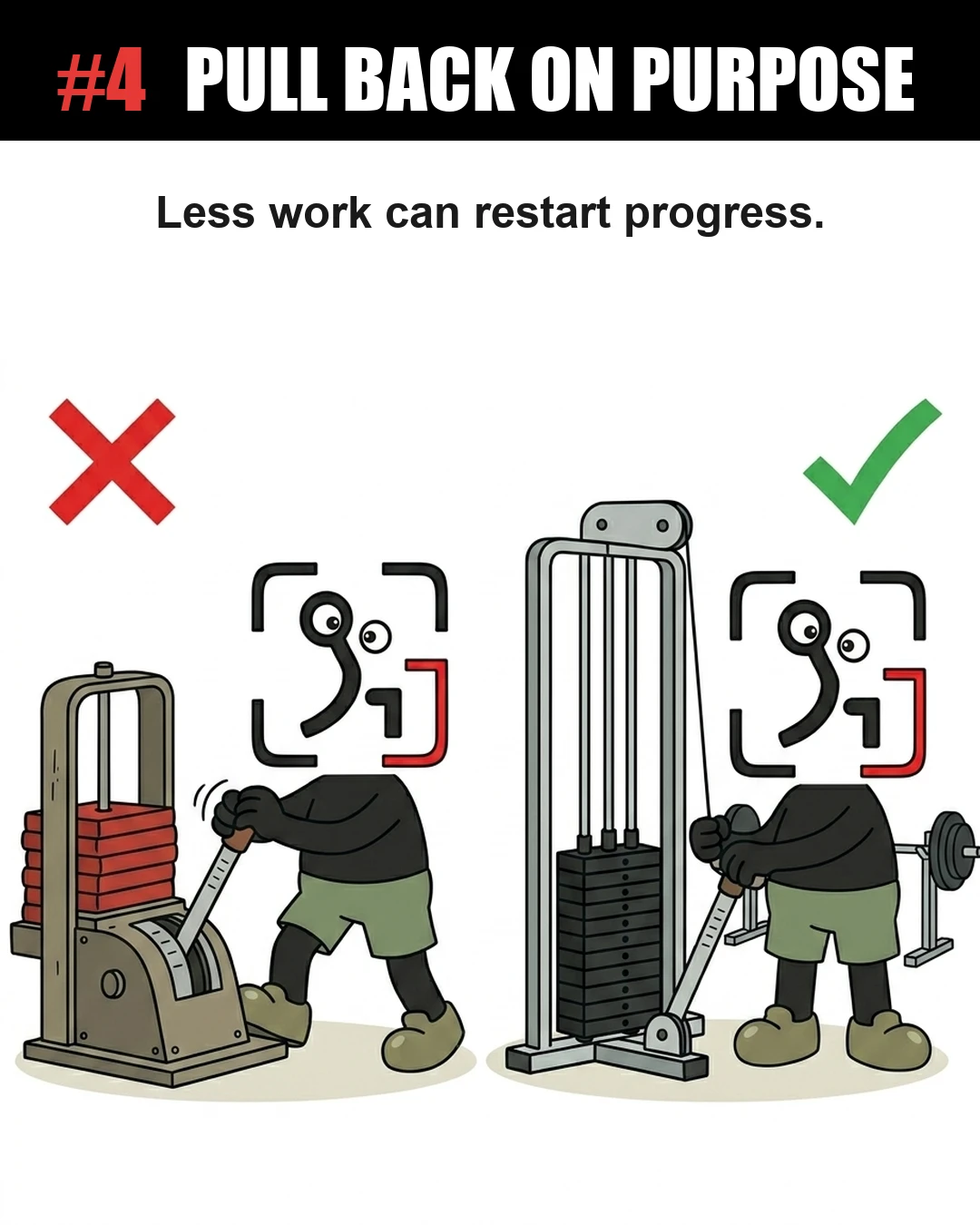
The GainFrame mascot is shown next to a red cross pushing a heavy lever and a green checkmark pulling a lighter cable lever, demonstrating that reducing training volume can restart progress.
#4 Pull back on purpose. Less work can restart progress.
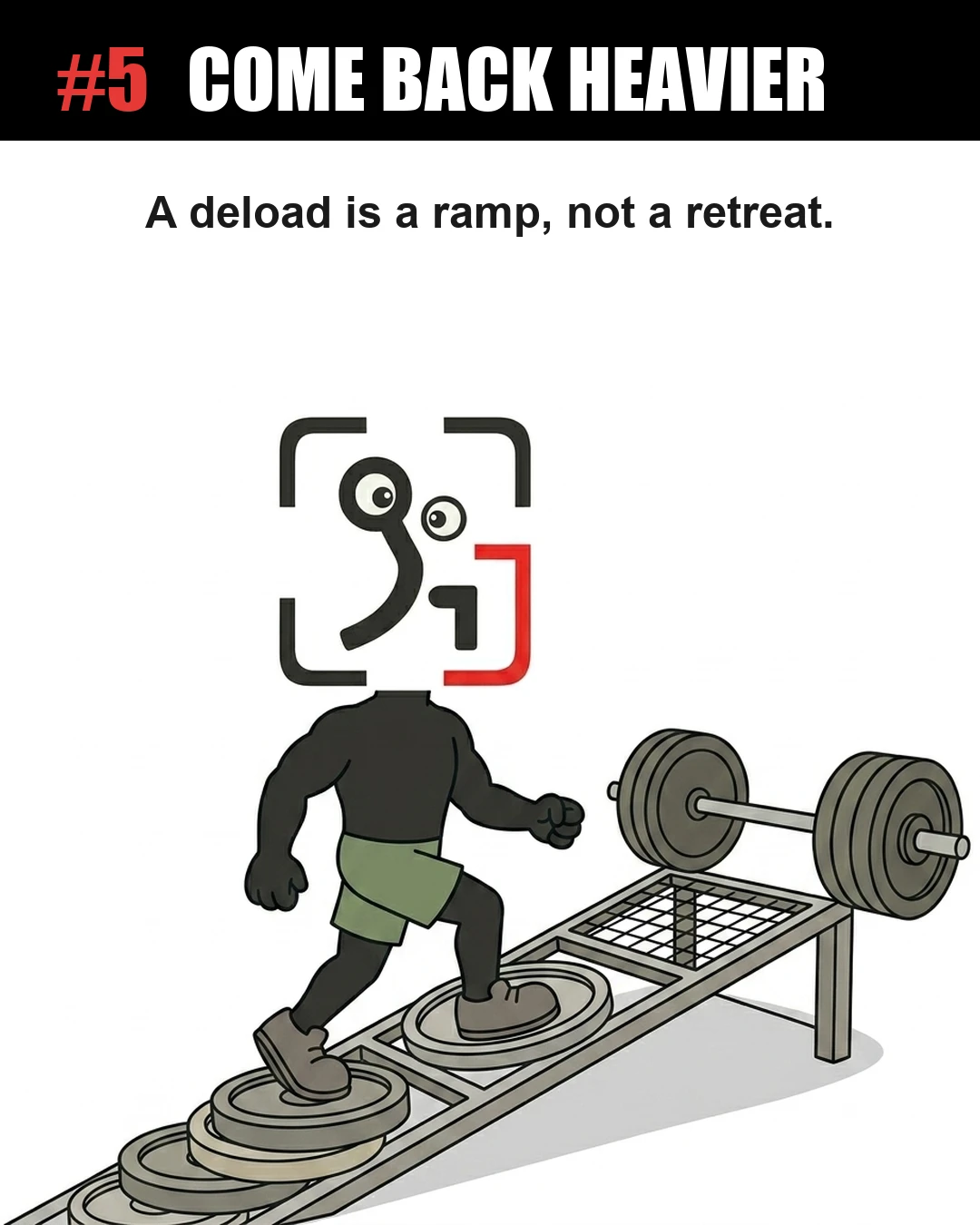
The GainFrame mascot walks up a ramp made of weight plates toward a heavy barbell, showing that a deload is a strategic ramp-up to return stronger rather than a retreat.
#5 Come back heavier. A deload is a ramp, not a retreat.

Like the comics? The app does the tracking.

GainFrame turns progress photos into body fat estimates, muscle scores, and honest trend lines — the stuff these comics keep nagging you about. Free to start on iOS.
Download GainFrame Free