
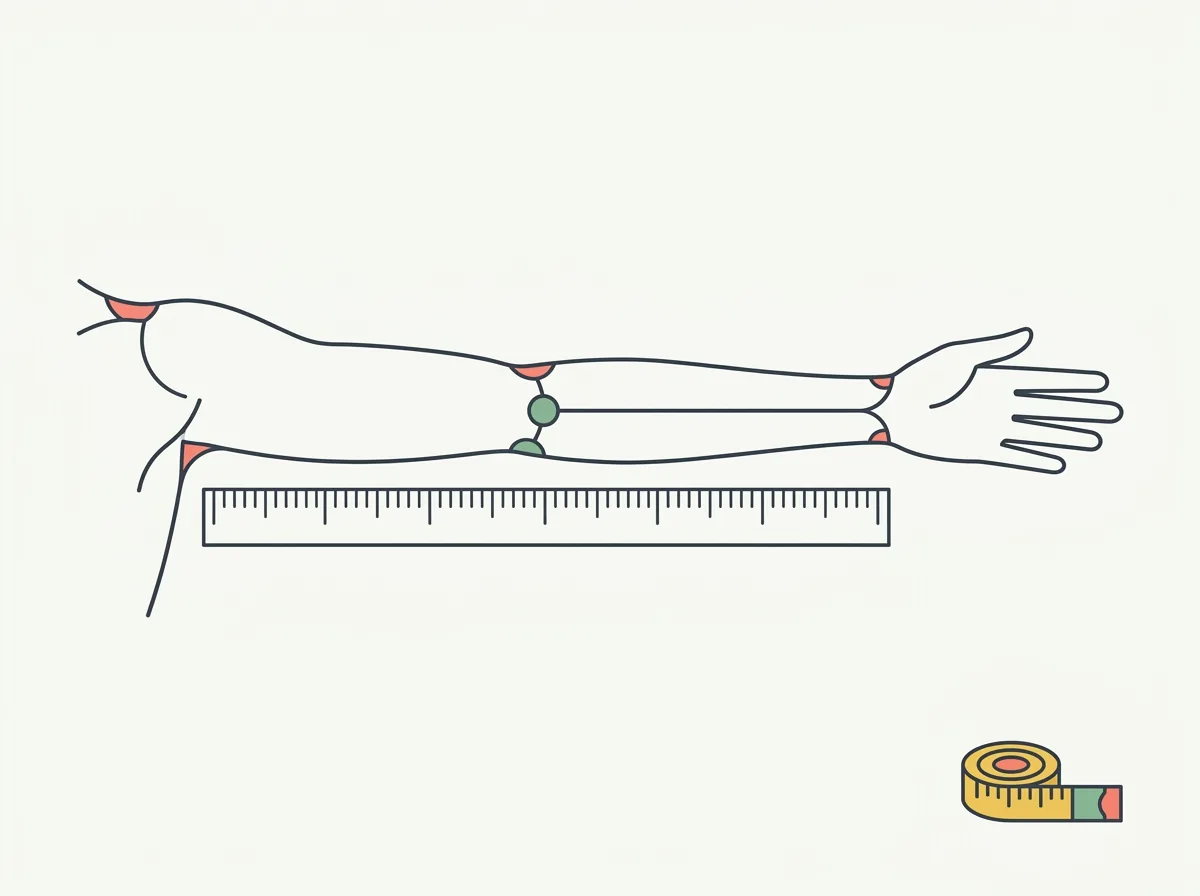
Quick answer: Bicep length can mean upper-arm length or the visible length of the biceps muscle belly. Neither is the same as arm circumference. Measure shoulder to elbow for upper-arm length; use a tape around the arm for size. A finger-gap check cannot give a validated measurement of muscle length.
You search for bicep length and find an arm-size chart. The numbers look precise, but they describe the distance around an arm. They cannot answer how long your upper arm is or why a flexed biceps has a particular shape.
The first useful step is naming the dimension. Then you can choose a repeatable measurement instead of comparing incompatible numbers.
What does bicep length actually mean?
| Term | What you are measuring | What the result can tell you |
|---|---|---|
| Upper-arm length | A defined shoulder landmark to the elbow | Length of the arm segment using that protocol |
| Biceps muscle-belly length | The contractile portion of the muscle, excluding its tendons | An anatomical dimension requiring a specified method and joint position |
| Arm circumference | A tape loop around the upper arm | Total girth at that point, including muscle, fat and other tissue |
| Visible elbow gap | The space that appears between a flexed muscle contour and elbow crease | A rough visual observation, affected by position and how you identify the edges |
The biceps has two heads with tendons at the shoulder and an attachment on the radius near the elbow. Its visible bulge is only part of that structure. The anatomical distinction is explained in NCBI's biceps muscle review. Measuring the skin above a muscle is not the same as locating its anatomical boundaries.
If you meant size around the arm, go directly to the average bicep size guide. Its circumference comparisons answer a different question.
The cover is a concept illustration; use the landmark-based instructions below for measurement.
How do you measure upper-arm length?
Use an assistant and a nonstretch measuring tape. The CDC NHANES anthropometry manual describes an upper-arm measurement using bony landmarks and a bent elbow. This is a simplified explanation of that protocol, not a clinical assessment.
- Stand upright with your upper arm at your side. Bend the elbow to a right angle with your palm facing upward.
- Have your helper locate the posterior shoulder landmark described in the manual, at the upper border near the acromion. A shirt seam is not a substitute.
- Run the tape down the middle of the back of the upper arm to the bony tip of the elbow, called the olecranon.
- Record the side, units and landmarks. Repeat with the same positioning if the tape slipped or a landmark was uncertain.
Call the result upper-arm length in your notes. Do not enter it in an arm-circumference chart or describe it as the measured length of your biceps muscle belly. If an accurate anatomical measurement matters for an assessment, have a qualified professional identify the landmarks.
Does the finger-gap test measure biceps length?
It does not produce a standardized length. The familiar test asks how many fingers fit between the flexed biceps and elbow crease. Finger width differs between people, the crease is not the tendon attachment, and the apparent edge changes with your pose.
You can record what your arm looks like in a consistent pose, but avoid translating a finger count into an exact muscle length or a prediction of training potential. This guide does not provide an ideal gap chart because the sources above do not establish one.
For a repeatable visual record, keep the camera height, distance, arm position and lighting consistent. Include relaxed views as well as any flexed comparison. Our progress-photo guide explains the setup.
Are long biceps better than short biceps?
That depends on what “better” means, and a visual label alone cannot answer it. Aesthetic preferences differ. Performance comparisons need actual exercises, technique and training history. An apparent elbow gap does not measure strength or establish a ceiling for future progress.
Also separate the labels long head and short head from the appearance of a long or short muscle belly. The first pair names parts of the biceps anatomy. Both belong to the same muscle; the names do not classify your whole arm as a long-biceps or short-biceps type.
If your concern is that your arms look small, examine training consistency and comparable measurements before drawing a genetic conclusion. The skinny-arms guide addresses that separate problem.
What should you track if your goal is bigger arms?
Use a measurement that matches the goal. Keep an arm-circumference log with the same tape location, relaxed or flexed state, and relationship to training. Record performance in your program and take comparable photos. Upper-arm length is useful for describing proportions, but it is not a substitute for those progress records.
| Record | Include with it | Avoid comparing it with |
|---|---|---|
| Circumference | Side, tape location, flexed or relaxed state | A differently positioned measurement |
| Photo | Camera setup, pose and date | A closer, pumped or differently lit image |
| Training log | Exercise, technique, load and repetitions | A different movement or range of motion |
You can keep photos in a dated album or use GainFrame to organize visual check-ins. Its photo analysis is an estimate; it does not measure biceps tendon length or replace an anatomical examination.
What else should you know?
Is bicep length the same as bicep size?
No. Bicep size usually refers to circumference, measured around the upper arm. Bicep length may refer to shoulder-to-elbow length or the visible muscle belly. Label the measurement before comparing it with a chart. A circumference value cannot tell you the length of the muscle or the arm segment.
Can I measure my biceps muscle belly with a tape?
A tape can record a surface distance between landmarks you choose, but identifying the actual muscle and tendon boundaries is a separate problem. Do not label a casual skin measurement as a validated muscle-belly length. If you need an anatomical assessment, ask a qualified professional which method is appropriate.
How many fingers should fit below my biceps?
There is no recommended finger count in the measurement sources used here. Finger sizes, elbow position and the visible muscle edge all affect the result. Use that observation only as a description of your pose, rather than a score of arm quality or a prediction of how much progress you can make.
What is a normal bicep length?
A meaningful reference would need to specify the dimension, measurement protocol and population. An average upper-arm circumference is not an average biceps muscle length. This guide does not provide a universal normal or ideal bicep length because those terms are often mixed together in casual comparisons.
Should I measure my arms before or after a workout?
For a circumference or photo log, choose a repeatable condition and keep it consistent. Mixing a relaxed measurement on one day with a flexed post-workout measurement on another makes the comparison harder to interpret. Record the condition alongside the number so you know what changed in the setup.