
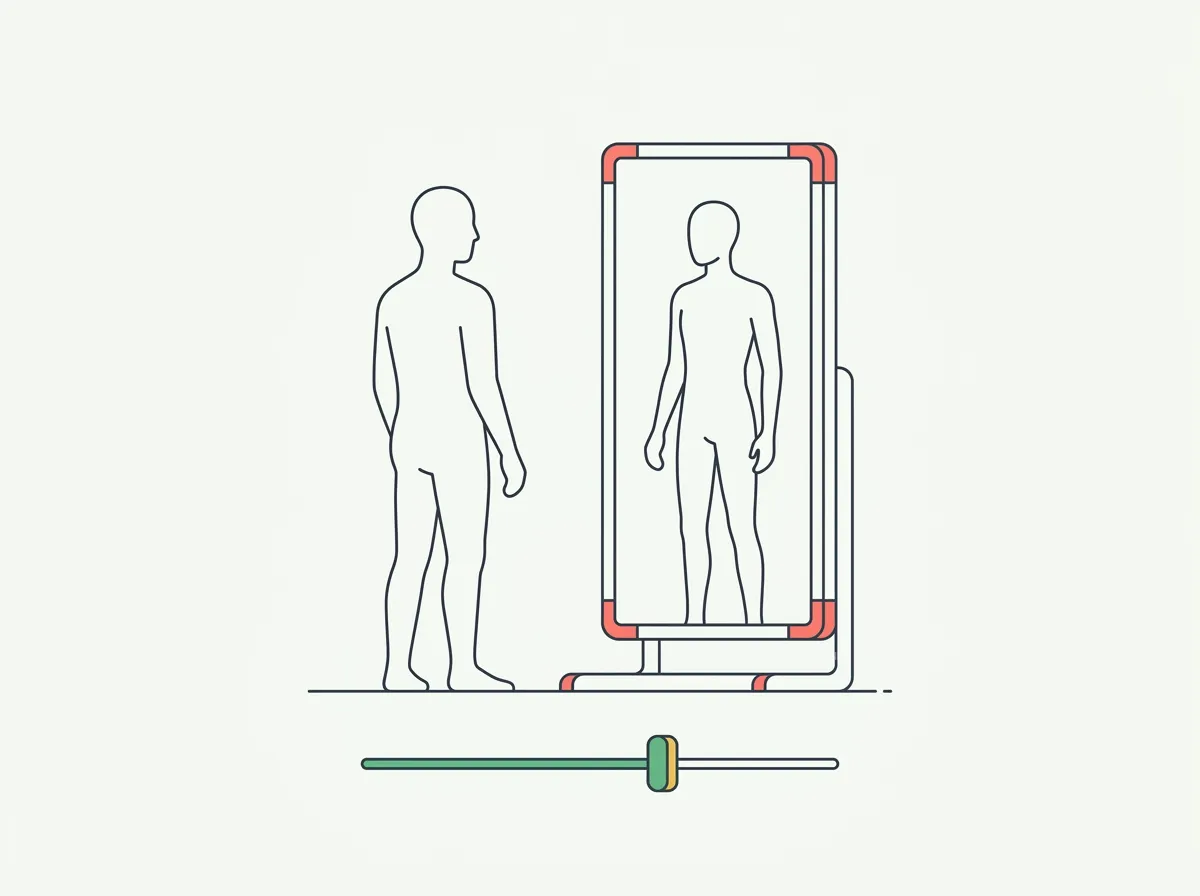
Quick answer: Dropping roughly 10 points of body fat, say 28% to 18%, transforms your face, waist, and definition dramatically. You can see it three ways: our standardized visualizer renders below, the free interactive body fat visualizer tool, or an AI projection of your own body at 3, 6, and 12 months.
It's 12:40 a.m. You caught your reflection getting out of the shower, did the thing where you stand a little straighter and pull in slightly, and now you're in bed typing "what would I look like with less body fat" into your phone. You are not alone, some version of this search runs thousands of times a night.
The problem with most answers is that they're either random transformation photos of strangers with different genetics, or vague prose like "you'd look more defined." Neither shows you anything usable. This post answers the question three concrete ways, from general to personal.
What does dropping 10 points of body fat actually look like?
The images below are standardized, photorealistic AI renders from our body fat visualizer, same build, pose, and lighting, so only body fat percentage changes between images. That's the point: no camera-angle tricks, no pump, no tan. Just the fat.
For any single level on its own page, the body fat picture gallery covers the full scale, 18% body fat on a man is the target level rendered below.
Here's the same man in his 30s at 28%, then 23%, then 18%.
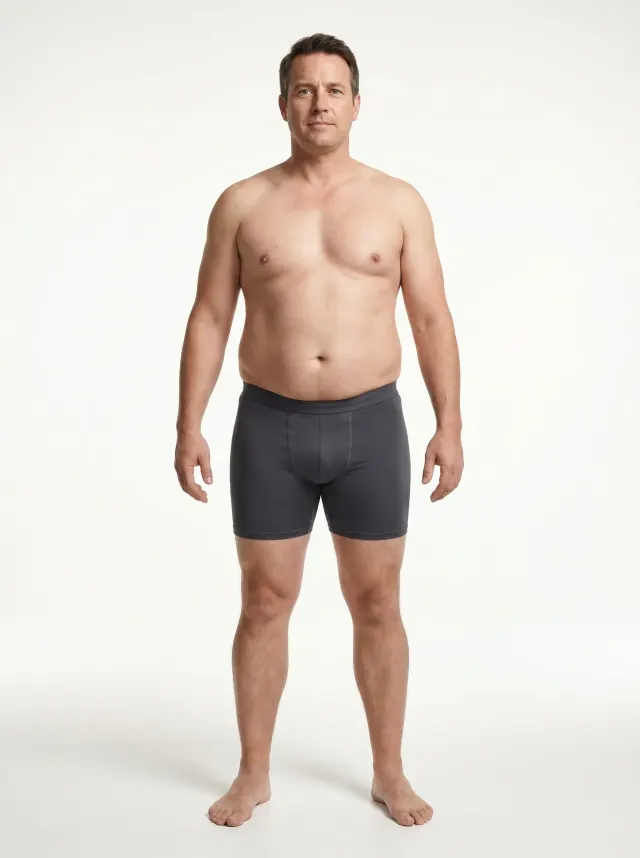
28%, the starting point for a lot of men. The waist is the widest point of the torso, and there's no visible muscle definition anywhere, even though muscle is there underneath.
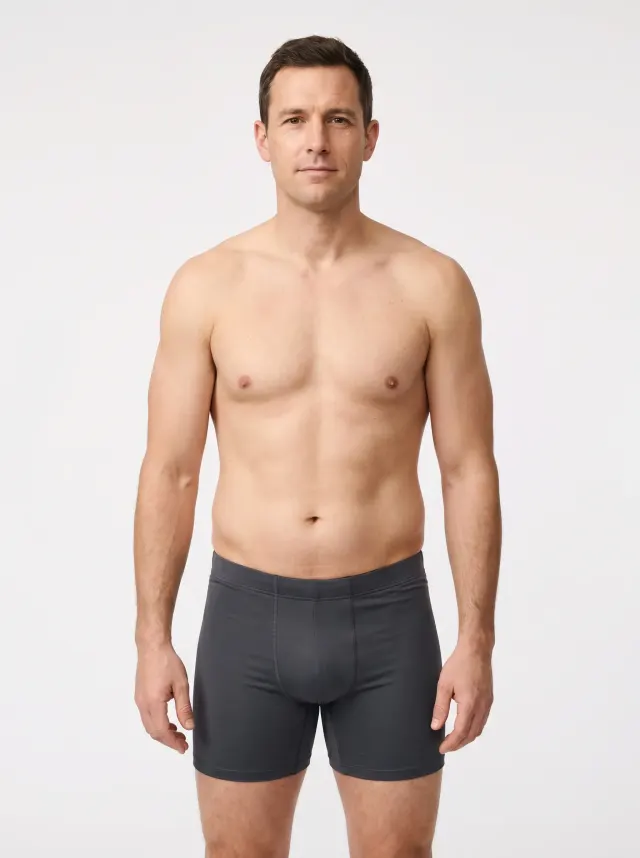
23%, five points down. Honest note: this step is mostly silhouette. The stomach flattens and the face slims, but you still won't see abs or sharp lines. Clothes fit noticeably better before mirrors impress you.
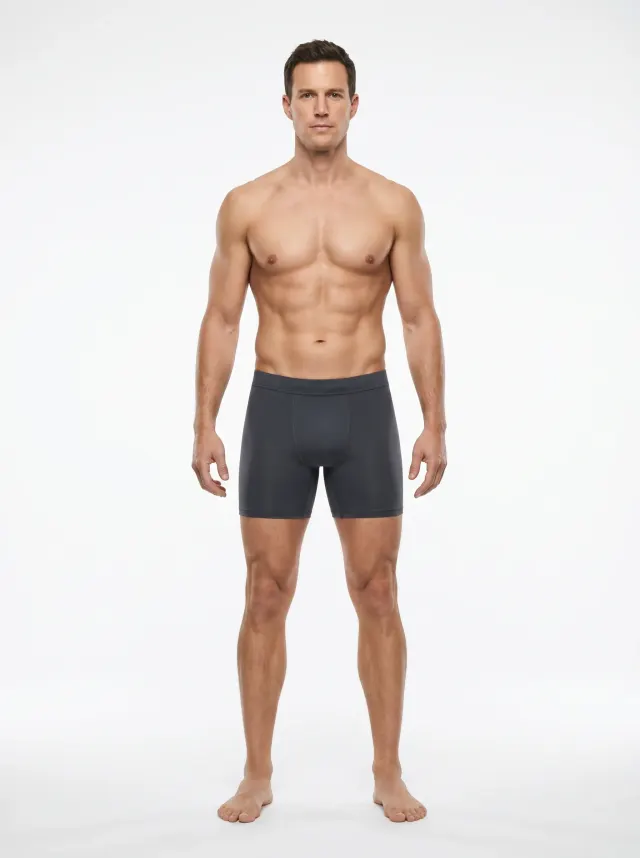
18%, the full 10-point drop. This is where the second five points earn their keep: chest and shoulder shape become visible, the jawline sharpens, and the waist-to-shoulder ratio flips. Still not shredded, abs typically need the mid-teens or below.
Notice the asymmetry: the first 5 points change your outline, the second 5 change your look. That's not a render artifact, it's how fat loss works. The leaner you are, the thinner the remaining layer over visible muscle, so each point buys more definition. Our body fat percentage chart walks the full range with photos.
Want to see it at your age and body fat level?
If you do not know your starting percentage, try the free AI body fat calculator from a photo. Use it as an approximate starting point for the references, not a measured baseline.
The three images above are one man, one age band, one path. The interactive body fat visualizer lets you set sex, age range, and body fat percentage and flip between levels yourself, male renders run from 8% to 33%, female from 18% to 42%, all under the same standardized conditions.
It takes about thirty seconds and it's free, no signup. If your midnight question was really "what would someone like me look like," start there.
Can you see what YOUR body would look like?
Generic renders answer the question for a body like yours. The more personal version, your frame, your proportions, your face, needs AI working from an actual photo of you.
That's what GainFrame's Future Physique feature does: it takes your current check-in photo and generates a projected image of your own body at 3, 6, and 12 months of consistent work, with an intensity slider for how aggressive the transformation is.
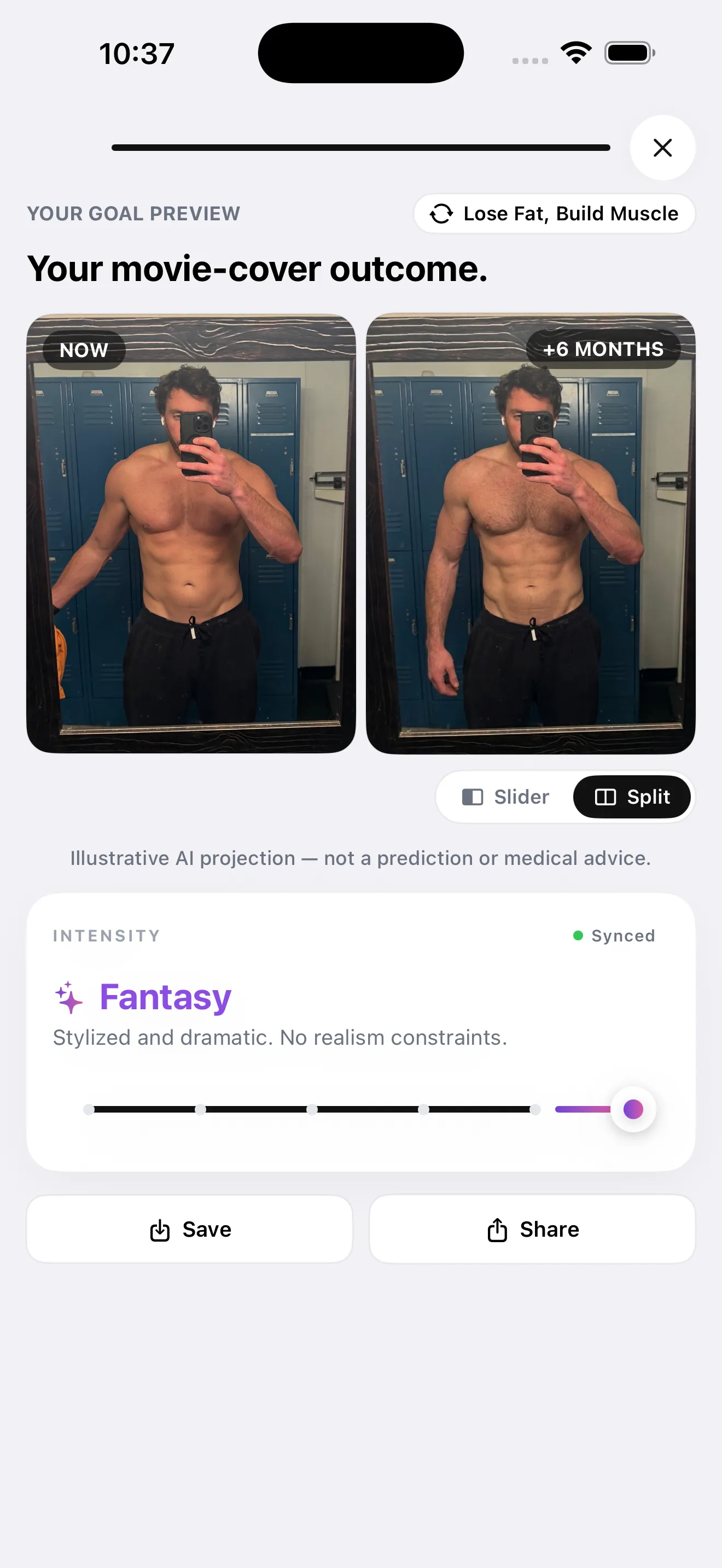
Future Physique: your photo now beside an AI projection at +6 months. Every image carries the disclaimer that matters.
One thing to be direct about: every projected image is labeled "Illustrative AI projection, not a prediction or medical advice," and that framing is honest, not legal boilerplate. The AI shows a plausible leaner version of you, it cannot know your genetics, your adherence, or your schedule. It's a compass, not a contract. We wrote up how the feature works and why the disclaimer exists if you want the full picture. Worth knowing before you tap: GainFrame is iOS only, and the free tier covers 25 photos lifetime.
How long would it realistically take?
The renders compress months into a scroll. Real timelines, hedged honestly:
- Rate of loss: a commonly cited sustainable pace is roughly 0.5-1% of bodyweight per week. For a 200-pound man, that's 1-2 pounds weekly, so a 10-point body fat drop is realistically a five-to-nine-month project, not a summer one. Our recomposition timeline post breaks down what changes at each month.
- Your face goes first. Facial fat sits in thin layers over bone, so small losses show up early in the cheeks and jawline. People will comment on your face weeks before your waistband agrees.
- The last 5 pounds look the biggest. At higher body fat, a pound comes off a thick layer and changes little. At lower body fat, the same pound thins an already-thin layer over visible muscle, which is why the 23% → 18% render step looks more dramatic than 28% → 23%, and why the end of a cut feels like fast-forward.
Two honest addenda. First, dropping fat without lifting gets you smaller, not the 18% render, that image assumes the muscle underneath was kept, which takes resistance training through the deficit. Second, whether you should cut at all depends on your starting point; bulk, cut, or recomp is the decision guide.
How do you keep the picture honest along the way?
Whatever tool sparked your motivation, the thing that sustains it is evidence you're moving. Weekly progress photos, same pose, same lighting, same time of day, the boring discipline that makes month three visibly different from month zero even when the mirror gaslights you daily. Here's how to shoot them properly.
The midnight question was "what would I look like." The better question, three months in, is "what do I look like compared to when I started", and that one has a checkable answer.
Frequently asked questions
How can I see what I would look like with less body fat?
Three practical options: reference images of standardized bodies at different body fat levels (like the renders in this post), an interactive visualizer where you set sex, age, and body fat percentage, or an AI projection generated from a photo of your own body. Each trades generality for personalization, the renders are instant, the projection is the most personal.
How much visual difference does 5% body fat make?
More than most people expect. From 28% to 23%, the change is mostly silhouette, a smaller waist and a flatter front. From 23% to 18%, the same 5 points buys visible upper-body shape, a sharper jawline, and the first hints of definition. The leaner you get, the more each point changes your appearance, because the remaining fat is spread thinner over visible muscle.
How long does it take to drop 10% body fat?
A commonly cited sustainable rate is roughly 0.5-1% of bodyweight per week. For a 200-pound man, 10 percentage points of body fat is very roughly 20-25 pounds of fat, which puts the realistic timeline around five to nine months with diet breaks included. Faster is possible but usually costs muscle, which defeats the visual purpose.
Why does your face change first when losing fat?
Facial fat sits in thin layers over bone, so a small absolute loss produces a visible change in cheek and jaw definition early in a cut. Many people report hearing "your face looks thinner" weeks before their waist measurement moves much. It's a genuine early win, treat it as evidence the process is working, not as the finish line.
Are AI body projections accurate?
They're illustrations, not predictions. GainFrame's Future Physique, for example, labels every projected image "Illustrative AI projection, not a prediction or medical advice." A projection can show a plausible version of your body at a lower body fat level, which is genuinely motivating, but your actual result depends on training, diet, genetics, and time. Use projections for direction, progress photos for truth.
See your own before, and your projected after
GainFrame estimates your body fat from a photo, tracks it week over week, and can project an illustrative image of your physique at 3, 6, and 12 months. Photos stay on your device. Free to start on iOS.
Download GainFrame Free