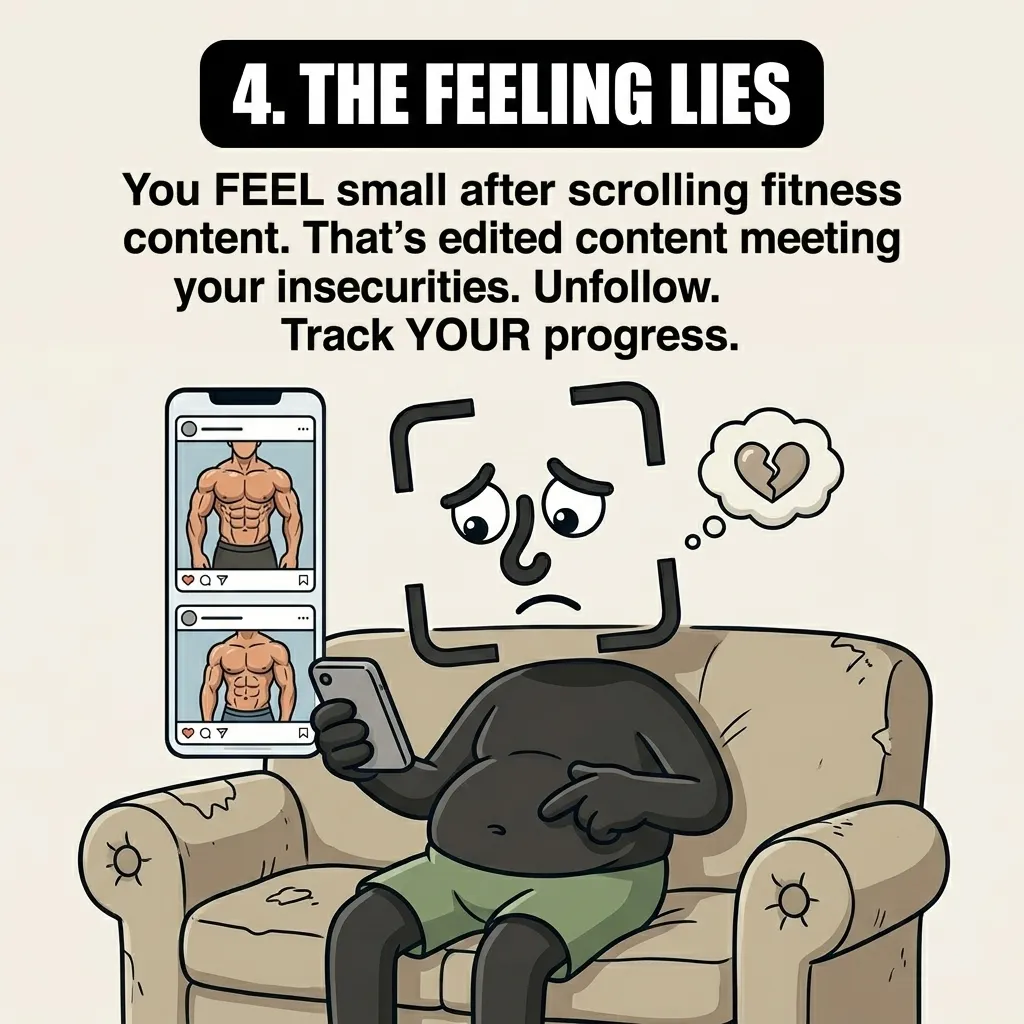
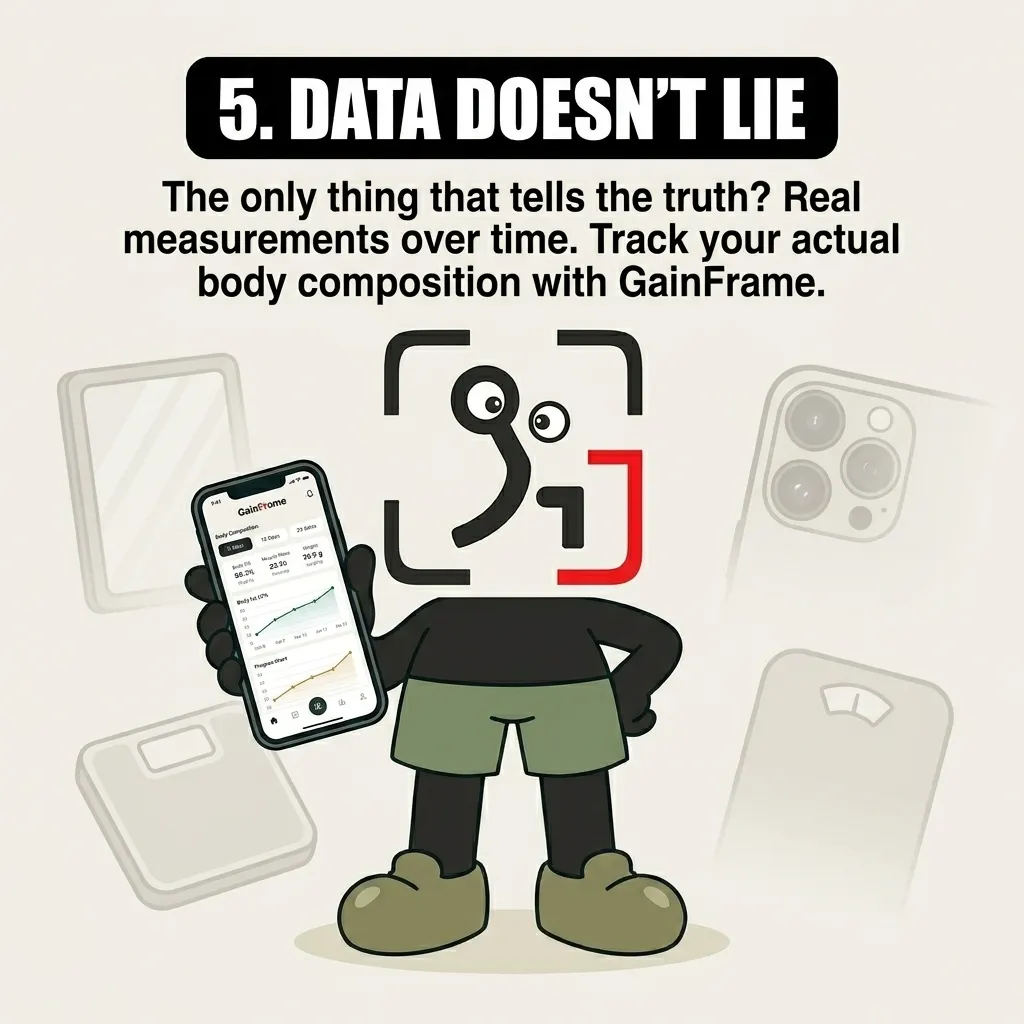
Visual cues like mirrors, photos, and daily scale weight can easily distort your perception of fitness progress due to lighting, lens distortion, and water retention. Instead of relying on these misleading sources or comparing yourself to social media, track objective body composition data over time to see real progress.
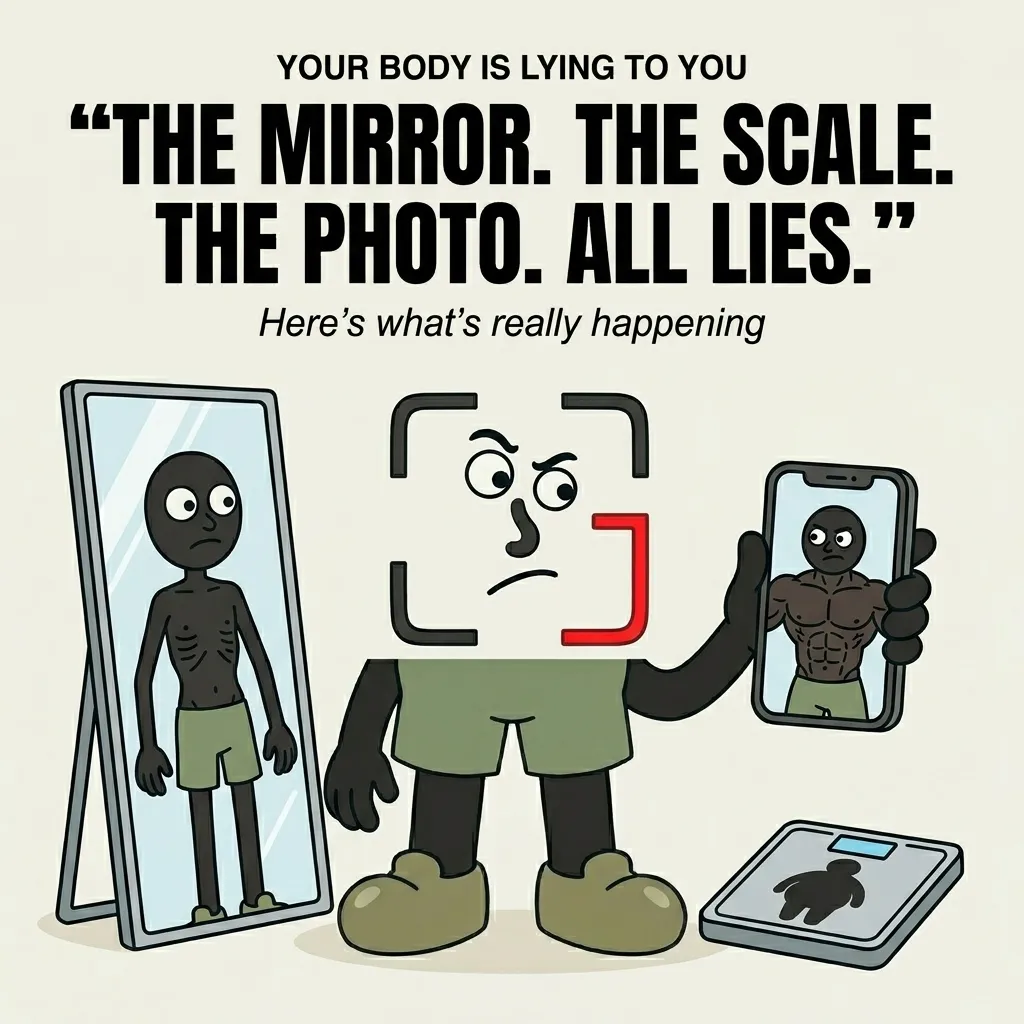
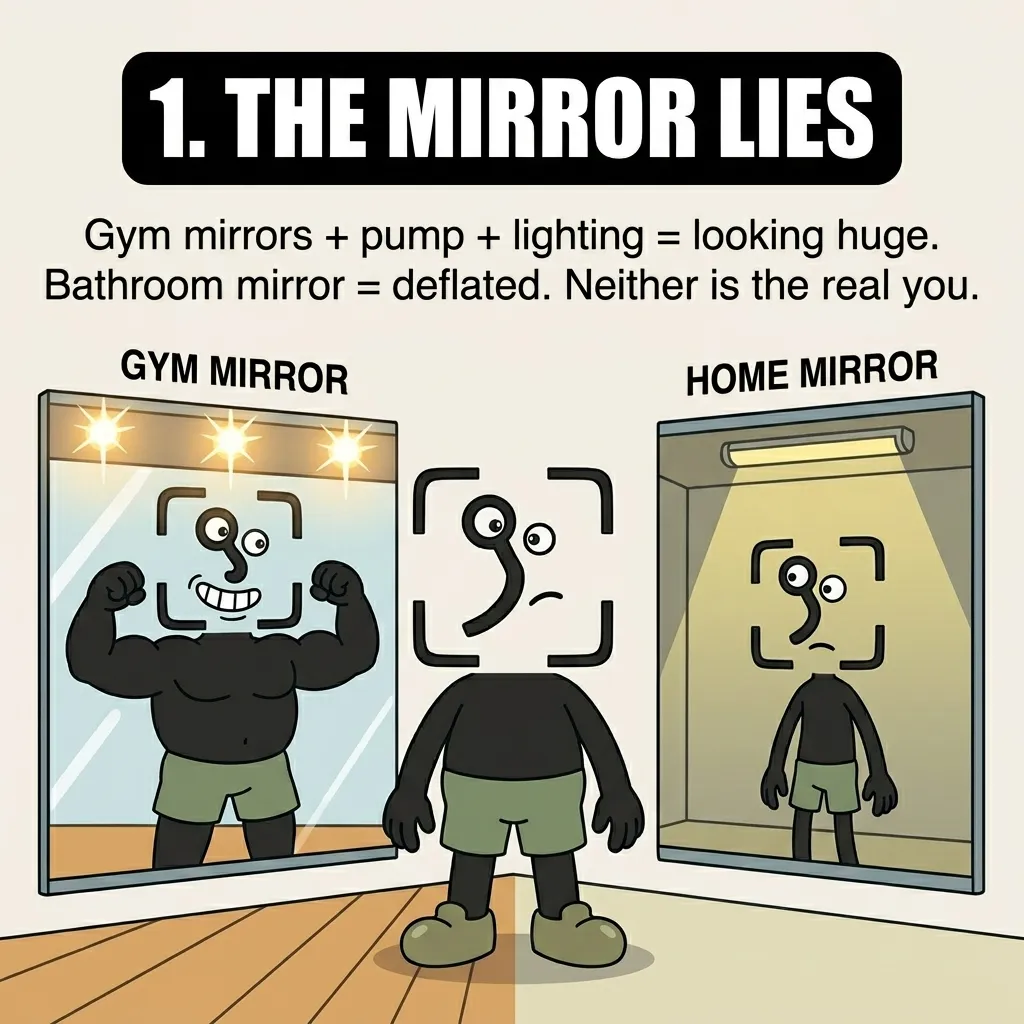
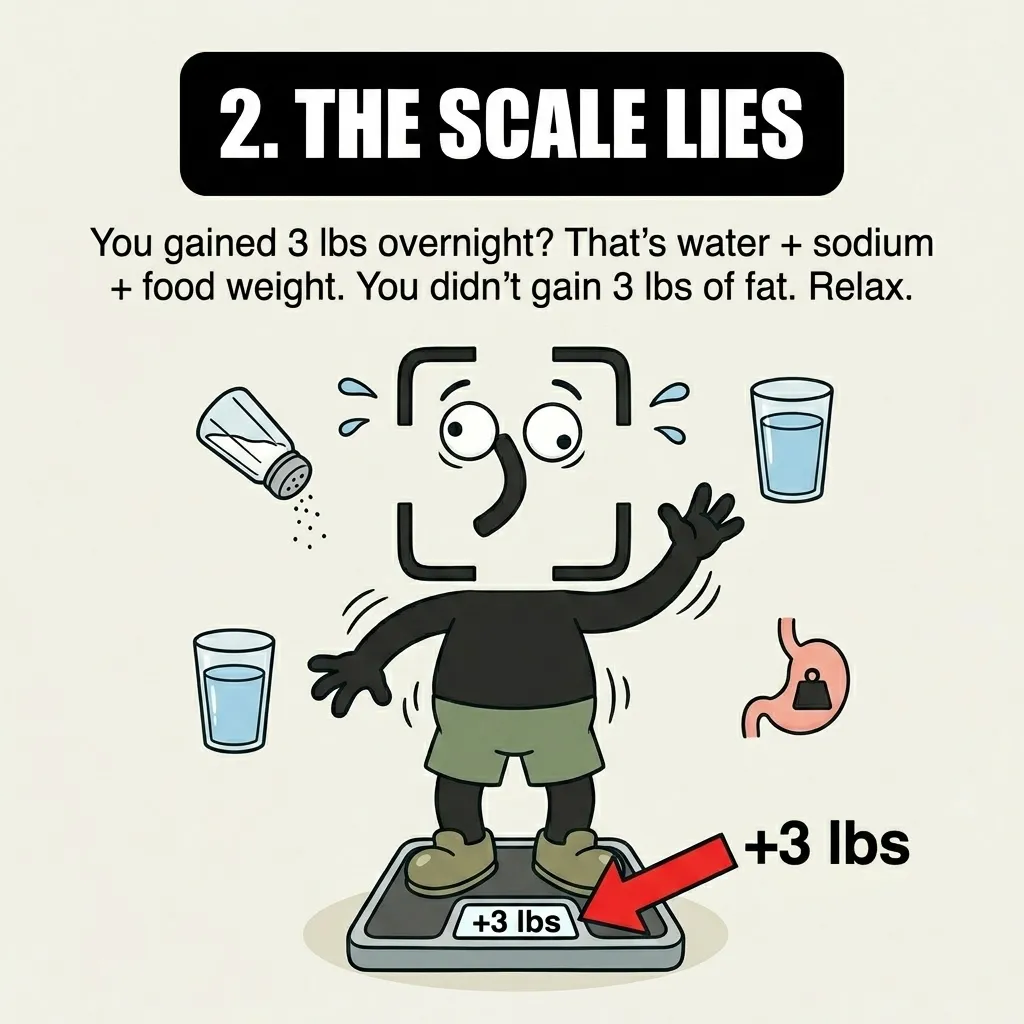
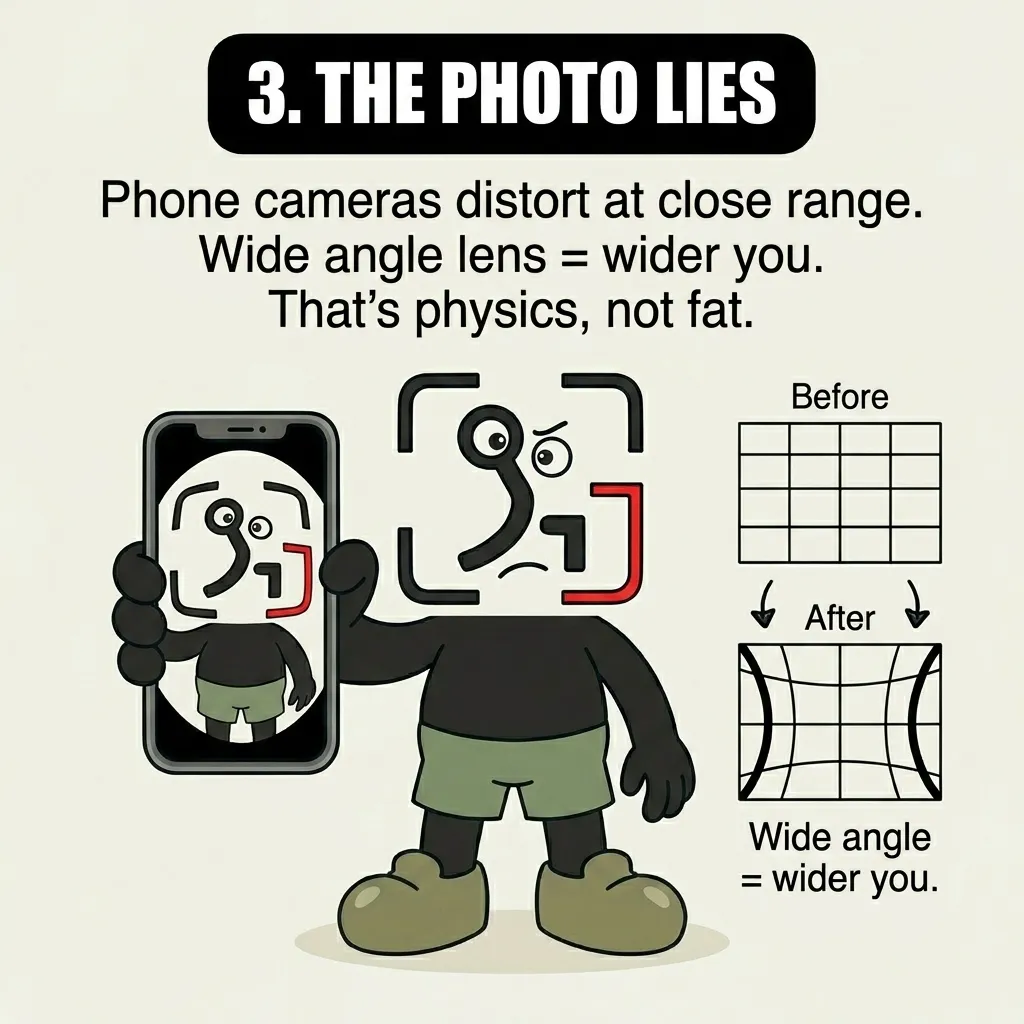
Your body is lying to you. “The mirror. The scale. The photo. All lies.” Here’s what’s really happening.1. The mirror lies. Gym mirrors + pump + lighting = looking huge. Bathroom mirror = deflated. Neither is the real you. Gym mirror. Home mirror.2. The scale lies. You gained 3 lbs overnight? That’s water + sodium + food weight. You didn’t gain 3 lbs of fat. Relax. +3 lbs. +3 lbs.3. The photo lies. Phone cameras distort at close range. Wide angle lens = wider you. That’s physics, not fat. Before. After. Wide angle = wider you.4. The feeling lies. You feel small after scrolling fitness content. That’s edited content meeting your insecurities. Unfollow. Track your progress.5. Data doesn’t lie. The only thing that tells the truth? Real measurements over time. Track your actual body composition with GainFrame. GainFrame. Body composition. 12 days. 23 entry. Body fat (%). Progress chart.
Like the comics? The app does the tracking.
GainFrame turns progress photos into body fat estimates, muscle scores, and honest trend lines — the stuff these comics keep nagging you about. Free to start on iOS.