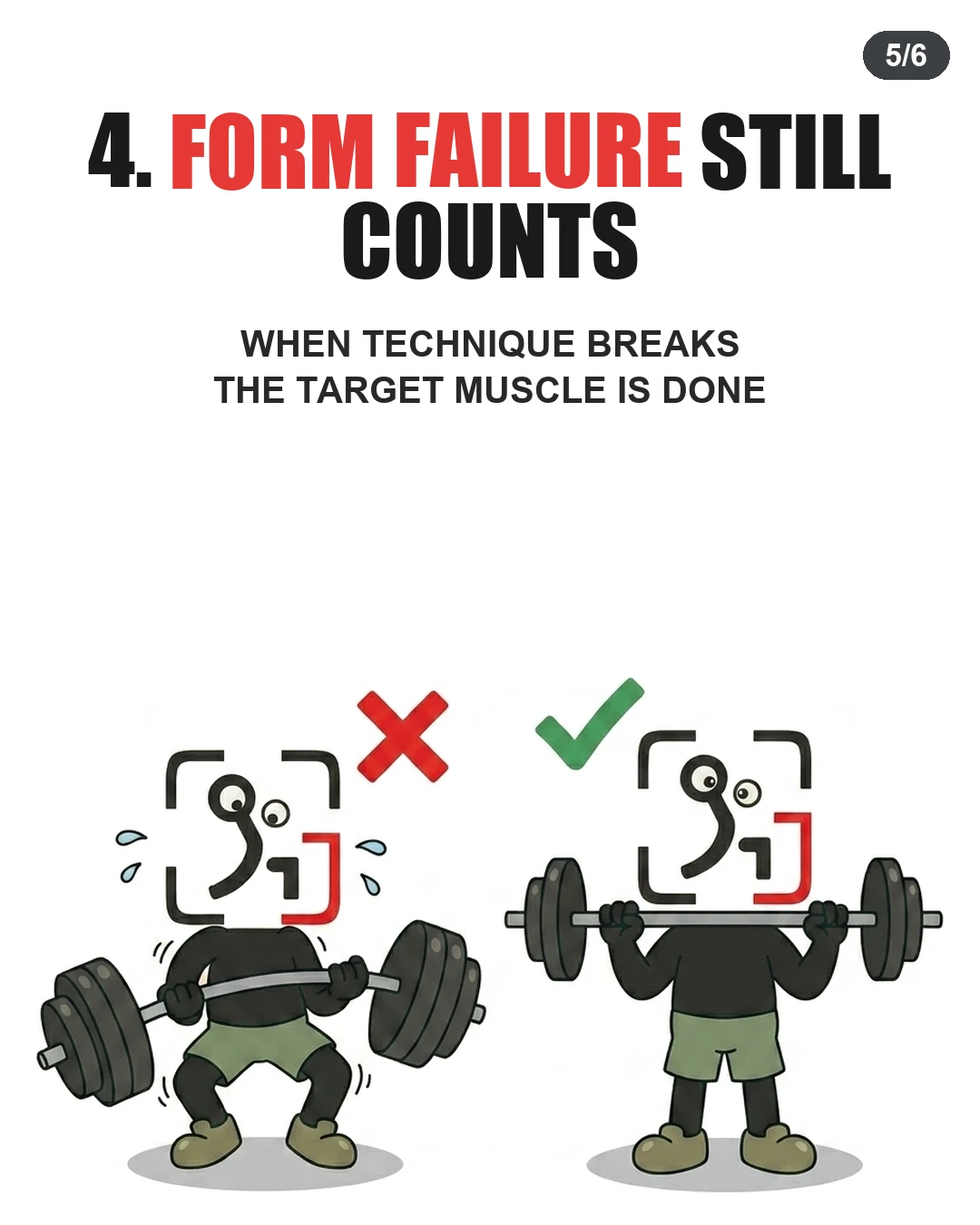
Effective muscle growth does not require taking every exercise to complete failure. Compound lifts are best stopped one to three reps short of failure, whereas isolation movements can be safely pushed further. In all cases, a set should conclude as soon as proper lifting technique breaks down.
1/6
How close to failure?2/6
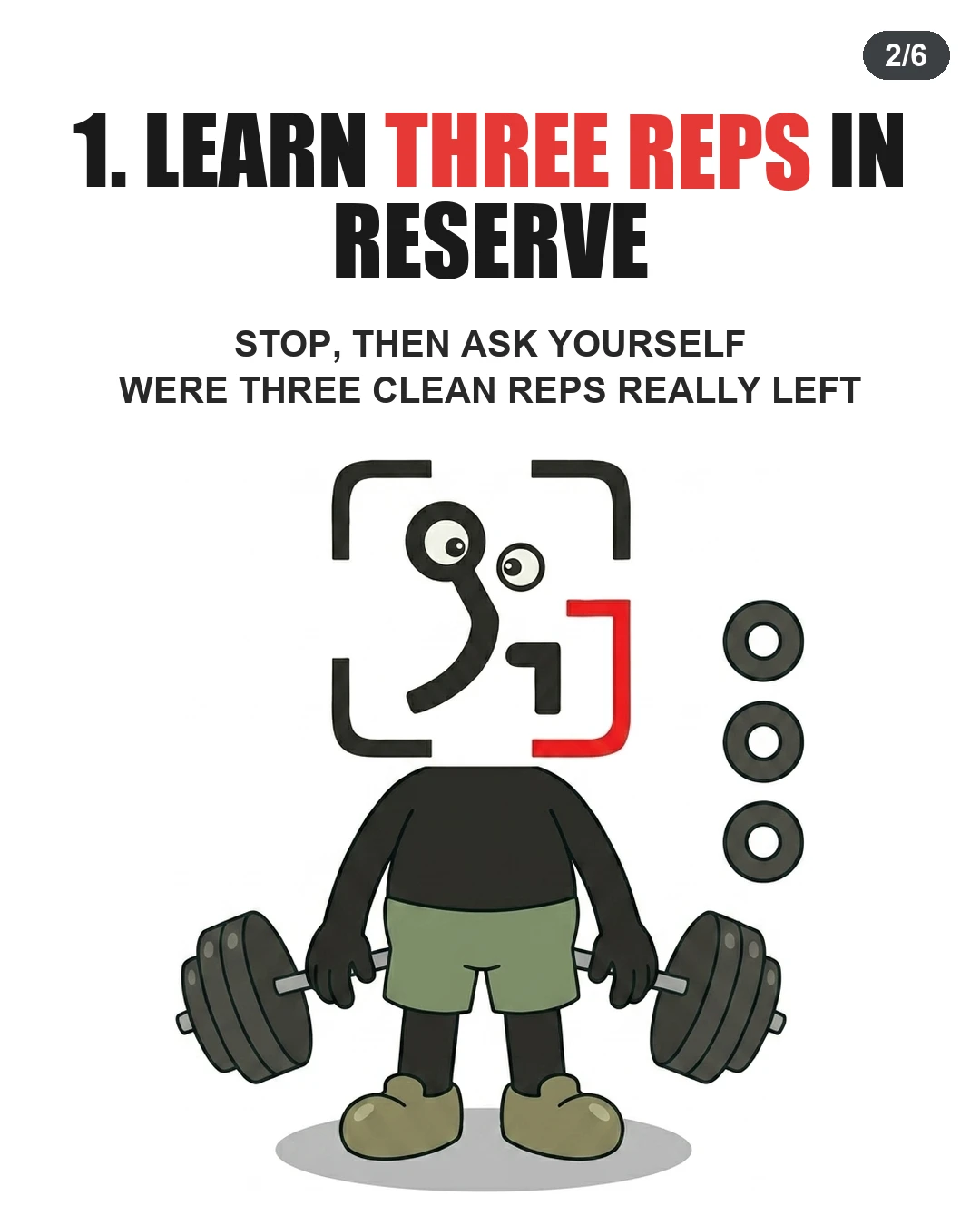
1. Learn three reps in reserve
Stop, then ask yourself were three clean reps really left3/6
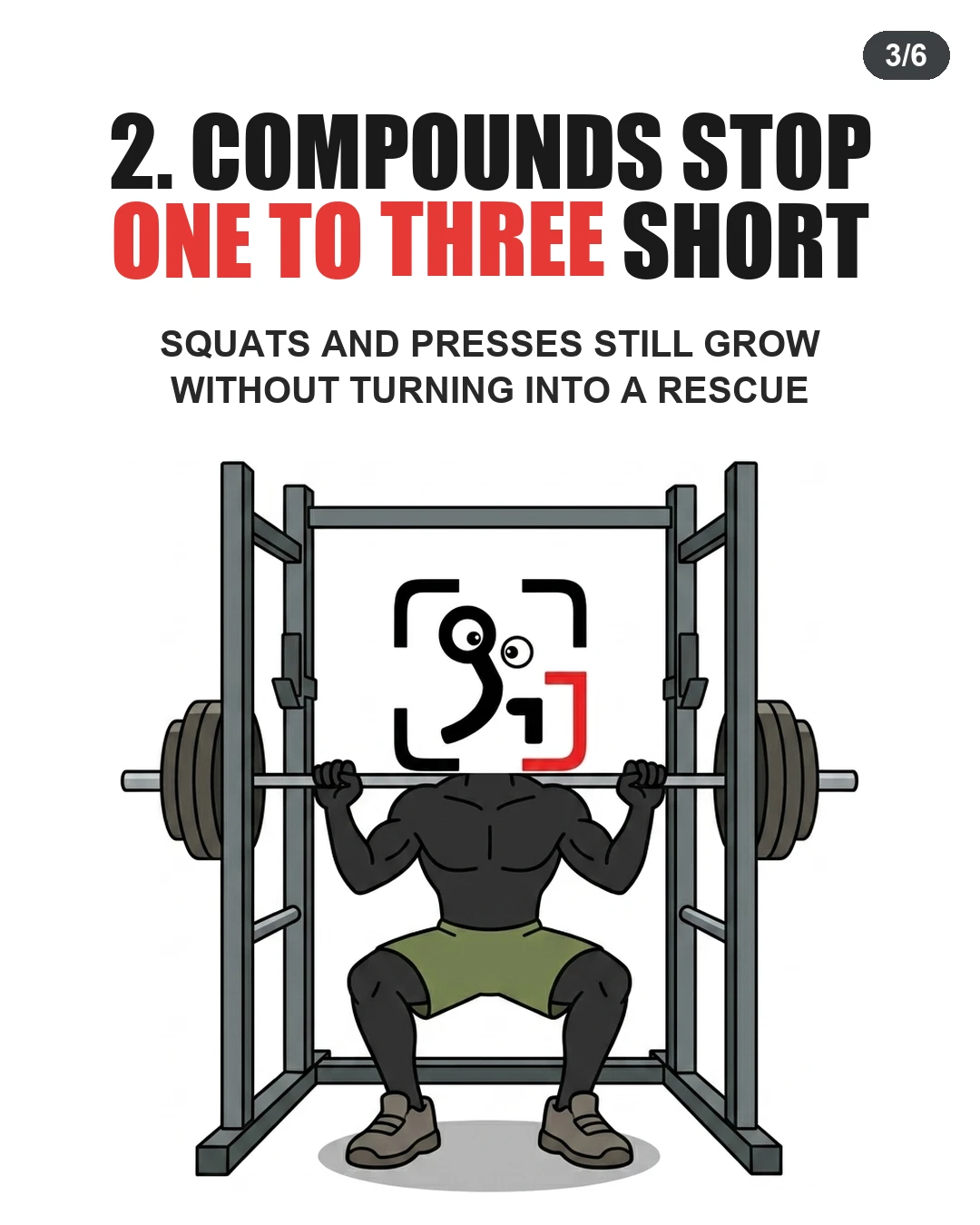
2. Compounds stop one to three short
Squats and presses still grow without turning into a rescue4/6
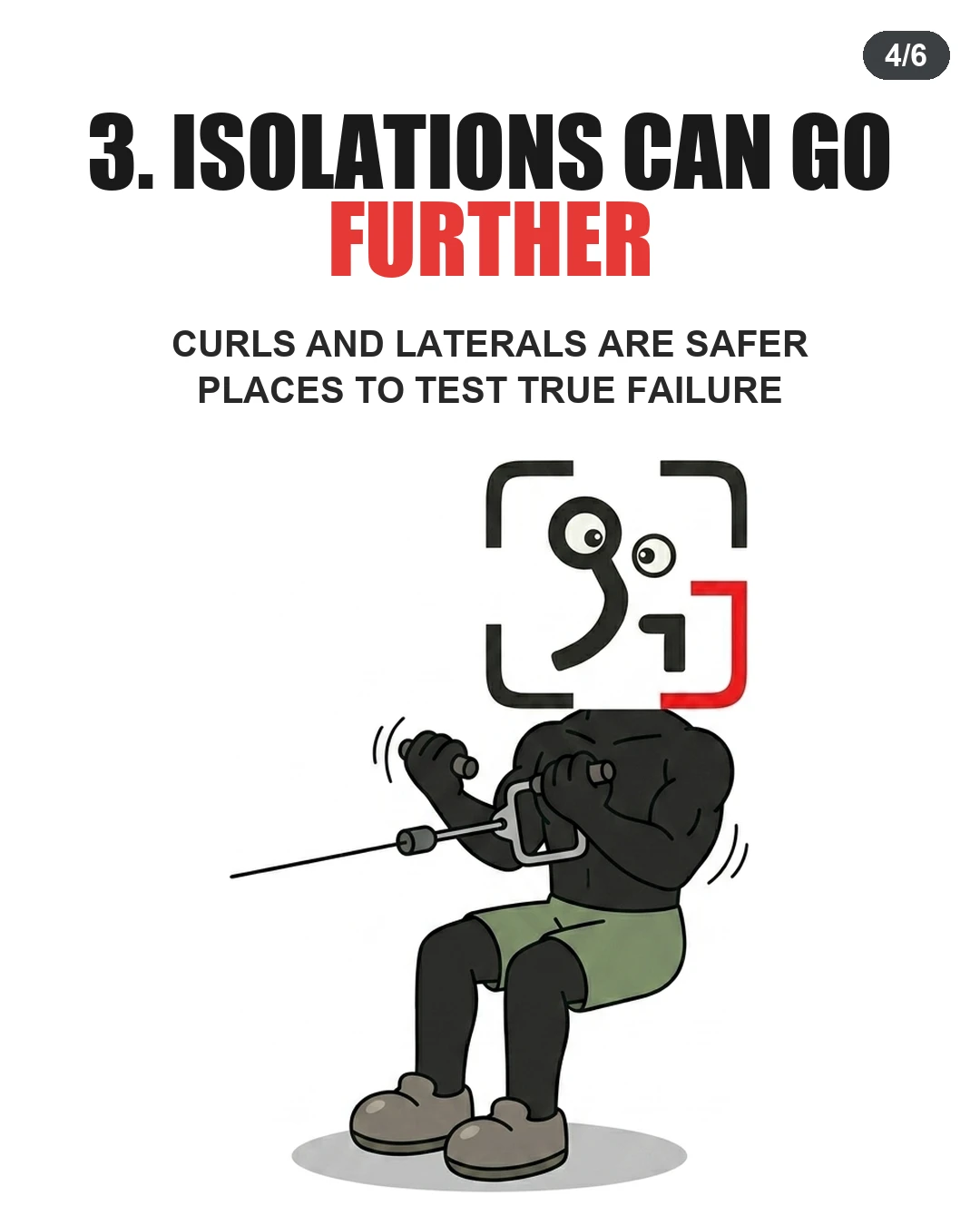
3. Isolations can go further
Curls and laterals are safer places to test true failure5/6
4. Form failure still counts
When technique breaks the target muscle is done6/6
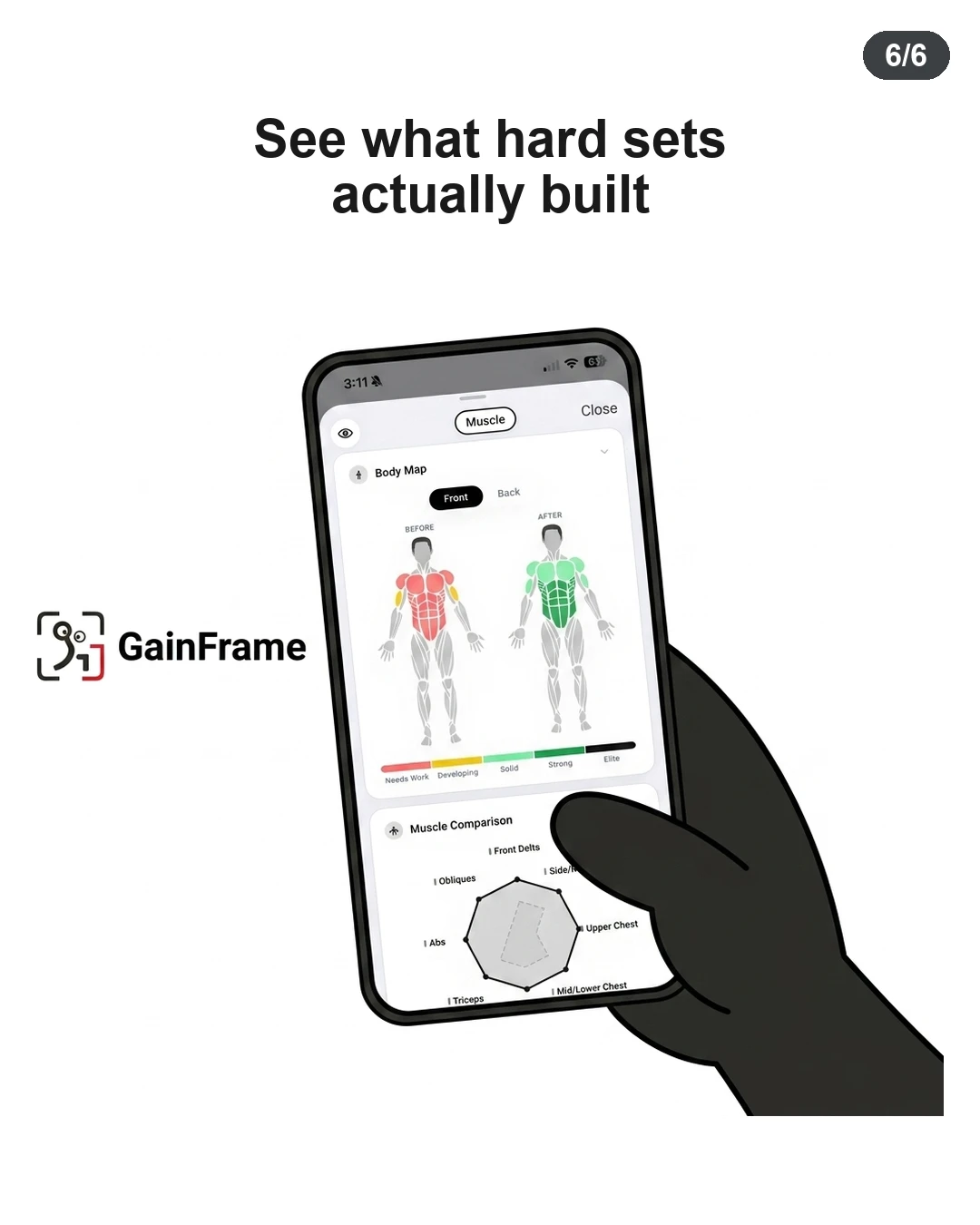
See what hard sets actually built
GainFrame
Like the comics? The app does the tracking.
GainFrame turns progress photos into body fat estimates, muscle scores, and honest trend lines — the stuff these comics keep nagging you about. Free to start on iOS.