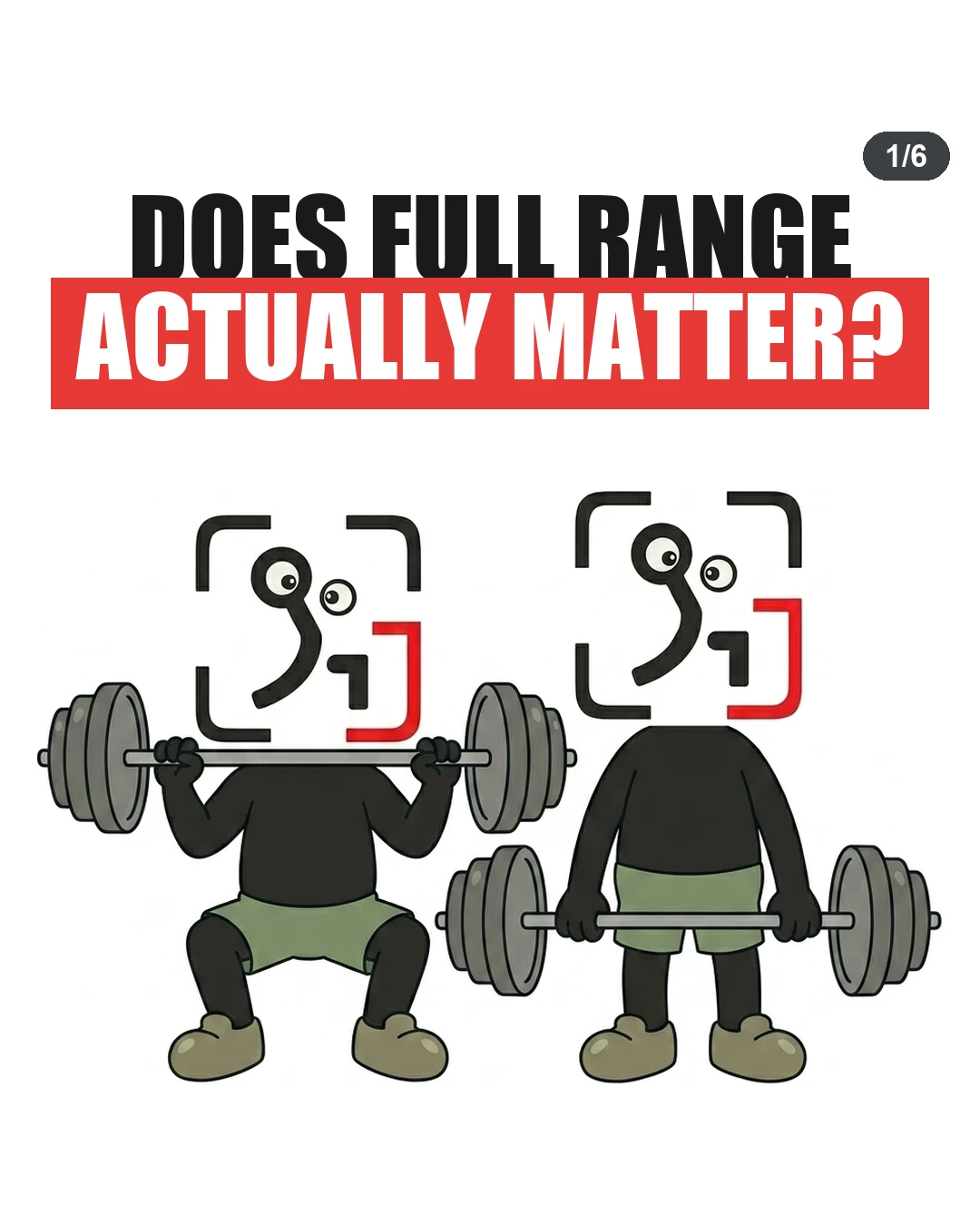
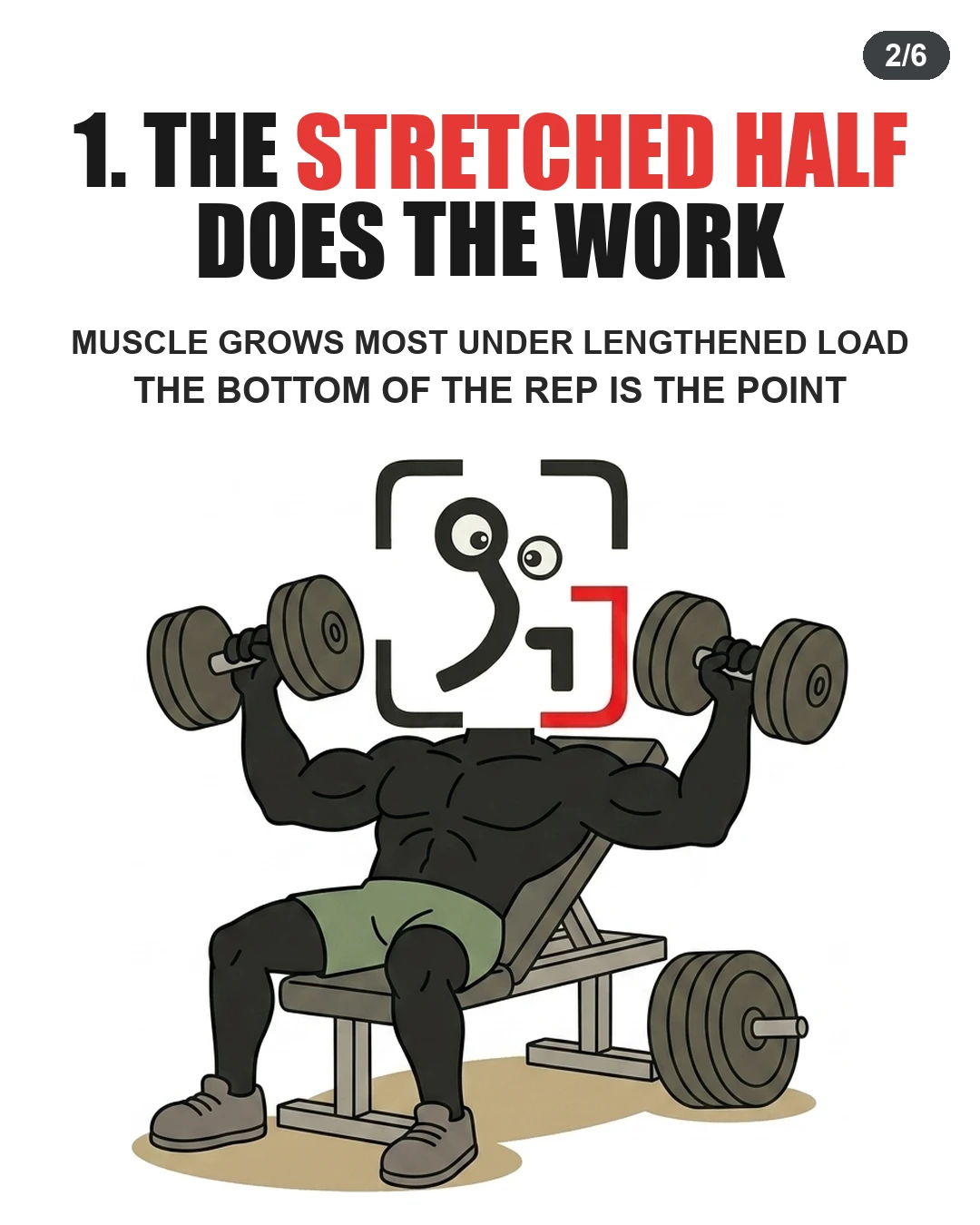
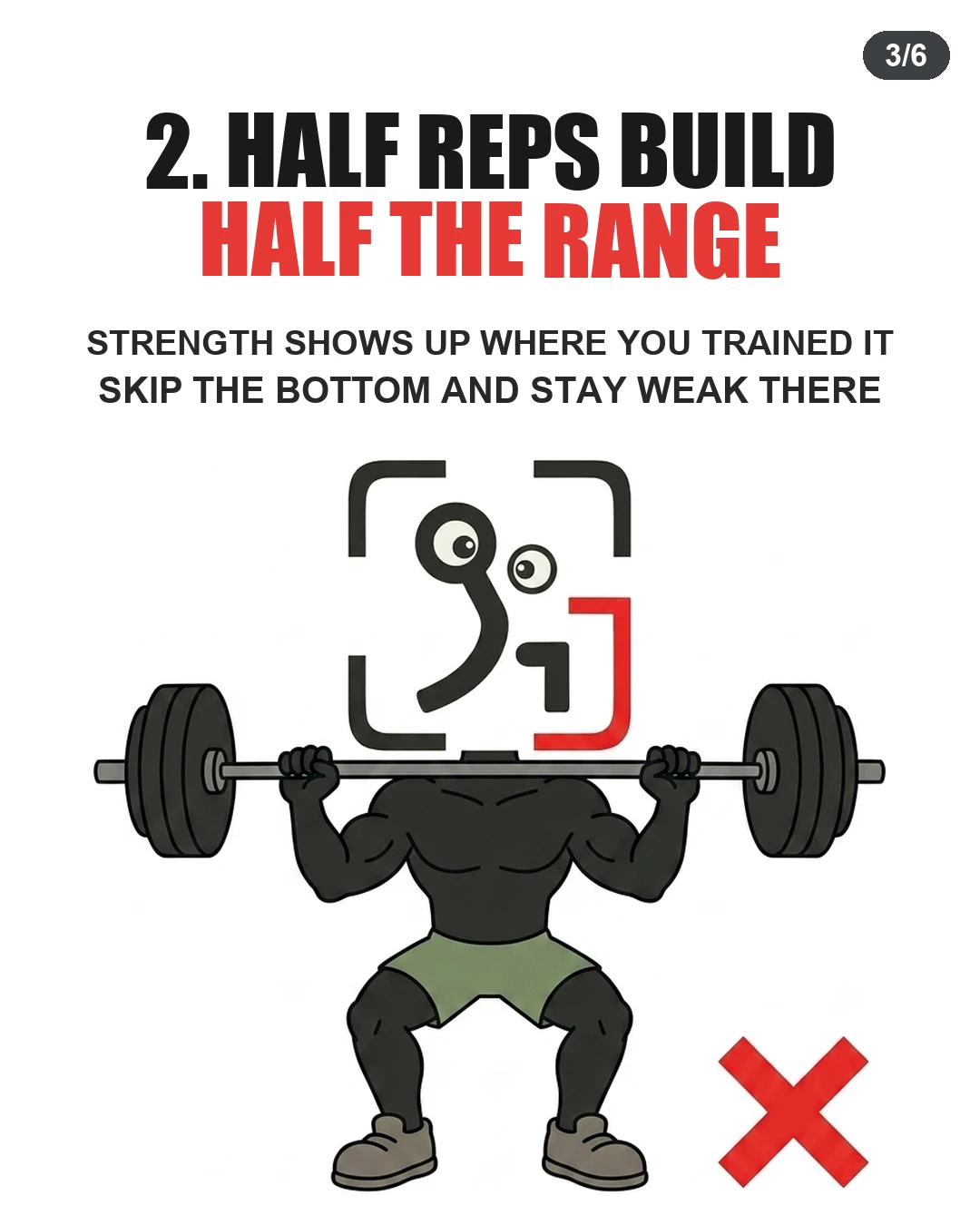
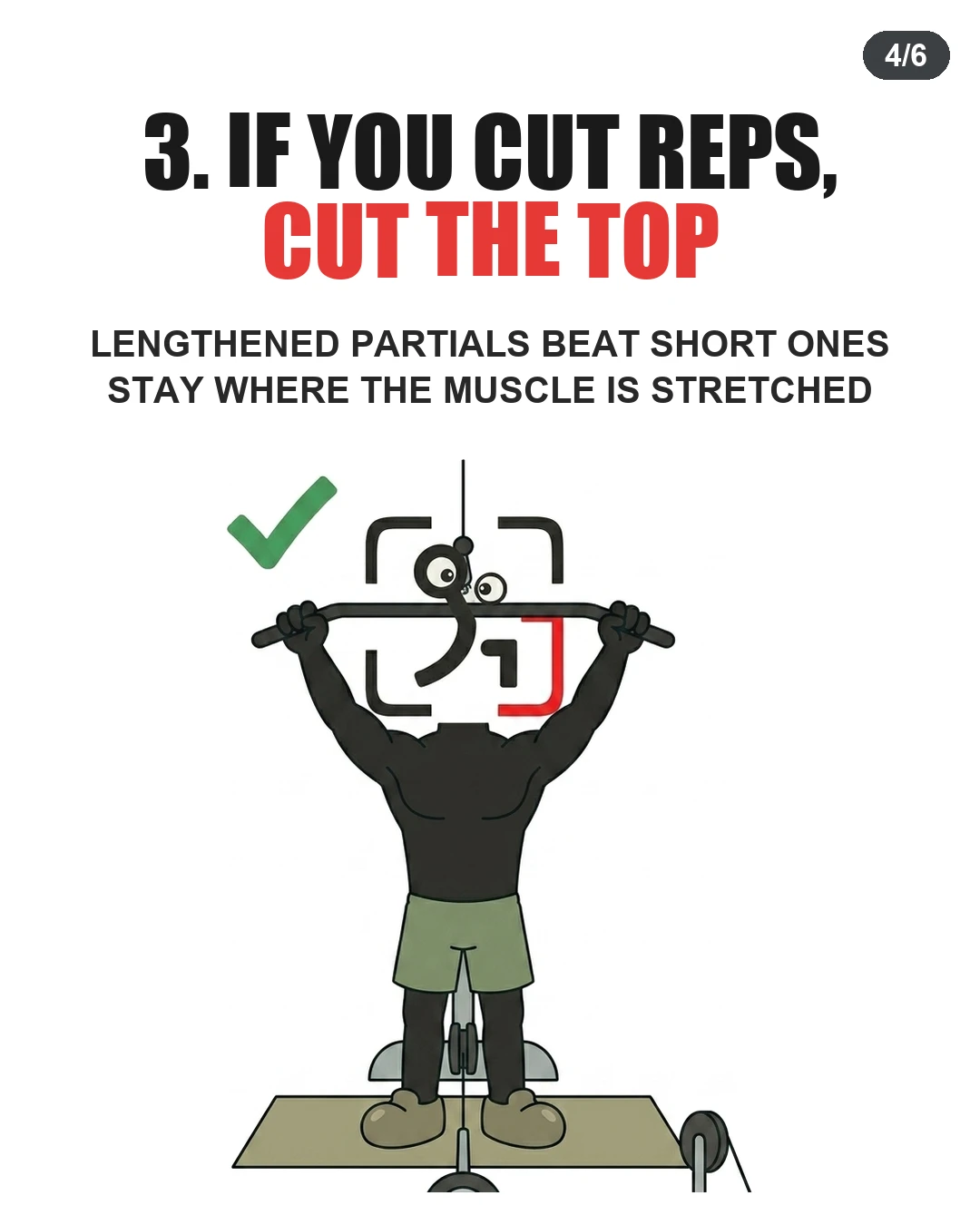
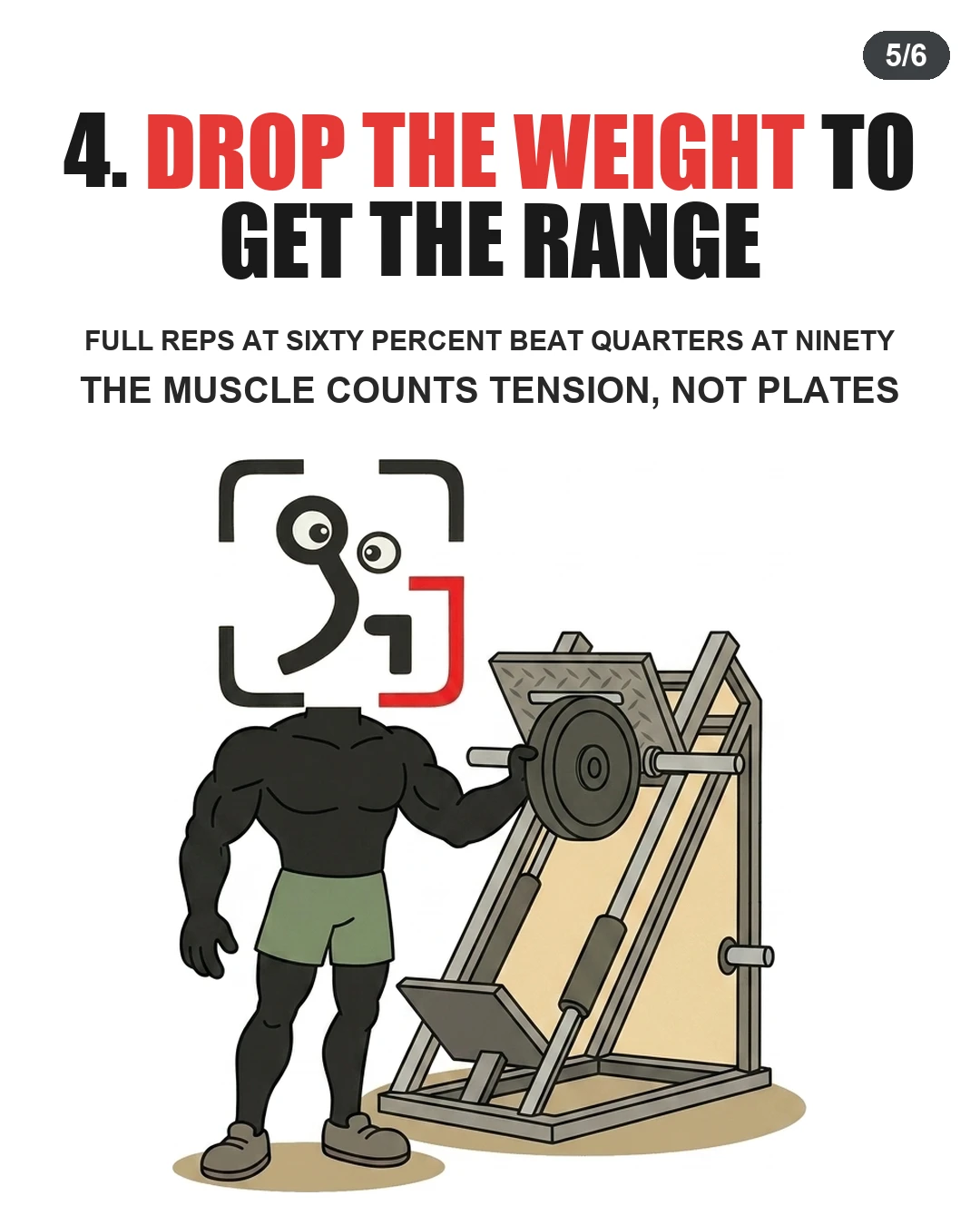
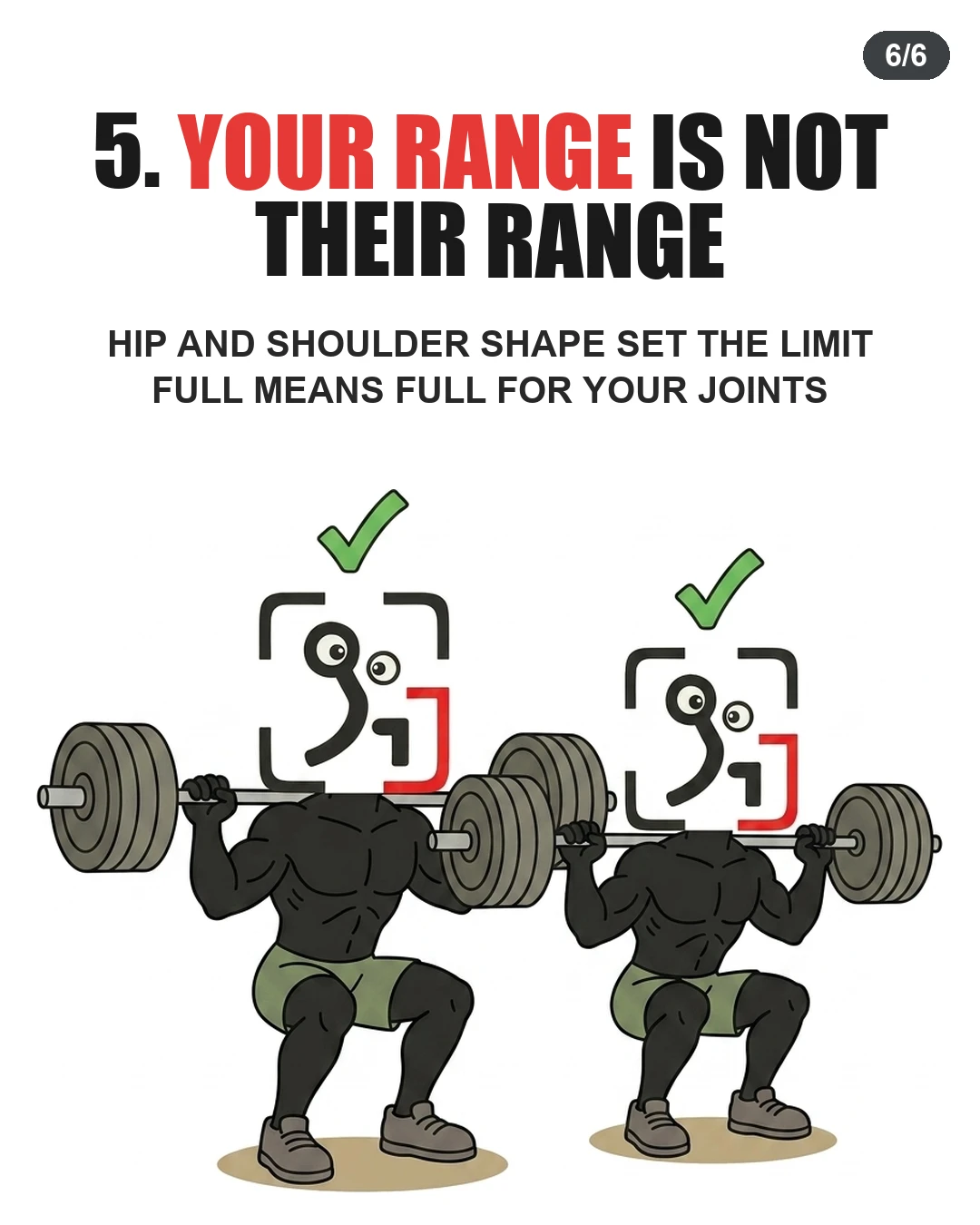
Training through a full range of motion maximizes muscle growth by prioritizing tension at lengthened positions. Reducing load allows proper movement quality over partial reps. Individual anatomy dictates personal depth, so full range should always match individual joint limits.
1/6 Does full range actually matter?2/6 1. The stretched half does the work. Muscle grows most under lengthened load. The bottom of the rep is the point.3/6 2. Half reps build half the range. Strength shows up where you trained it. Skip the bottom and stay weak there.4/6 3. If you cut reps, cut the top. Lengthened partials beat short ones. Stay where the muscle is stretched.5/6 4. Drop the weight to get the range. Full reps at sixty percent beat quarters at ninety. The muscle counts tension, not plates.6/6 5. Your range is not their range. Hip and shoulder shape set the limit. Full means full for your joints.
Like the comics? The app does the tracking.
GainFrame turns progress photos into body fat estimates, muscle scores, and honest trend lines — the stuff these comics keep nagging you about. Free to start on iOS.