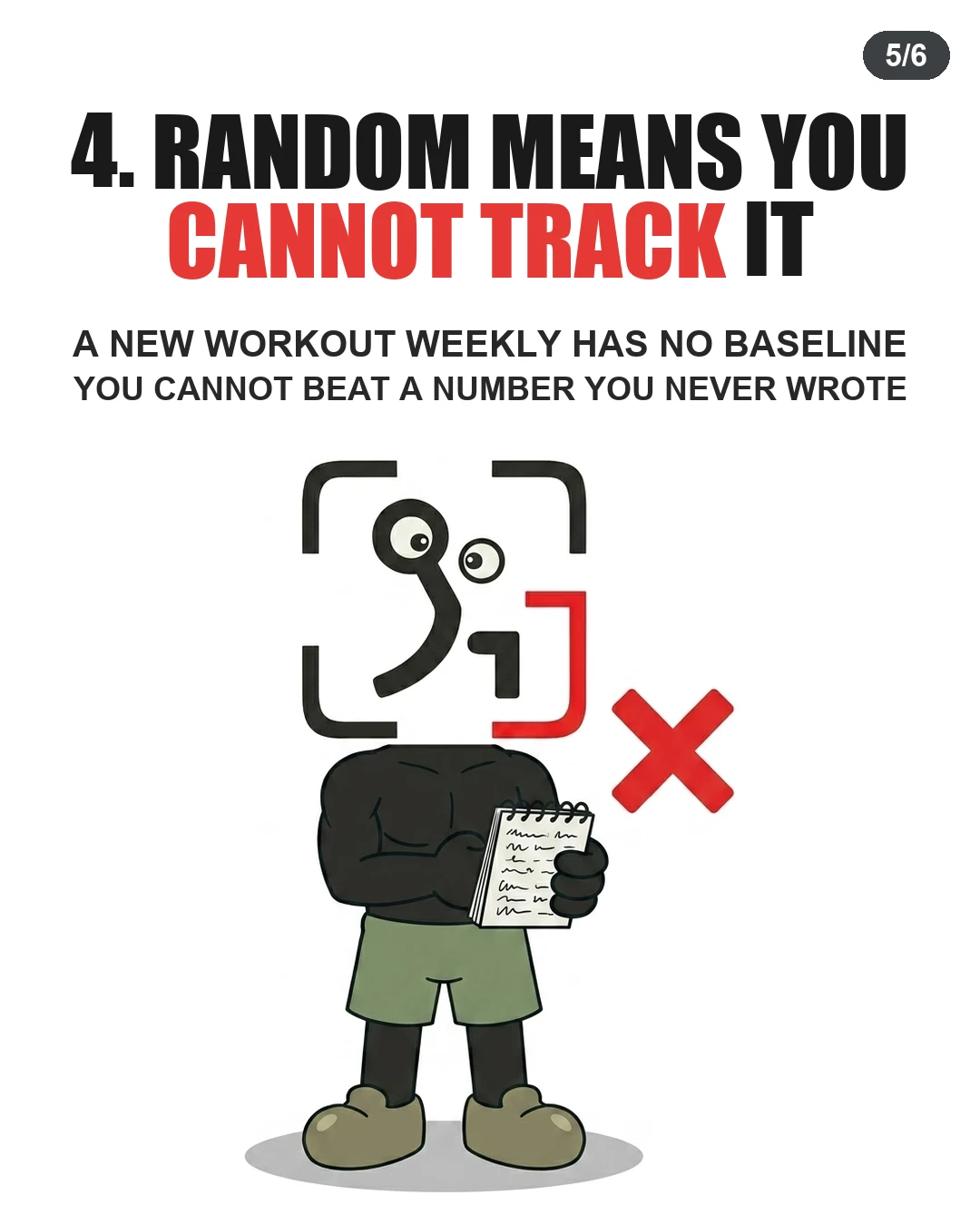
Muscle confusion is a myth because muscles only respond to mechanical tension and load, not novelty. Switching workouts too often causes unnecessary soreness and prevents tracking real progress over time. Effective muscle growth relies on progressive overload by consistently increasing weight or repetitions.
Is muscle confusion real?1. Muscle cannot get confused. It only responds to tension and load it does not know what day it is.2. New moves just make you sore. Unfamiliar exercises always hurt more soreness is not a growth receipt.3. Progressive overload is the engine. More weight or more reps than last time that is the whole mechanism.4. Random means you cannot track it. A new workout weekly has no baseline you cannot beat a number you never wrote.See if you are really beating last month. GainFrame.
Like the comics? The app does the tracking.
GainFrame turns progress photos into body fat estimates, muscle scores, and honest trend lines — the stuff these comics keep nagging you about. Free to start on iOS.