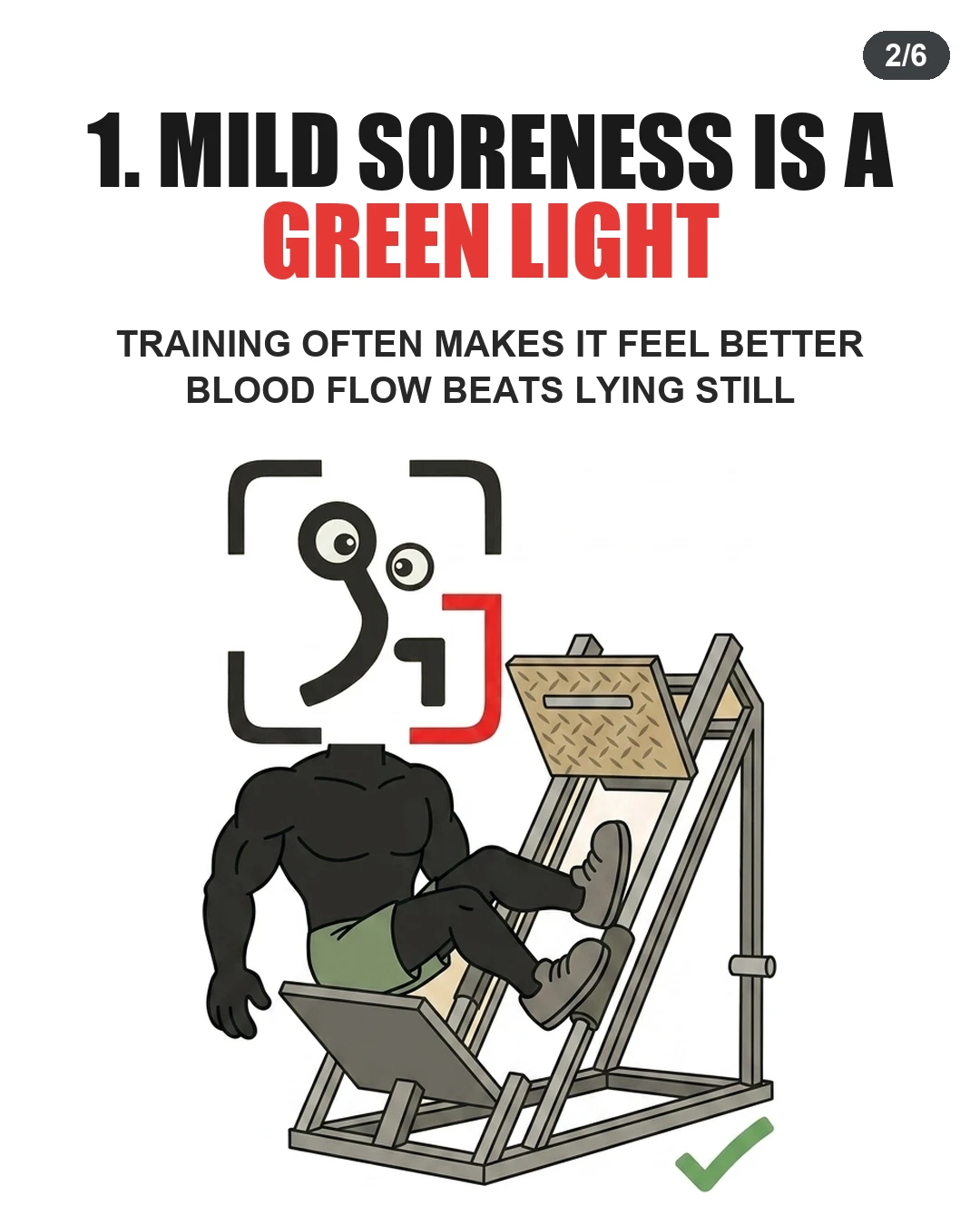
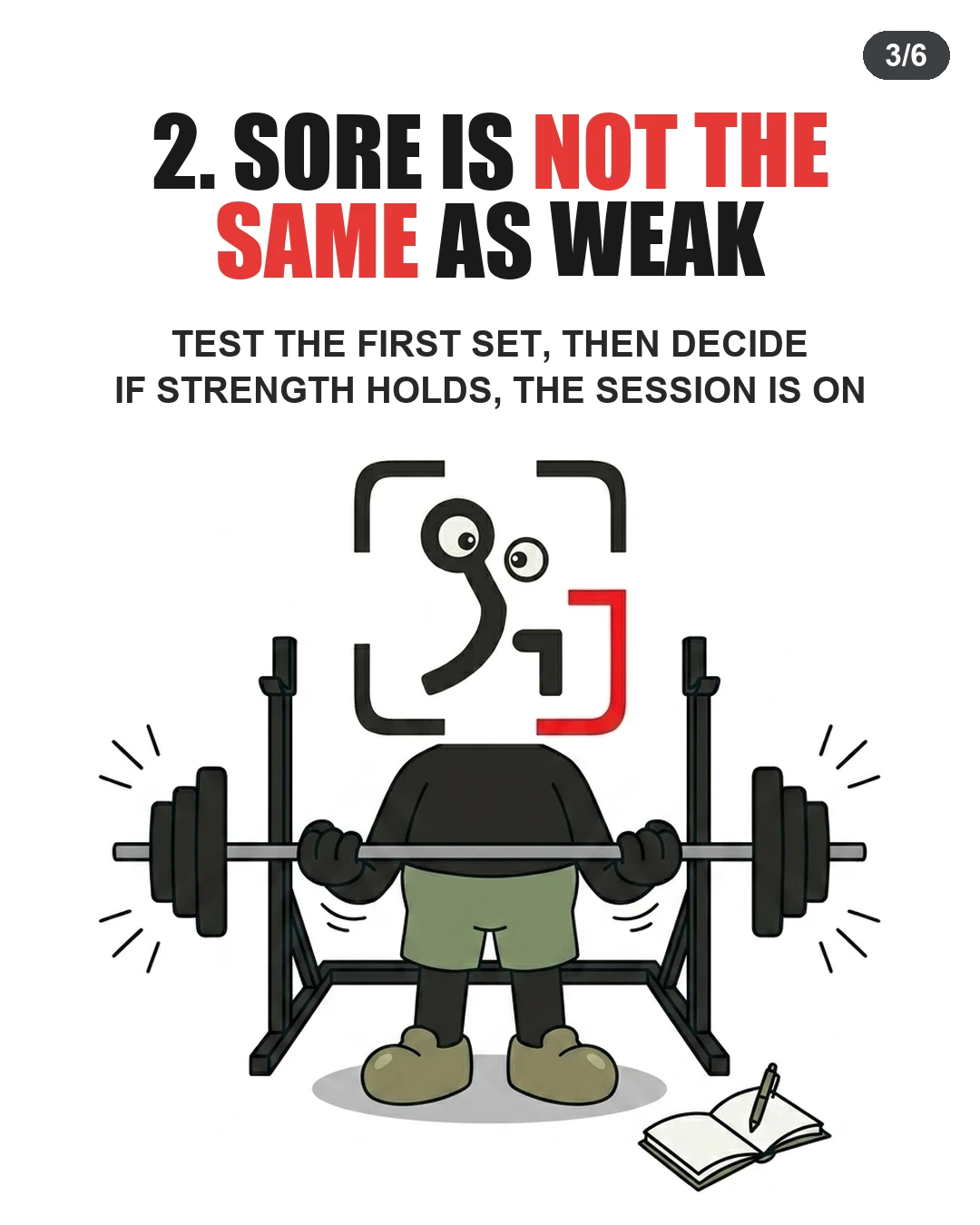
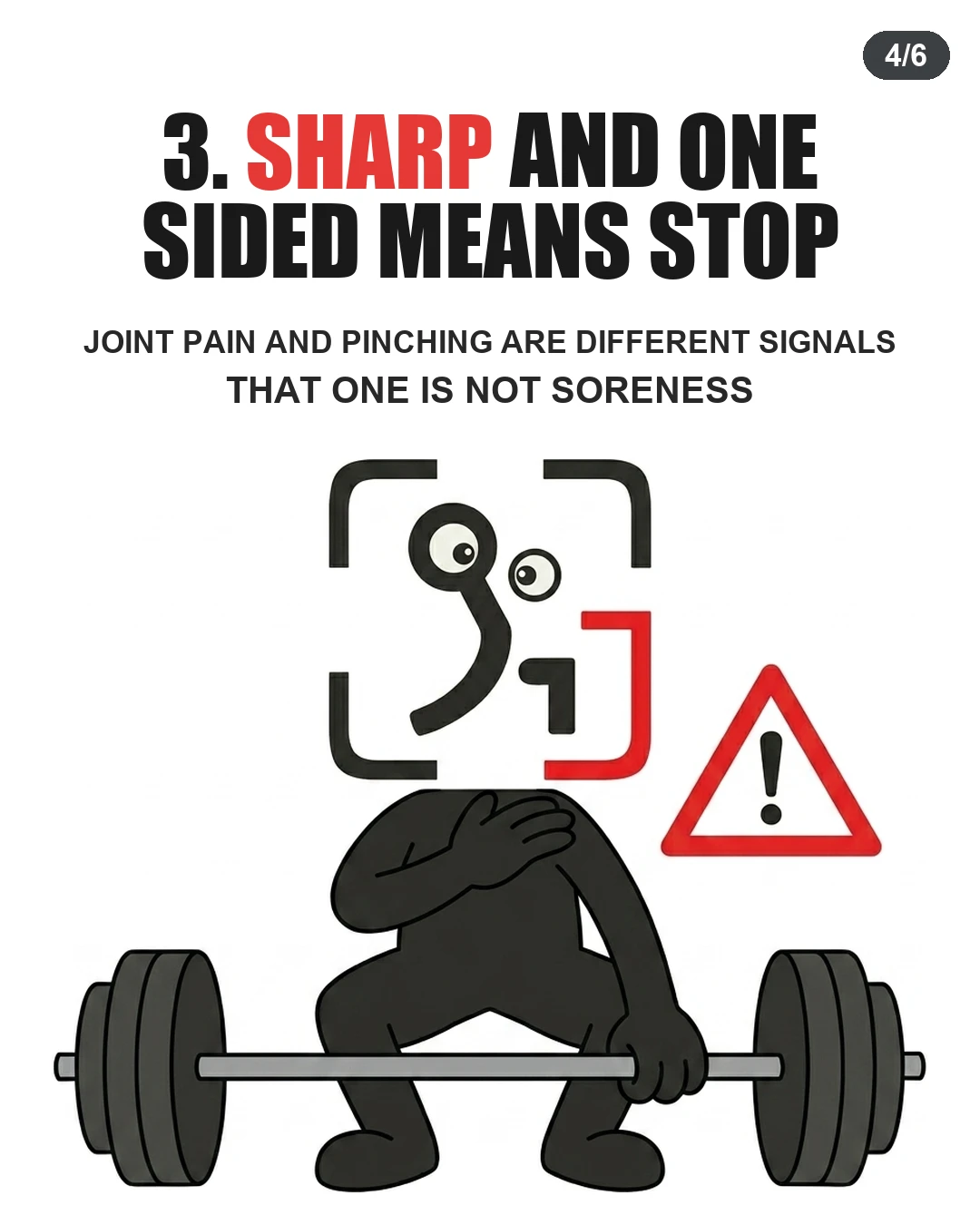
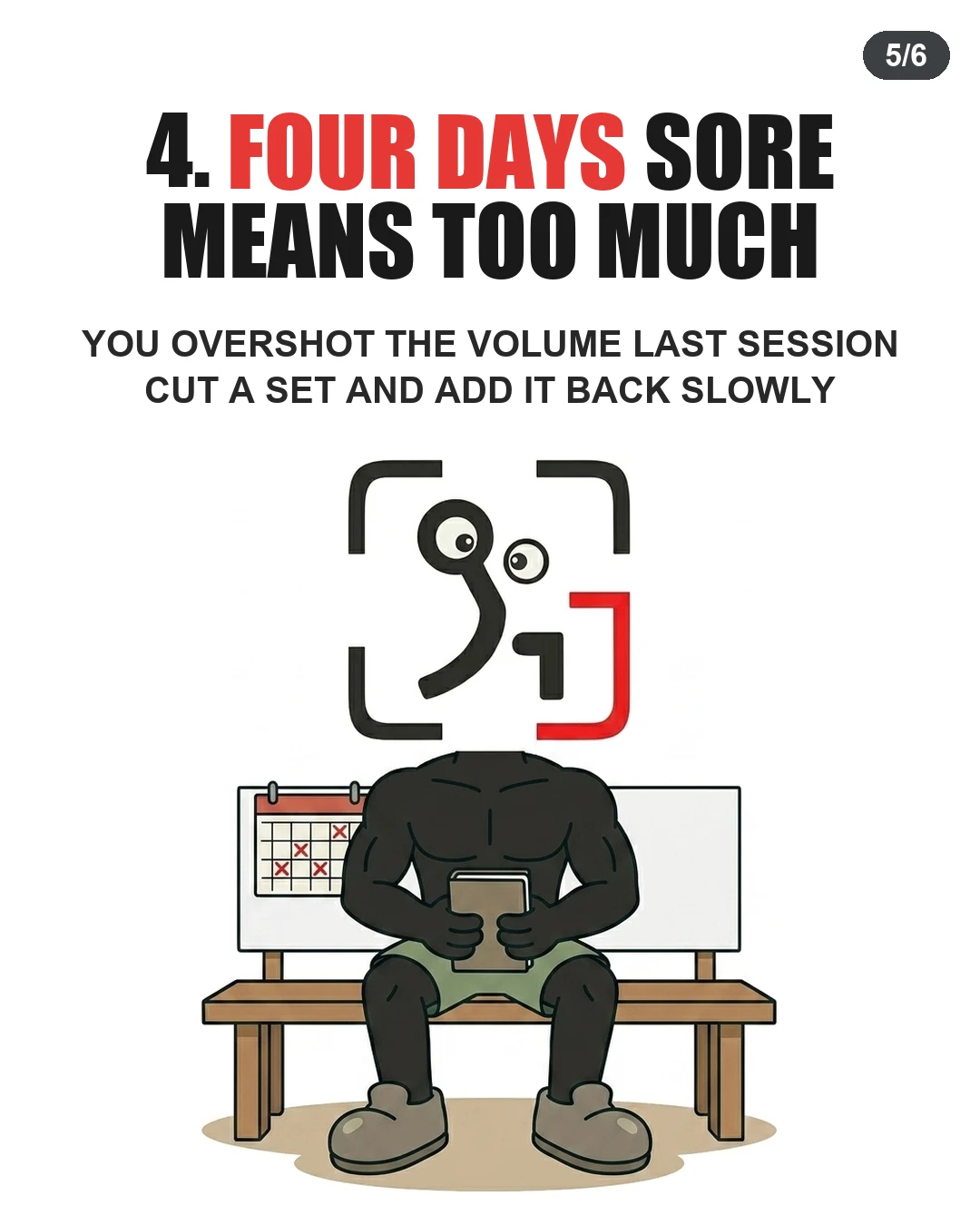
Mild soreness is usually fine to train through, as light activity and blood flow can help recovery if strength holds during your warm-up sets. However, sharp or one-sided joint pain requires immediate rest. Soreness lasting four days or longer indicates excessive volume that needs to be scaled back in future sessions.
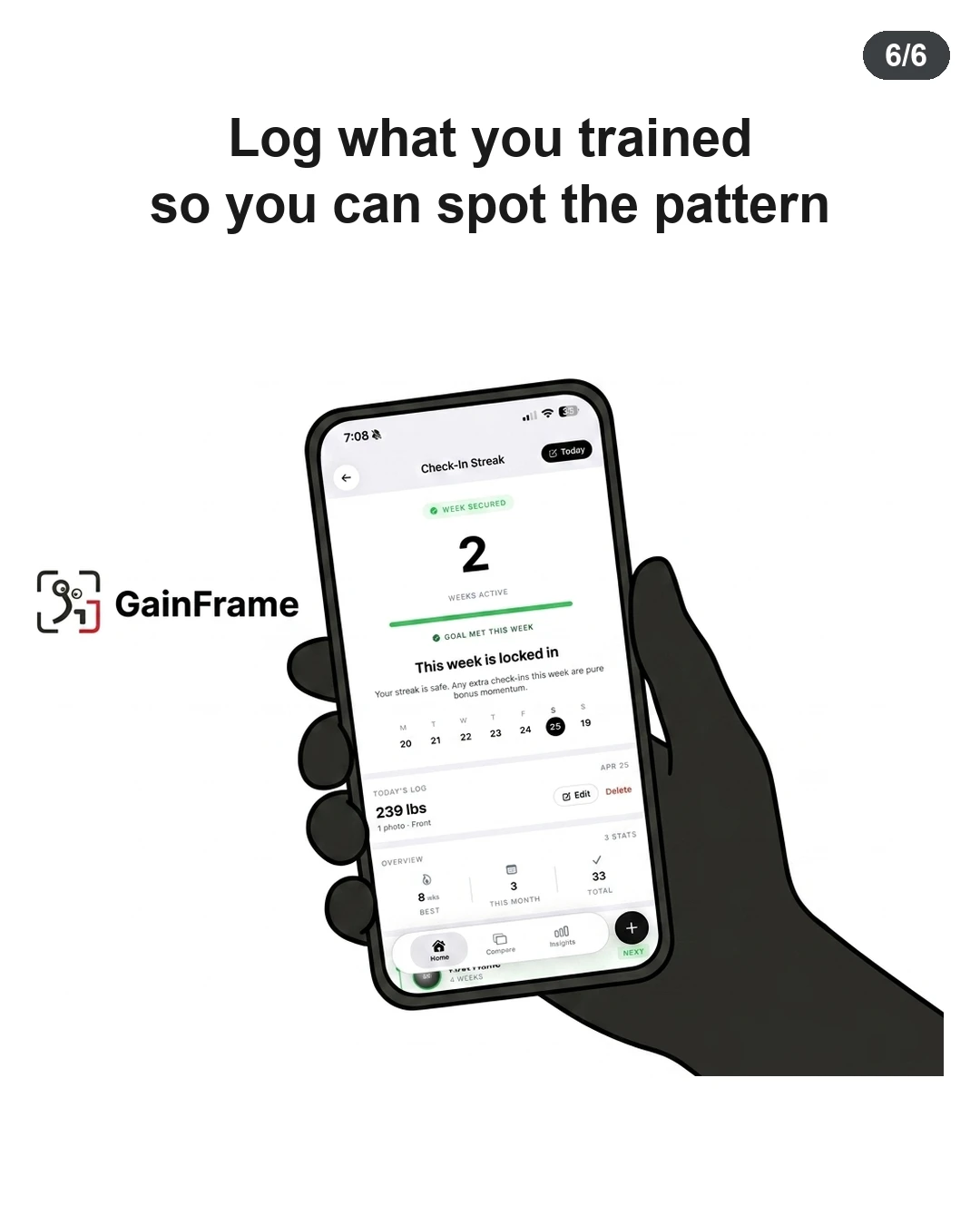
1/6 Should you train when sore?2/6 1. Mild soreness is a green light. Training often makes it feel better. Blood flow beats lying still.3/6 2. Sore is not the same as weak. Test the first set, then decide. If strength holds, the session is on.4/6 3. Sharp and one sided means stop. Joint pain and pinching are different signals that one is not soreness.5/6 4. Four days sore means too much. You overshot the volume last session. Cut a set and add it back slowly.6/6 Log what you trained so you can spot the pattern. GainFrame
Like the comics? The app does the tracking.
GainFrame turns progress photos into body fat estimates, muscle scores, and honest trend lines — the stuff these comics keep nagging you about. Free to start on iOS.