
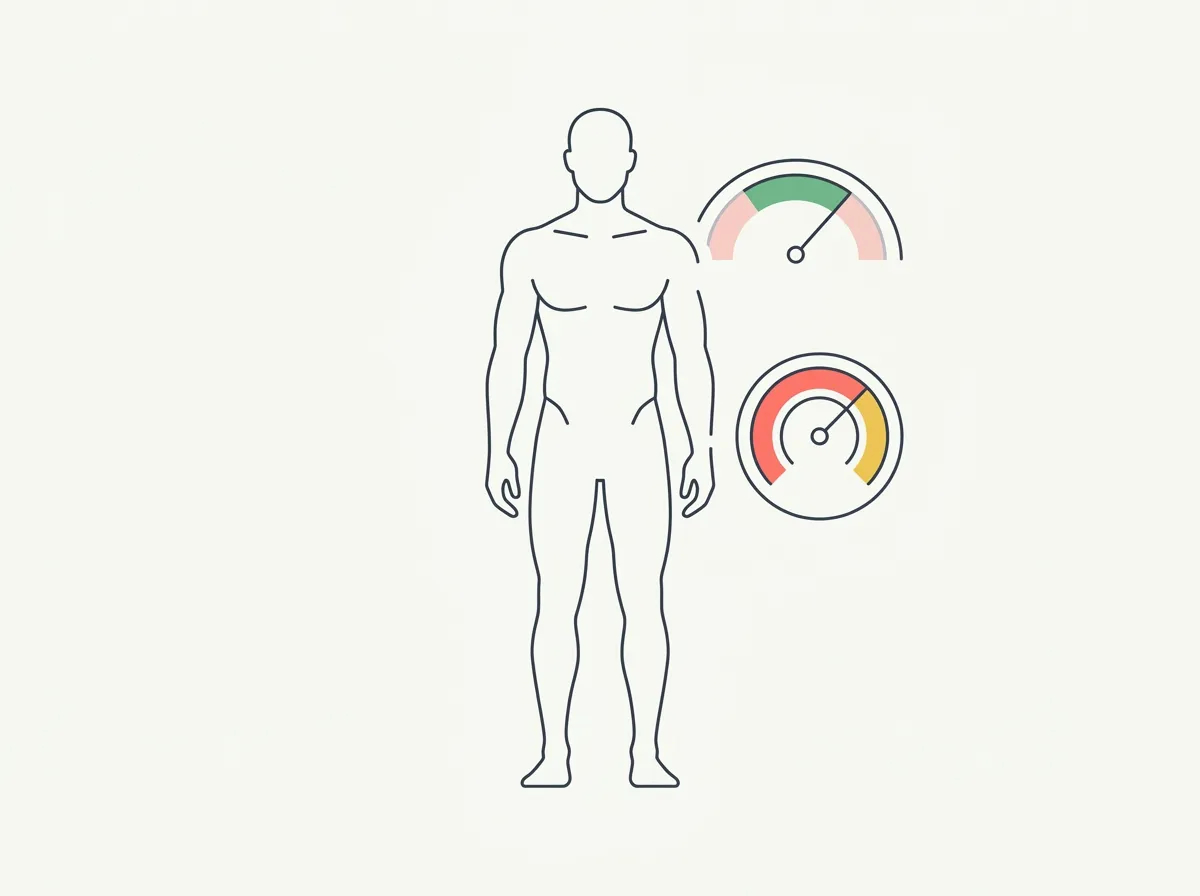
Quick answer: The aesthetic physique range for men is roughly 8–15% body fat with an FFMI above 20 — visible abs, defined shoulders, and a clear shoulder-to-waist taper. For women, 16–22% body fat with visible muscle tone. The look requires both low enough body fat for definition AND enough muscle mass for shape. Neither alone produces the aesthetic.
Two people step on stage — or step onto the beach. One is 170 lbs at 22% body fat. The other is 165 lbs at 11% body fat. Both have trained hard. But the first looks soft and undefined. The second looks exactly like what people mean when they say "aesthetic physique."
The difference isn't weight. It's not even just body fat percentage. It's the intersection of low enough body fat to make definition visible AND enough muscle mass to have something worth defining.
What does "aesthetic physique" actually mean?
An aesthetic physique is a lean, proportionally muscled body: low enough body fat that muscle definition is visible (roughly 8–15% for men, 16–22% for women), with enough muscle mass and shoulder-to-waist taper to create the classic V-shaped athletic silhouette. It isn't a formal term — the classic visual is visible shoulder-chest separation, defined arms, and a flat or defined midsection.
It's distinct from the bodybuilder extreme (maximum muscle, competition leanness) and from being simply thin (low weight with minimal muscle). The aesthetic range is specifically the intersection — lean enough for definition, muscular enough for shape.
Three factors determine it: body fat percentage, muscle mass (captured by FFMI), and proportions (the shoulder-to-waist relationship). All three need to be in range simultaneously.
What body fat percentage produces an aesthetic physique for men?
The 8–15% range is the aesthetic sweet spot for most men. Here's what each sub-range actually looks like:
| Body Fat % | Appearance |
|---|---|
| 3–7% | Competition conditioning — extreme definition, prominent vascularity, depleted muscle bellies. Difficult to sustain. |
| 8–12% | Sharp definition — visible abs, clear muscle separation, full muscle bellies. The classic aesthetic range. |
| 13–15% | Athletic with some softness — muscles visible but less defined, abs show when flexed, face remains lean |
| 16–19% | Fit appearance — muscle tone visible but definition fades, midsection soft |
| 20%+ | Minimal definition — muscle outlines largely obscured |
Here's the same average-muscle man at three of those levels — standardized renders from our body fat visualizer, so only body fat changes between images. (Prefer to see it on your own body? The free AI body transformation tool renders a year of training toward that look on your own photo, and the free AI physique rater scores how aesthetic your current physique reads 1–100 — proportions and all.)
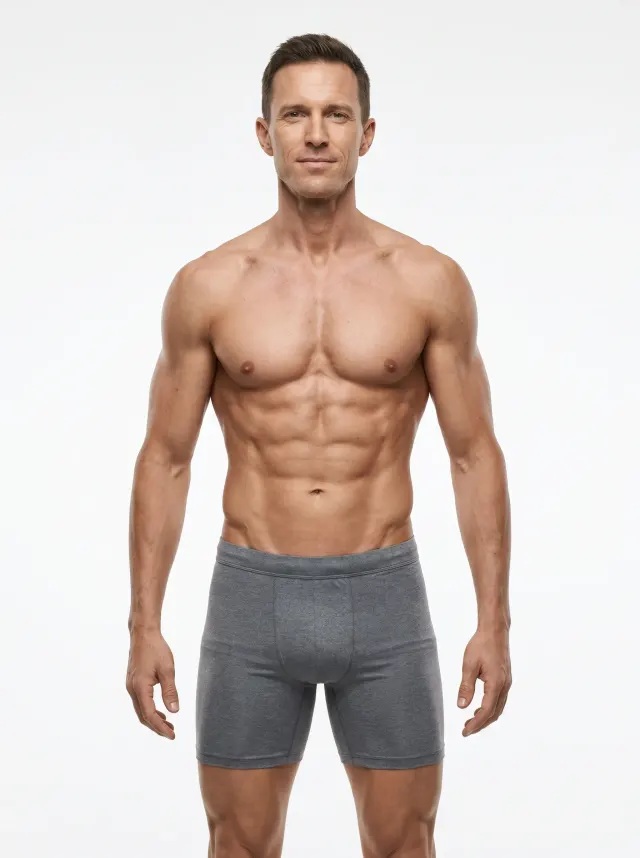
~8% body fat, average muscle. Lean and defined — but notice it reads "lean," not "built." That's the FFMI side of the equation missing.
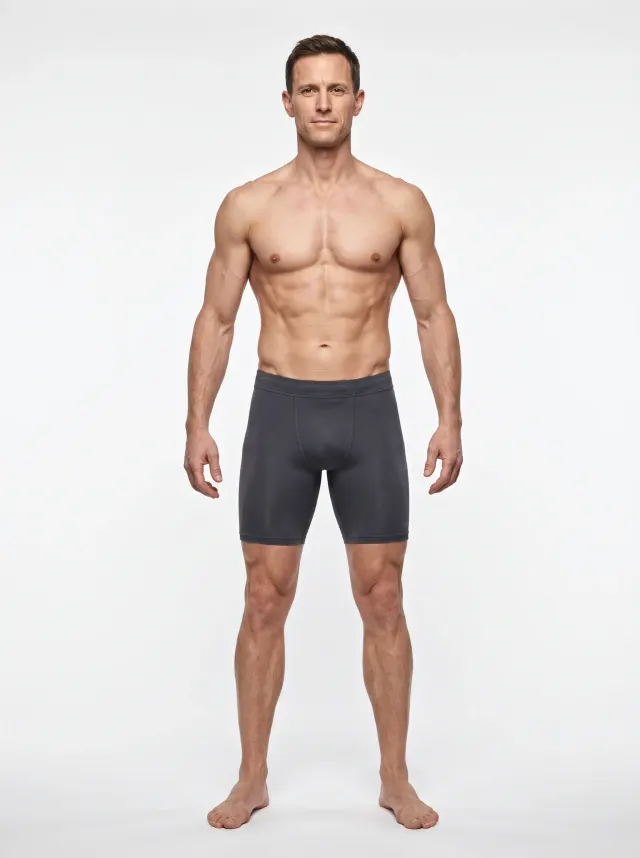
~13% body fat: the upper aesthetic range most natural lifters can hold year-round.
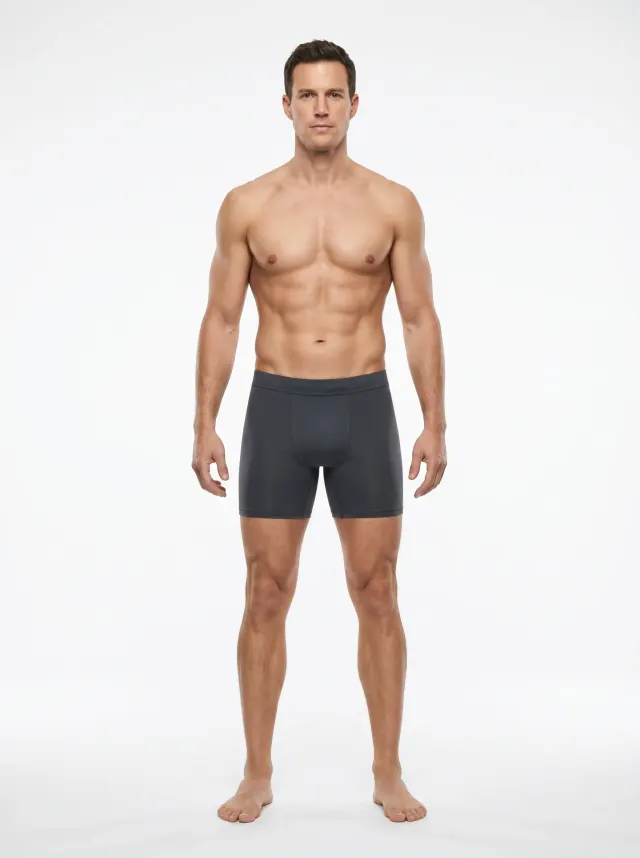
~18% body fat: healthy, but definition has faded — one focused cut above the aesthetic range.
The upper boundary of the aesthetic range (12–15%) is where most natural lifters can realistically live year-round. The lower range (8–12%) typically requires a dedicated cut to reach and is harder to sustain.
One important caveat: these are general ranges. Individual variation in fat distribution, muscle insertion points, and skin thickness means two men at identical body fat percentages can look meaningfully different. The ranges are directional, not deterministic.
What body fat percentage produces an aesthetic physique for women?
For women, the athletic aesthetic range is 16–22% body fat. Women naturally carry more essential fat than men — particularly in the hips, thighs, and chest — which shifts the "aesthetic" range higher:
| Body Fat % | Appearance |
|---|---|
| 10–15% | Fitness competitor level — extreme definition, minimal curves. Difficult to sustain. |
| 16–20% | Athletic aesthetic — visible muscle definition, toned arms and legs, some abdominal definition |
| 20–24% | Fit and toned — visible muscle but softer, healthy appearance |
| 25–29% | Average fitness — some muscle tone but definition minimal |
| 30%+ | Muscle definition largely obscured |
The 16–22% range produces visible muscle tone, defined shoulders and arms, and functional fitness aesthetics without the depleted appearance of competition conditioning. Most women find this range both achievable and sustainable.
The same standardized comparison for women — identical build, two points in the athletic range:
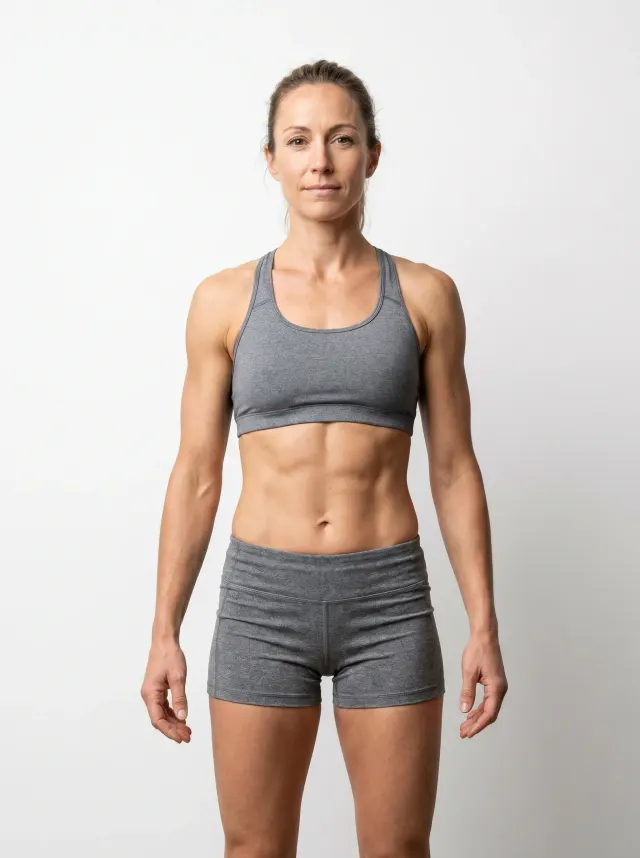
~18% body fat: the sharp end of the athletic range — near the sustainable floor for many women.
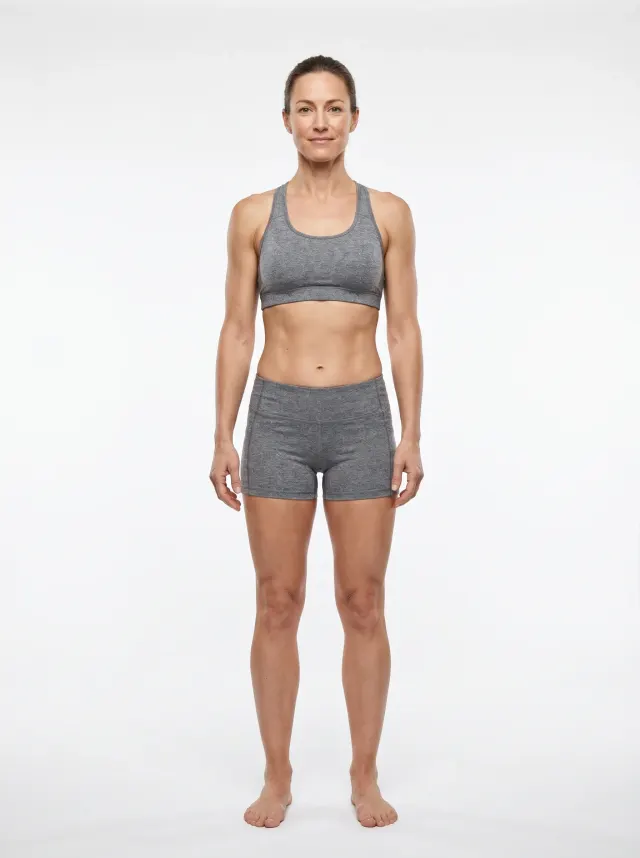
~22% body fat: the classic fit look — toned, defined, fully sustainable.
Why doesn't low body fat alone create an aesthetic physique?
This is the most common misconception. Someone crashes their calories to 10% body fat and looks in the mirror expecting the aesthetic physique they imagined — and sees a thin, flat, undefined result instead.
Low body fat creates visibility. But there has to be something to make visible.
Muscle mass provides the three-dimensional structure that low body fat reveals. Shoulder cap development, chest thickness, lat width, quad separation — these are the structural elements that leanness uncovers. Without them, leanness produces a flat, skinny appearance rather than a defined athletic one.
The inverse is equally true. High muscle mass at elevated body fat — an FFMI of 22 at 22% body fat — looks thick and powerful but not aesthetic. The definition that makes muscle structure visible requires the fat to be thin enough.
The aesthetic equation requires both simultaneously.
What role does FFMI play in aesthetic physique?
Fat-Free Mass Index measures how much lean mass you carry relative to your height. It's the muscle-side variable the scale and BMI both miss.
For the aesthetic look, FFMI matters because it determines whether there's enough muscle structure to be defined. A rough guide:
- FFMI below 18 (men): Likely to look thin rather than aesthetic when lean, because muscle volume is insufficient for visible shape
- FFMI 18–20: Entry-level aesthetic potential — lean enough and with enough muscle that definition starts to be visible
- FFMI 20–23: Clear aesthetic range — visible muscle development in multiple groups, definition noticeable when lean
- FFMI 23+ (natural): Advanced development — significant muscle volume that remains visible even at slightly higher body fat
For women, the same principle applies with lower absolute numbers: an FFMI around 17–20 represents the aesthetic development range.
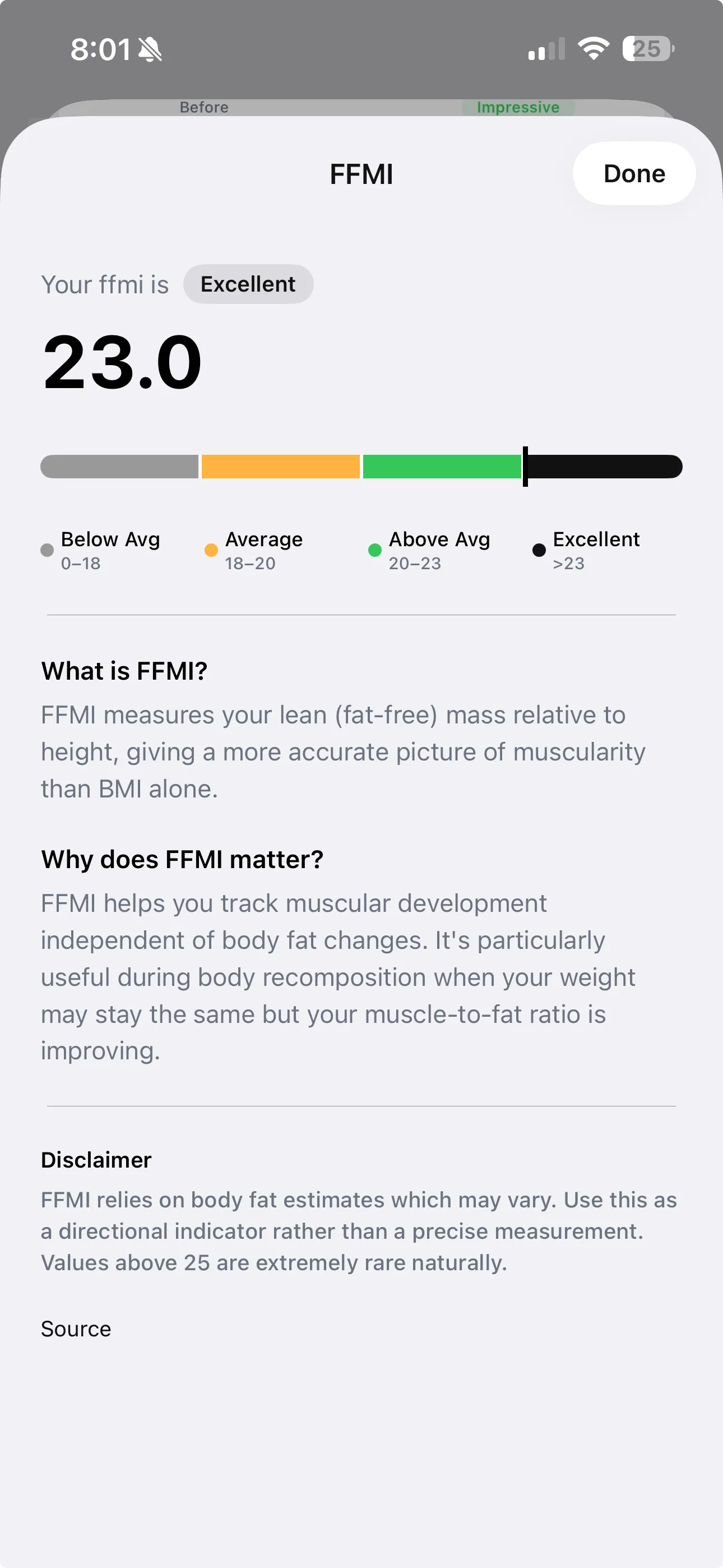
FFMI contextualizes lean mass against height — the muscle-side variable that determines whether leanness produces an aesthetic result or just a thin one. Below 18–19 for men, low body fat produces a flat physique rather than a defined one.
How do you track whether you're building an aesthetic physique?
The aesthetic physique requires tracking three numbers together: body fat percentage (falling toward range), FFMI (rising toward the aesthetic zone), and proportions (shoulder-to-waist ratio improving).
None of these is visible in scale weight alone. A weekly check-in that captures a photo, calculates body fat and FFMI, and scores muscle group development gives you all three signals in one place.

When BF%, muscle scores, and proportions are tracked together, you can ask specific questions: "Am I lean enough for my muscle to show yet?" gets answered from your actual composition data rather than a generic estimate.
GainFrame tracks body fat percentage, FFMI, per-muscle scores, and the Proportions metric from each photo check-in. The combination shows whether all three variables are moving toward the aesthetic range — or whether fat loss is ahead of muscle development, or vice versa.
Frequently Asked Questions
What is the most aesthetic body fat percentage for men?
8–15% is widely considered the sweet spot — visible abdominal definition, clear muscle separation, full muscle bellies. At 8–12%, definition is sharp. At 13–15%, muscles appear fuller but softer. Below 8% is competition range: extreme definition but difficult to sustain.
What body fat percentage is needed for visible abs?
For most men, visible abdominal definition appears around 10–14%. For women, around 16–20%. The exact threshold varies by ab muscle development and fat distribution — someone with well-developed abs may show definition at 14% where others need to reach 10–12%.
Can you look aesthetic at 20% body fat?
For most men, definition is minimal at 20%. If FFMI is very high (23+), some definition is preserved due to muscle volume. But for most natural lifters, the aesthetic range requires body fat below 15–16% to produce visible definition.
What is the aesthetic body fat range for women?
16–22% — visible muscle tone, defined arms and shoulders, some abdominal definition. Higher than the male range because women naturally carry more essential fat. Above 25%, muscle definition begins to fade.
Why doesn't low body fat alone create an aesthetic physique?
Low body fat creates visibility; muscle mass creates what's visible. Without sufficient muscle development (FFMI above 18–19 for men), leanness produces a flat, thin appearance rather than a defined athletic one. Both variables need to be in range simultaneously.
How long does it take to reach an aesthetic body fat percentage?
Starting from average body fat, reaching the aesthetic range typically takes 3–6 months of consistent training with a slight deficit. Getting lean is often faster than building muscle — most people underestimate the muscle development side of the equation.
Track both sides of the aesthetic equation
GainFrame tracks body fat percentage, FFMI, per-muscle scores, and proportions from weekly check-in photos — showing whether you're in the aesthetic range on all three variables, not just one.
Download GainFrame Free