
Quick answer: Work backward from the wedding date: weeks 1–4 build the deficit and lifting habit, weeks 5–8 bring visible definition (schedule the final suit fitting around week 9–10), weeks 9–11 are the peak push, and week 12 is maintenance — no crash diets or dehydration tricks before the most photographed day of your life.
Search "wedding weight loss" and count how many results are for you. The industry produced "sweating for the wedding" tank tops, bridal boot camps, and a thousand 90-day bride plans — and for the guy standing at the other end of the aisle, roughly nothing. Meanwhile you've got a date on the calendar, a suit that was measured optimistically, and photos that will hang on a wall for the next forty years.
Twelve weeks is enough to change what those photos look like. It is not enough for a movie-montage transformation, and the plans that promise one usually end with a crash diet in the final week — which is precisely how grooms end up looking drained and gray on the one day that's permanently documented. So here's the realistic version, built backward from the date.
How much can you actually change in 12 weeks?
Set the expectation first, because everything downstream depends on it. Sustainable fat loss is commonly cited around 0.5–1% of body weight per week. For a 200 lb groom, that's roughly 12–20 lb across the full twelve weeks — done without the energy crash, muscle loss, or rebound that faster rates invite.
The good news: the visual return is larger than the number. An inch or two off the waist changes how every shirt and jacket sits. New lifters add visible shoulder and chest fullness in this window. And posture — the most underrated wedding-photo variable — improves within weeks of consistent rowing and pressing. You will not become a different person by the wedding. You will become the version of yourself the tailor was hoping for. For the deeper timeline math, see how long body recomposition takes.
Weeks 1–4: What does the foundation month look like?
The work: a moderate calorie deficit (roughly 300–500 below maintenance), protein around 0.7–1 g per pound of body weight daily, and three to four lifting sessions a week built on compound movements — squats or leg press, a press, a row, a hinge. Nothing exotic. The entire goal of month one is that you're still doing it in month two.
What changes visually: less than you want, and that's normal. The first weeks of a deficit drop water and glycogen along with some fat, so the scale moves fast and then slows — don't recalibrate your plan around week-2 euphoria or week-4 disappointment. The real month-one wins are a slightly tighter waist and dramatically better posture from rowing three times a week. Standing taller is free and photographs like ten pounds.
Wedding logistics: if the suit isn't bought yet, do the initial fitting now for fabric and style — and tell the tailor you're twelve weeks out from the date and mid-plan. They deal with this constantly.
Weeks 5–8: When does definition actually show up?
This is the block where other people start noticing. The waist change becomes obvious in how clothes fit, the jawline sharpens, and if you're lifting consistently the shoulders start filling the jacket instead of the jacket doing all the work. Keep the deficit steady; resist the urge to slash calories because progress feels slow. Slow is what sustainable looks like from the inside.
The suit note: common tailor advice puts the final fitting around 2–3 weeks before the wedding — which means week 9 or 10 of this plan. Mark it now. A suit taken in at week 6 can be loose by the wedding; a groom who shows up to the final fitting still losing a pound a week is giving the tailor a moving target. Weeks 5–8 are for losing; week 9–10 is for measuring.
This is also where the mirror starts lying to you. You see yourself daily, under stress, usually in bad bathroom light, and adaptation makes real change invisible. A weekly photo — same spot, same light, same relaxed pose — is the antidote. Our progress photo guide covers the setup in five minutes.
Weeks 9–11: What is the peak push?
The final working block. Hold the deficit, keep protein high, and keep lifting heavy — the training is what tells your body to keep the muscle while the fat goes. If you want one addition, add a couple of easy cardio sessions or a daily step target; if you want one subtraction, cut the alcohol here (bachelor party excepted; one night won't undo a plan, and everyone knows it's happening).
Two appointments live in this block. The final suit fitting, ideally around week 9–10 once your weight has mostly flattened. And the haircut rehearsal — get the wedding haircut once now, so week 12's version is the second, refined take. Neither is training advice; both affect the photos more than your last two pounds will.
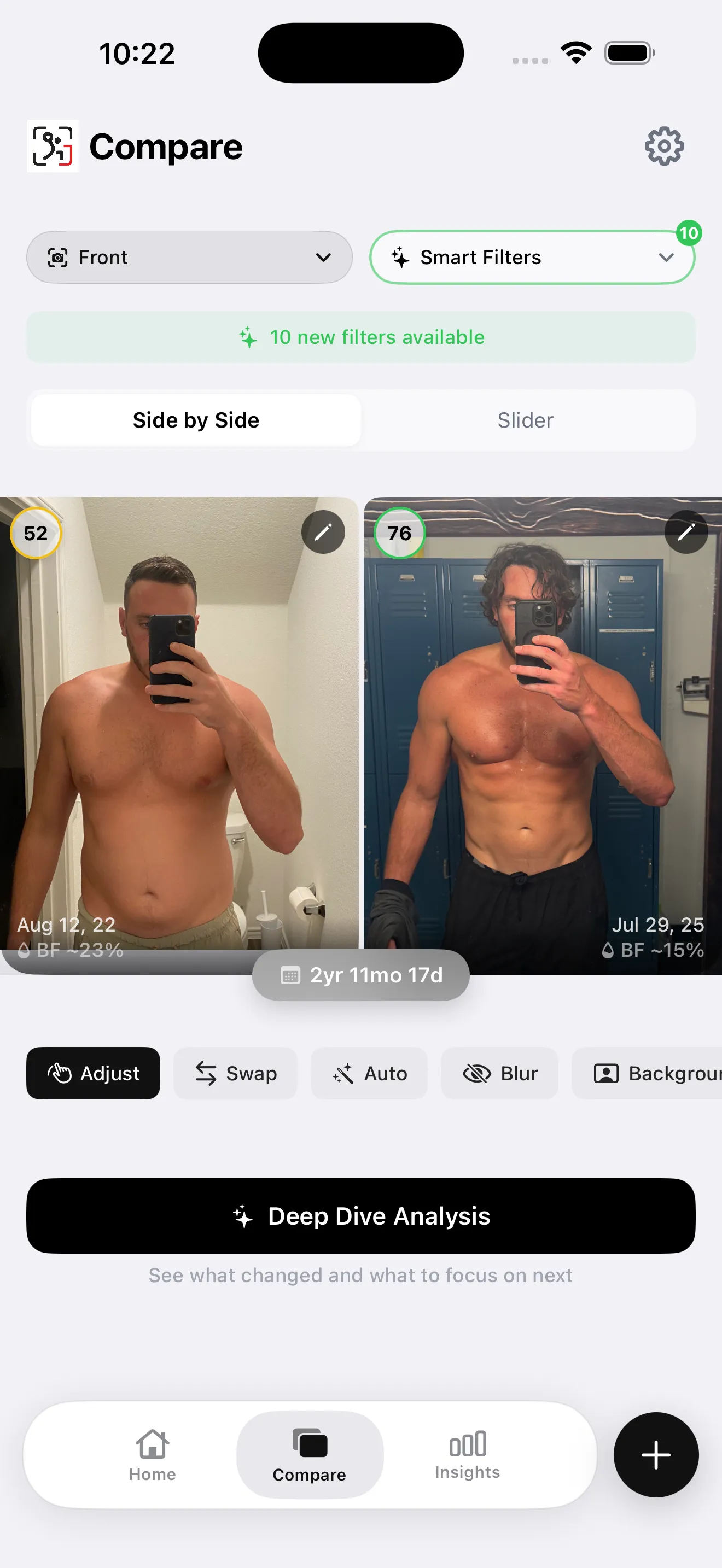
Week 1 vs week 10, side by side. When the mirror shrugs, the comparison doesn't.
Week 12: Why is the last week for maintaining, not cutting?
Here's the counterintuitive part: the week of the wedding, stop losing. Move calories up to roughly maintenance, keep meals familiar, drink normal amounts of water, and sleep. Whatever you weigh on Monday is functionally what you'll weigh on Saturday — the last-week deficit buys you nothing visible and risks plenty.
The specific trap to refuse: water manipulation. Bodybuilders cut water and sodium before a stage appearance, the internet knows this, and every year some groom tries it before his wedding. Don't. It's a technique with a narrow window and an ugly failure mode — flat, cramping, headachy, and visibly exhausted on a fourteen-hour day of photos, toasts, and dancing. A physique athlete is judged shirtless for ten minutes; you're being photographed, hugged, and handed champagne from morning until midnight. Hydrated and rested beats depleted and sharp-for-an-hour, every time.
Crash-dieting the final week fails the same test. Wedding photos are the most permanent photos most men ever take — the goal of week 12 is arriving at them fed, hydrated, and looking like the healthiest version of yourself, not the emptiest.
How do you keep the panic in check for 12 weeks?
Every groom hits a week — usually around 6 or 7 — where the scale stalls, the mirror looks identical, and the whole plan feels like it isn't working. Under wedding-planning stress, that's when guys do something drastic. The fix is boring: a weekly check-in photo, taken in the same conditions, compared against week 1 instead of against yesterday.
This is the one place an app genuinely helps. GainFrame turns those weekly photos into numbers — an estimated body fat %, a physique score, and auto-aligned side-by-side comparisons with the delta between any two dates — and tracks your weight with milestones toward the date, so the trend answers the panic instead of your reflection. iOS only, and the estimates come from photos rather than clinical measurement, but for "is this actually working?" a trend line beats a stressed groom's mirror read.
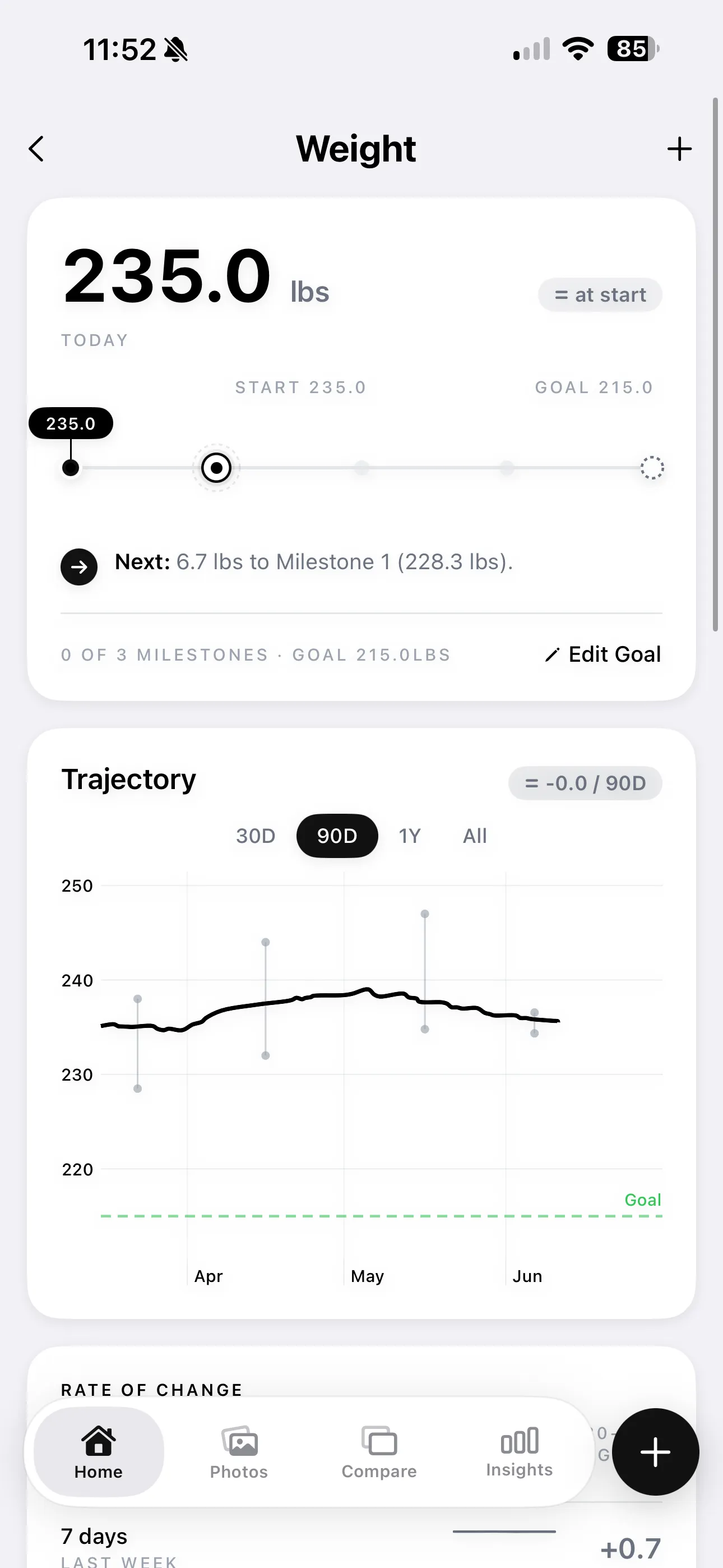
Milestones and a trajectory pointed at one very specific date.
Frequently asked questions
How much weight can a groom realistically lose in 12 weeks?
Sustainable fat loss is commonly cited around 0.5–1% of body weight per week, so a 200 lb groom might realistically drop 12–20 lb over 12 weeks without wrecking energy or muscle. The visual change is bigger than the number suggests, because a smaller waist plus better posture and fuller shoulders reads as a much larger transformation in photos.
Is 12 weeks enough time for a groom to get in shape for a wedding?
Twelve weeks is enough for a clearly visible change — a tighter waist, a sharper jawline, a suit that fits the way the tailor intended. It is not enough for a full physique overhaul, so pick the realistic goal: look like a noticeably leaner, sharper version of yourself. Most guests compare you to you, not to a fitness model.
When should the final suit fitting happen if I'm losing weight?
Common tailor advice is to schedule the final fitting about 2–3 weeks before the wedding, once your weight has mostly stabilized. Book the initial fitting early for fabric and style, warn the tailor you're mid-plan, and save precise measurements for the end. A suit fitted at week 4 of a 12-week cut can hang loose by the wedding.
Should a groom cut water weight before the wedding?
No. Water manipulation is a physique-stage technique with a narrow window and a real failure mode — done wrong it leaves you flat, cramping, and visibly drained on a long day of photos, dancing, and champagne. Grooms aren't judged shirtless under stage lights. Normal hydration, normal sodium, and a good night's sleep photograph far better.
What should a groom eat the week of the wedding?
Roughly maintenance calories, familiar foods, normal salt and water. The last week adds almost nothing to fat loss but can subtract a lot — new foods risk bloating, aggressive deficits risk looking gaunt and exhausted. Whatever you weighed on Monday of wedding week is essentially what you'll weigh on Saturday, so spend the week protecting the result, not chasing more.
Twelve weeks. One date. Proof it's working.
GainFrame scores your weekly check-in photos and tracks weight milestones toward the date — so the mid-plan panic gets answered by a trend line, not a stressed look in the mirror. Free to start on iOS.
Download GainFrame Free