

Quick answer: A lean bulk means eating 200–300 calories above your maintenance level with protein at 0.8–1g per pound of bodyweight daily. At this surplus, muscle-building has enough fuel without a fat-storage overflow. The hard part isn't the number — it's staying disciplined enough not to creep toward a dirty bulk when progress feels slow.
Most people who try to lean bulk fail in one of two ways.
The first group starts clean — precise surplus, high protein, whole foods. Then week four arrives and the scale barely moved. So they add a few hundred more calories. Then a few hundred more after that. By week eight they're eating 700 calories over maintenance and calling it a lean bulk. It isn't. It's a dirty bulk with a cleaner name.
The second group is scared of fat gain and doesn't eat enough. They eat at maintenance or slightly above, train hard, and wonder why nothing is growing. The answer is that without a real surplus, muscle protein synthesis doesn't have the energy to fully execute — regardless of how clean the food is.
Getting lean bulking right is a precision problem. The surplus window is narrower than most people treat it, and the only way to stay inside it is to set it correctly and track whether you're actually in it.
What does a lean bulk surplus actually mean in calories?
Muscle protein synthesis — the biological process of building new muscle tissue — has a ceiling. For most intermediate lifters, that ceiling is fully fueled by a surplus of roughly 200–300 calories per day above maintenance. Research on this is reasonably consistent: larger surpluses don't produce proportionally more muscle. They produce proportionally more fat.
Start with your TDEE (total daily energy expenditure). This is the calories at which your weight stays stable, accounting for your activity level. Calculators using your age, sex, height, weight, and typical weekly training hours give a reasonable estimate. Then add 200–300 to that number. That's your lean bulk target.
Two important notes. First, TDEE calculators are estimates — sometimes off by 10–15%. The first four weeks of your bulk will tell you whether the estimate is right: if weight isn't moving, TDEE was underestimated and you need to eat slightly more. If it's moving faster than 0.5 lbs per week, TDEE was overestimated. Adjust based on real data.
Second, this number will change over time as you gain weight. A 200 lb person has a higher TDEE than when they started the bulk at 185 lbs. Recalculate every four to six weeks and adjust.
How much protein do you need to lean bulk without gaining fat?
The relationship between protein and fat gain during a bulk is direct: adequate protein means muscle can be built with the surplus; inadequate protein means the surplus goes somewhere less useful.
The target is 0.8–1g of protein per pound of bodyweight per day. For a 180 lb person, that's 144–180g of protein daily. Set this first — before allocating any remaining calories to carbs or fat. It's the non-negotiable variable.
Why this specific range? Research on muscle protein synthesis rates generally supports diminishing returns above about 0.8–1g per pound, though some studies suggest up to 1.2g in caloric restriction. During a lean bulk (a modest surplus), the lower end of the range is sufficient. Going higher doesn't hurt, but it crowds out carbohydrates that fuel training quality.
Distribute protein across three to four meals rather than eating it all at once. Most research suggests a practical ceiling of roughly 40–50g of protein per meal for maximizing muscle protein synthesis — the rest gets oxidized rather than used for building.
How should you structure meals for a lean bulk?
Once protein is set, the remaining calories fill in around training. This is where carbohydrates earn their place in the lean bulk.
Carbohydrates are the primary fuel for intense resistance training. Eating them strategically around training sessions — in the two to three hours before and after — takes advantage of heightened insulin sensitivity and glycogen demand. This isn't critical; total daily intake matters more than timing. But if you're optimizing, carbs around training and fat distributed across the rest of the day is the practical approach.
A typical day structure that works for most lifters:
- Pre-training meal (2–3 hrs before): Larger carb portion + protein source. This fuels the session.
- Post-training meal (within 2 hrs after): Another moderate carb portion + protein source. This supports recovery.
- Other meals: Protein + fat + vegetables. Smaller carb portions or none.
Rest days don't require a separate meal structure. Keep protein consistent. Carb intake can be slightly lower on rest days (100–200 calories less) since glycogen demand is lower — but don't cut so aggressively that total protein or calories drop below target.
What foods make lean bulking practically easier?
The macro targets are the constraint. Food choices are about making them easy to hit without needing to eat enormous volumes or expensive supplements.
High protein-per-calorie sources: Chicken breast, Greek yogurt, cottage cheese, egg whites, canned tuna and salmon, low-fat ground beef. These deliver protein without pushing total calories above target.
Training-friendly carbohydrate sources: White rice, oats, potatoes, fruit, bread. These are easily digestible and convenient to eat around training when appetite may not be high.
Satiating fats to round out calories: Whole eggs, olive oil, mixed nuts, avocado. These add caloric density without bulk — useful when hitting a 3,000+ calorie target feels like a volume problem.
What to limit (not eliminate): Highly processed food, alcohol, and calorie-dense snacks with low protein. These make it easy to overshoot the surplus while contributing nothing to the muscle-building signal.
How do you track a lean bulk so it actually stays lean?
Setting up the lean bulk correctly is the first half. The second half is verifying you're still inside the setup — because surplus creep is gradual and invisible without measurement.
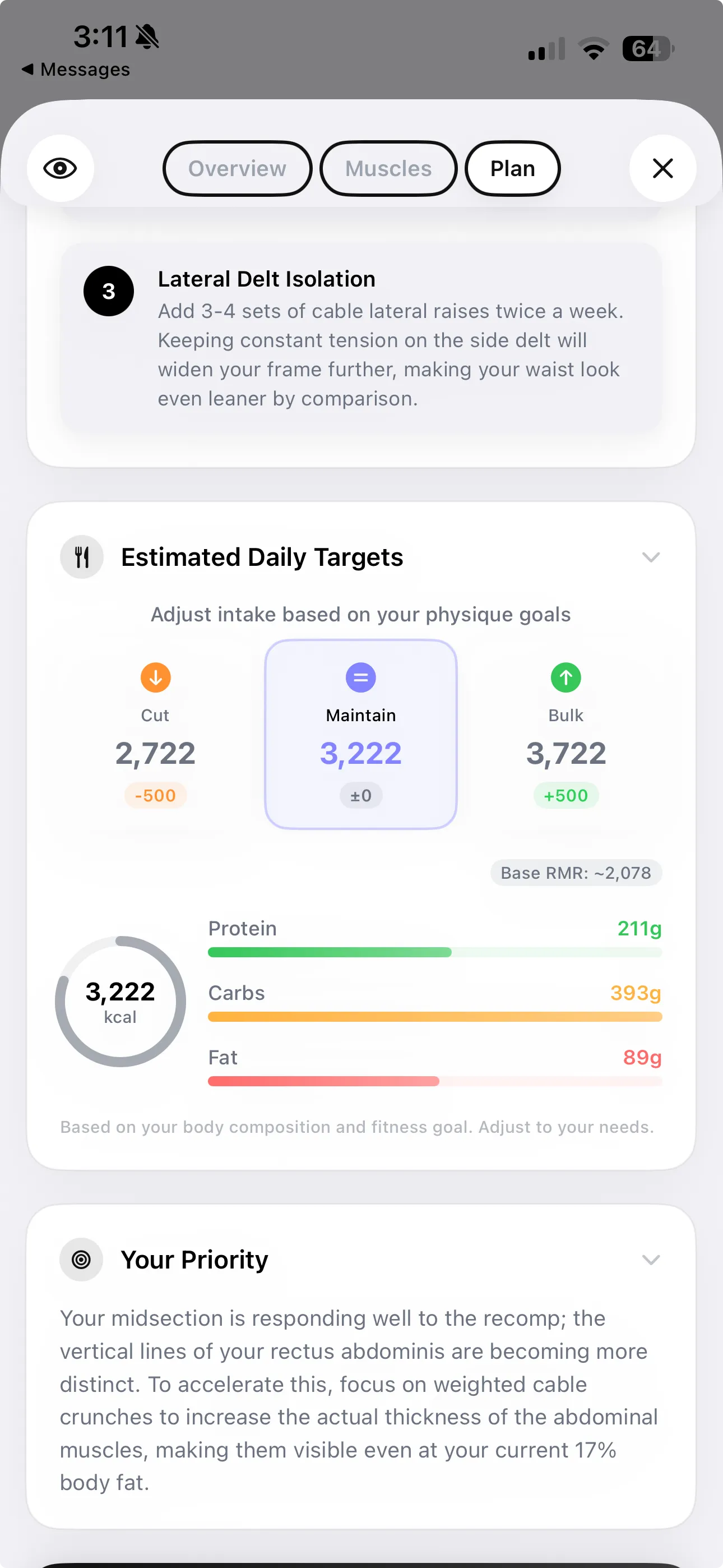
The lean bulk target sits between Maintain and Bulk on the calorie selector — a controlled, specific surplus with macro distribution calculated. This is what "lean bulk" looks like as an actual number, not a philosophy.
GainFrame calculates your Cut, Maintain, and Bulk targets from your current body composition — then tracks whether the body fat trend over time reflects a lean bulk or something that's drifted heavier. The weekly check-in is what makes that tracking consistent.
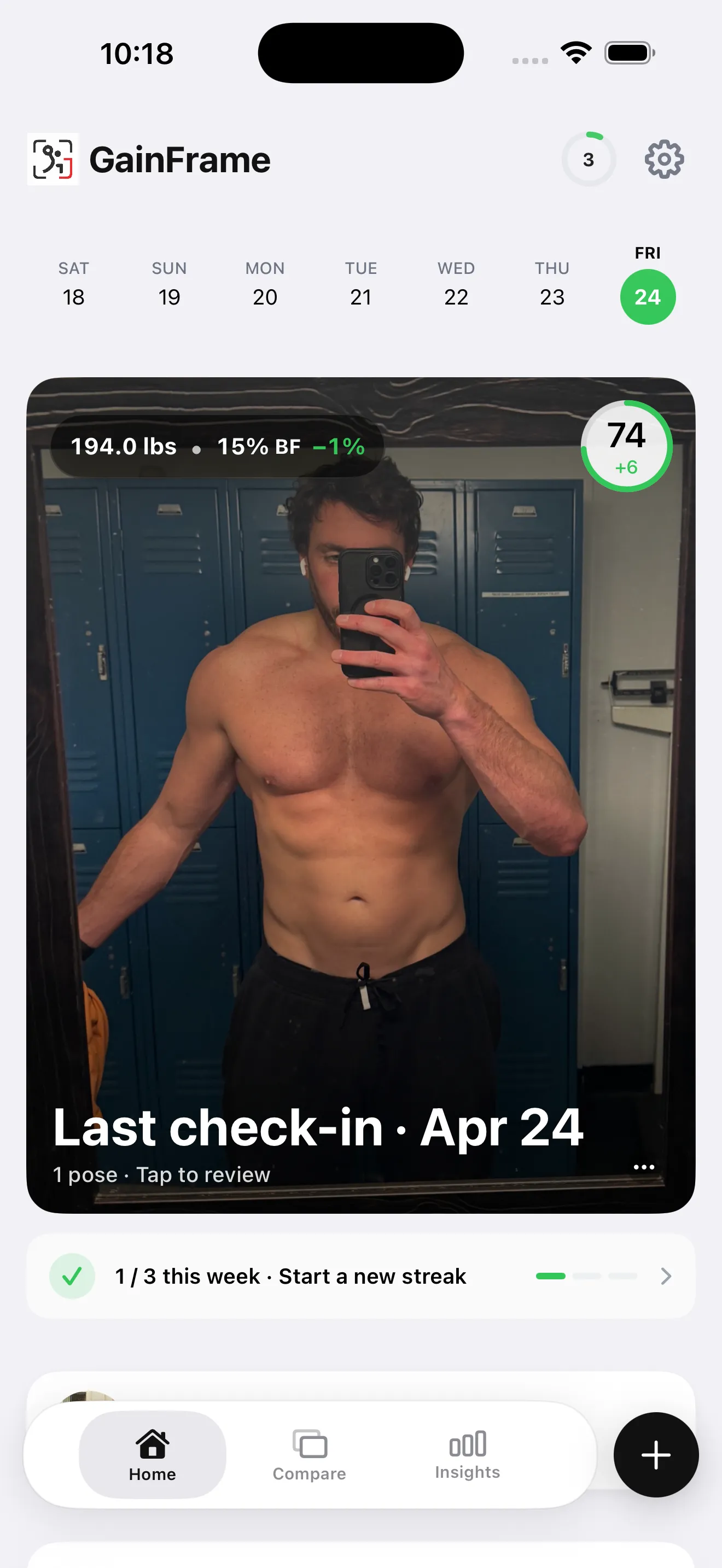
The weekly check-in creates a body fat and composition trend during the bulk — not just a weight trend. That's what separates a lean bulk from a bulk that slowly drifted.
Consistency over the bulk's duration is what the data requires. A single check-in tells you almost nothing. Eight consistent weekly check-ins tell you the direction.
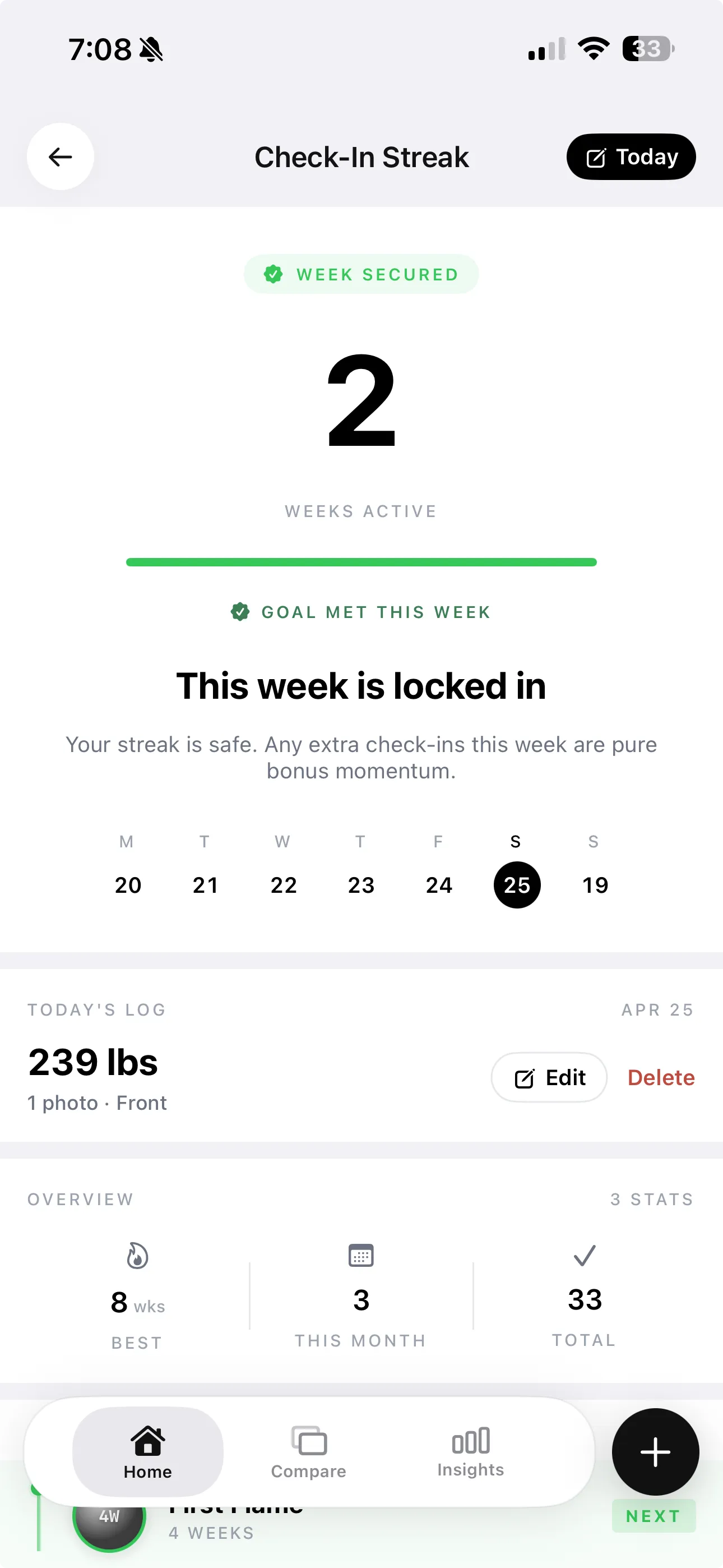
Eight weeks of check-ins is the minimum dataset for reading a bulk's body composition trend. Less than that and you're adjusting based on noise rather than signal.
Once the bulk is running, track whether it's actually adding muscle or primarily fat — that's the companion question to this post's setup guide. The setup gets you in the right lane. The tracking keeps you there.
Frequently Asked Questions
How many calories should you eat on a lean bulk?
Eat 200–300 calories above your total daily energy expenditure. This surplus is enough to fuel muscle protein synthesis without overwhelming your body's ability to direct those calories into muscle rather than fat. Calculate your TDEE with an online calculator, then add 200–300 to that number. Adjust after four weeks based on your actual rate of weight gain.
Can you lean bulk without tracking calories?
Possible but difficult. The surplus window for lean bulking is narrow — only 200–300 calories. Most people eating by feel either overshoot into dirty bulk territory or undershoot and don't grow. Tracking for the first four to six weeks calibrates your intuition so you can eventually maintain the surplus without an app.
Should you eat the same amount on rest days and training days?
A flat daily target is simpler and works well. Some people eat slightly less on rest days and more on training days — this can help if the training-day caloric need is high and the rest-day need is lower. What matters is total weekly intake. Don't cut rest-day calories so aggressively that protein drops below target.
What happens if you eat too few calories on a lean bulk?
You stall. At maintenance or below, muscle protein synthesis is limited by energy availability. Your body prioritizes maintaining existing tissue over building new tissue. You may feel like you're bulking because you're eating more protein and training hard — but without the surplus, the growth signal doesn't have energy to fully execute.
How long should you lean bulk before cutting?
Most lean bulk phases run 12–20 weeks. The endpoint is a body fat ceiling — roughly 18–20% for men or 28–30% for women — not a fixed date. Once you approach that level, a cut of 8–12 weeks returns you to a leaner, more efficient starting point for the next bulk phase.
Do you need carbs to lean bulk?
Not strictly required — muscle can be built on low-carb diets. However, carbohydrates are the primary fuel for high-intensity training, and training quality directly affects the muscle-building signal. Most lifters find performance and muscle gain better with adequate carbs around training. Total protein and total calories matter most; carb timing is a secondary optimization.
Is intermittent fasting compatible with lean bulking?
Yes, with planning. You need to fit your full caloric target and protein target into the eating window. In a 16:8 window, 3,000–3,500 calories and 180g of protein is achievable but requires deliberate meal planning. Total daily protein matters more than distribution across meals.
The Lean Bulk Setup Checklist
Five steps before your bulk starts — not after week four when the scale is already moving the wrong way.
Calculate your TDEE. Use an online calculator with your age, sex, height, weight, and weekly training days. This is your maintenance baseline — the calorie level at which your weight stays flat. Write it down.
Set your surplus at 200–300 calories above TDEE. Not 500. Not "I'll eat clean so it's fine." A 200 lb intermediate lifter's muscle-building ceiling is fully fueled at this range. Add the number to your TDEE — that's your daily target.
Lock in protein first. 0.8–1g per pound of bodyweight. Calculate this before anything else. For a 175 lb person, that's 140–175g per day across three to four meals. This number doesn't move when other variables shift.
Prioritize carbs around training, fill fat elsewhere. No complex ratio required. Carbs before and after training; fat distributed across the rest of the day. Hit total calorie and protein targets and you're done.
Adjust at four weeks based on actual rate of gain. Gaining faster than 0.5 lbs per week? Reduce by 150–200 calories. Flat scale for three-plus weeks with no body fat change? Add 100–150 calories. The setup number is a starting estimate — the data corrects it.
Track the bulk, not just the calories
Setting up the lean bulk correctly is step one. Knowing whether it's staying lean across 12 weeks is step two. GainFrame tracks body fat percentage and per-muscle scores from weekly photo check-ins — so the composition trend during the bulk is visible as it accumulates, not just when you reach the end and look back.
Download GainFrame Free