
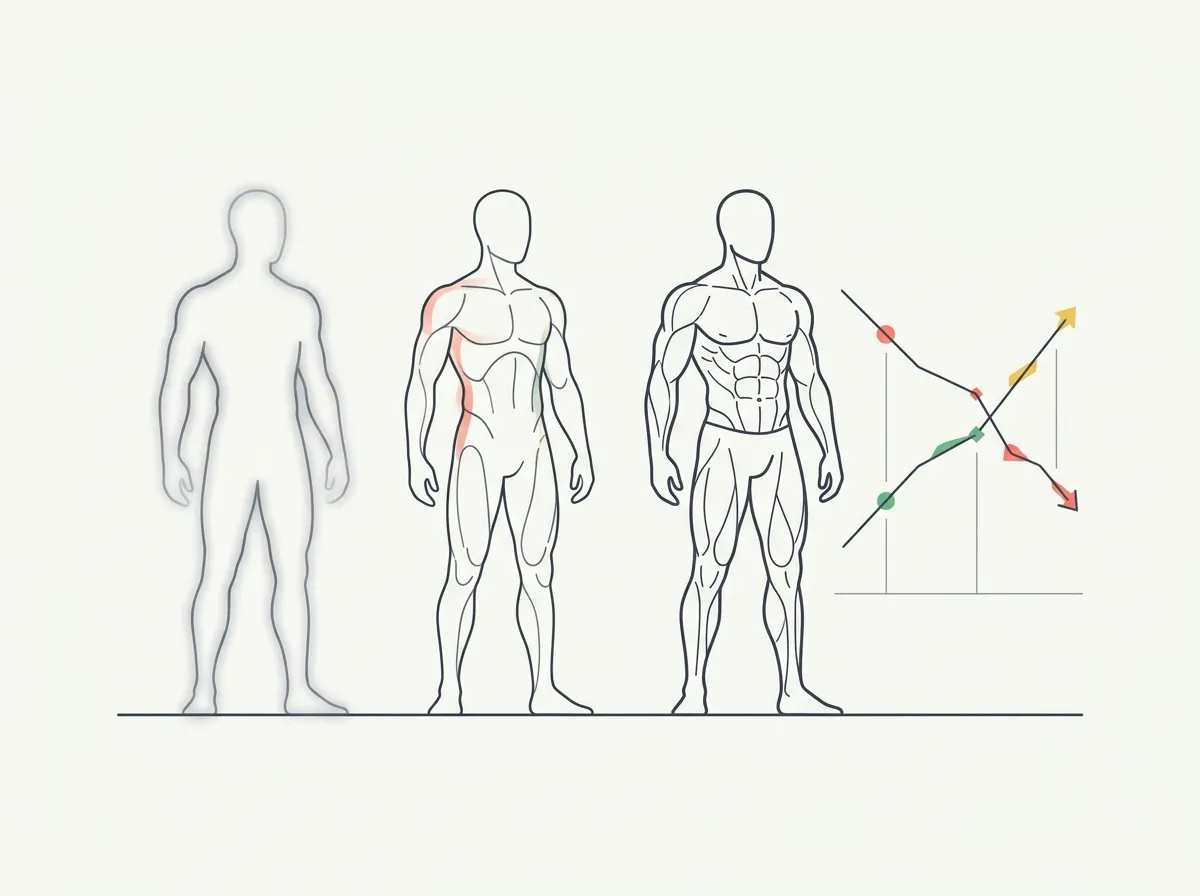
Quick answer: Moving from skinny fat to muscular takes consistent resistance training, adequate protein and an eating plan you can sustain. Recomposition may combine fat loss with muscle gain, especially when training is new. Track strength, body-weight trends, measurements and standardized progress photos together. Your starting point, recovery and consistency affect the pace.
You've trained for a month, your lifts are improving, and the scale is almost unchanged. It is hard to tell whether your routine is working when you are relying on one number.
Skinny fat describes relatively low muscle mass and higher body fat at a normal body weight. It is an informal appearance label. Your training history and health matter more than whether the label seems to fit a photograph.
Recomposition means working toward less fat and more muscle over time. That can happen without a large change in total weight, but stored fat alone cannot guarantee muscle growth. Training, nutrition and recovery still determine how you respond.
Why can beginners respond to recomposition training?
Starting a consistent resistance-training program gives previously untrained muscles a new stimulus. The response varies, and early strength gains also reflect learning the movements. More weight on the bar alone cannot tell you exactly how much muscle you gained.
A randomized trial by Longland and colleagues found greater lean-mass gain and fat loss with higher protein during an energy deficit combined with intensive exercise. It shows that simultaneous change is possible under specific study conditions. It does not establish that everyone with a skinny fat appearance will get the same result or should copy the study's demanding routine.
Should you bulk, cut, or recomp if you're skinny fat?
The bulk vs. cut vs. recomp decision depends on your starting point, training history and health. For a beginner who wants to build muscle while gradually reducing fat, a consistent training routine with maintenance calories or a modest deficit can be a reasonable starting approach.
A large surplus can add unwanted fat. An aggressive deficit can make training and recovery harder and increase the challenge of retaining lean mass. Choose an approach you can sustain, then adjust it using several weeks of progress rather than one weigh-in.
If you are already underweight or have a medical reason to manage weight, get individualized guidance before creating a deficit. The appearance label alone cannot tell you which calorie target is appropriate.
What does skinny fat recomp nutrition actually look like?
Start with a manageable eating plan and adjust it using your actual response.
1. Calories: use maintenance as a starting estimate. A TDEE calculator gives an estimate, which you can compare with your weight trend and intake over time. If gradual fat loss is appropriate, a modest deficit such as 200-300 calories below estimated maintenance is a possible starting adjustment. It is not a guarantee of muscle gain.
2. Protein: roughly 0.8-1g per pound of body weight daily is one practical target used in this plan. Distribute protein across meals you enjoy. Your needs depend on body size, training and health; a dietitian can help adapt the target when a generic plan does not fit.
3. Reassess using several signals. Review weight trends, measurements, training performance, hunger and recovery together. If strength and recovery are deteriorating, reconsider the deficit. Avoid changing calories repeatedly in response to ordinary day-to-day weight fluctuations.
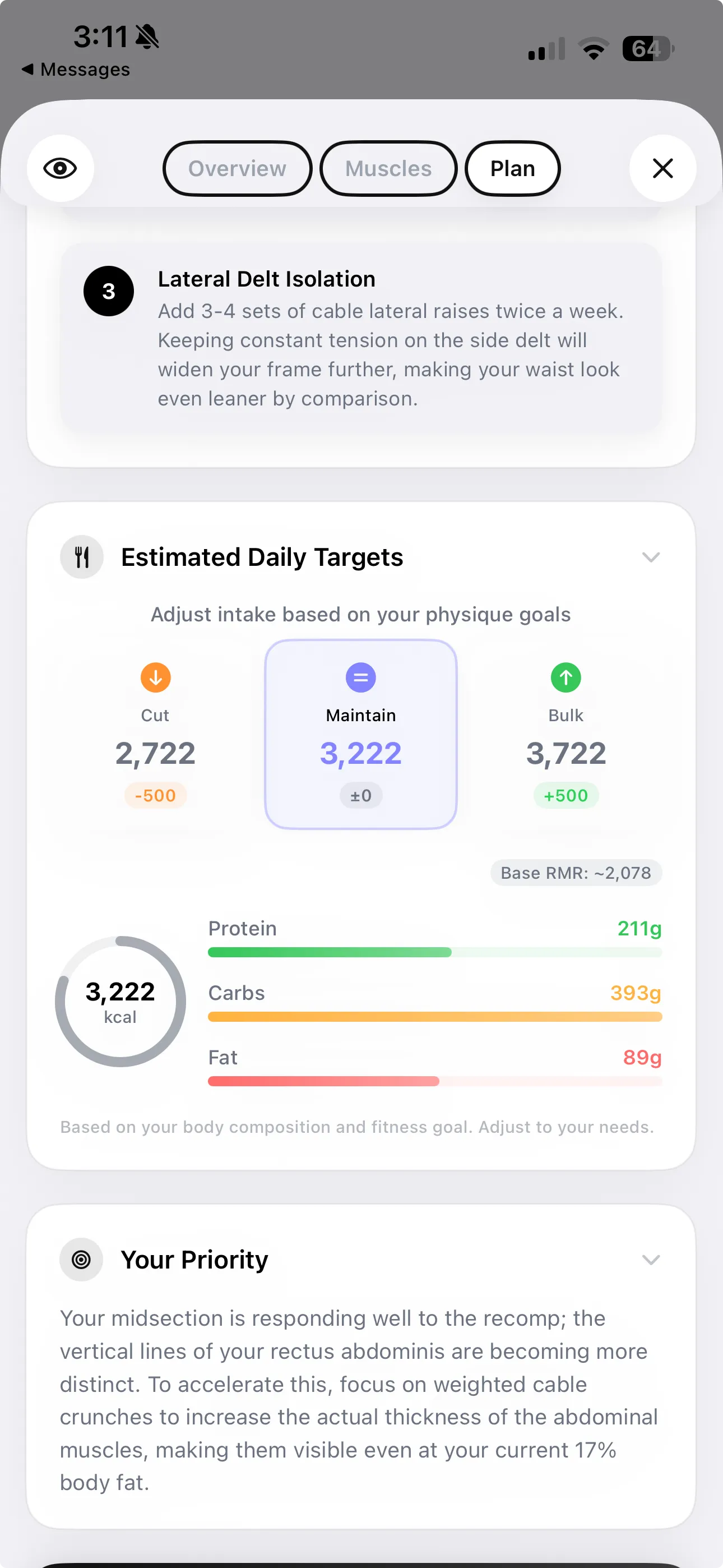
Calorie and macro targets are starting estimates. Adjust them using your progress and recovery over time.
What training approach works best for a skinny fat recomp?
Build your routine around resistance exercises you can perform consistently with good technique. Squats or leg presses, a hip hinge, presses and rows cover several major movement patterns. Three to four sessions a week is one workable schedule, provided you recover between sessions.
Progressive overload means increasing the challenge as your ability improves, through weight, repetitions or other planned changes. Progress may pause while you learn a movement or manage fatigue. Keep a training log so you can review the trend across weeks.
Cardio can fit alongside lifting. Walking, cycling or other activity you enjoy can support fitness. Adjust its volume if fatigue interferes with your planned training and recovery.
Isolation exercises such as curls and lateral raises can help you train specific muscles. Choose a balanced routine that fits your equipment, experience and schedule.
How do you track whether a skinny fat recomp is working?
Use several measures together. A scale measures total weight, so it cannot separate changes in fat, muscle, water and other tissue. A flat reading can occur during recomposition, but it can also mean your body composition is unchanged.
Look for a pattern across:
- Body-weight trends from comparable weigh-ins.
- Tape measurements taken at the same landmarks.
- Training performance recorded across several sessions.
- Progress photos with repeatable camera, lighting and pose.
Take photos every two to four weeks under consistent conditions. You can compare standardized progress photos side by side in the browser. Match the angle, light and framing before interpreting a difference. A photo can show appearance changes without proving a precise change in muscle mass or body-fat percentage.
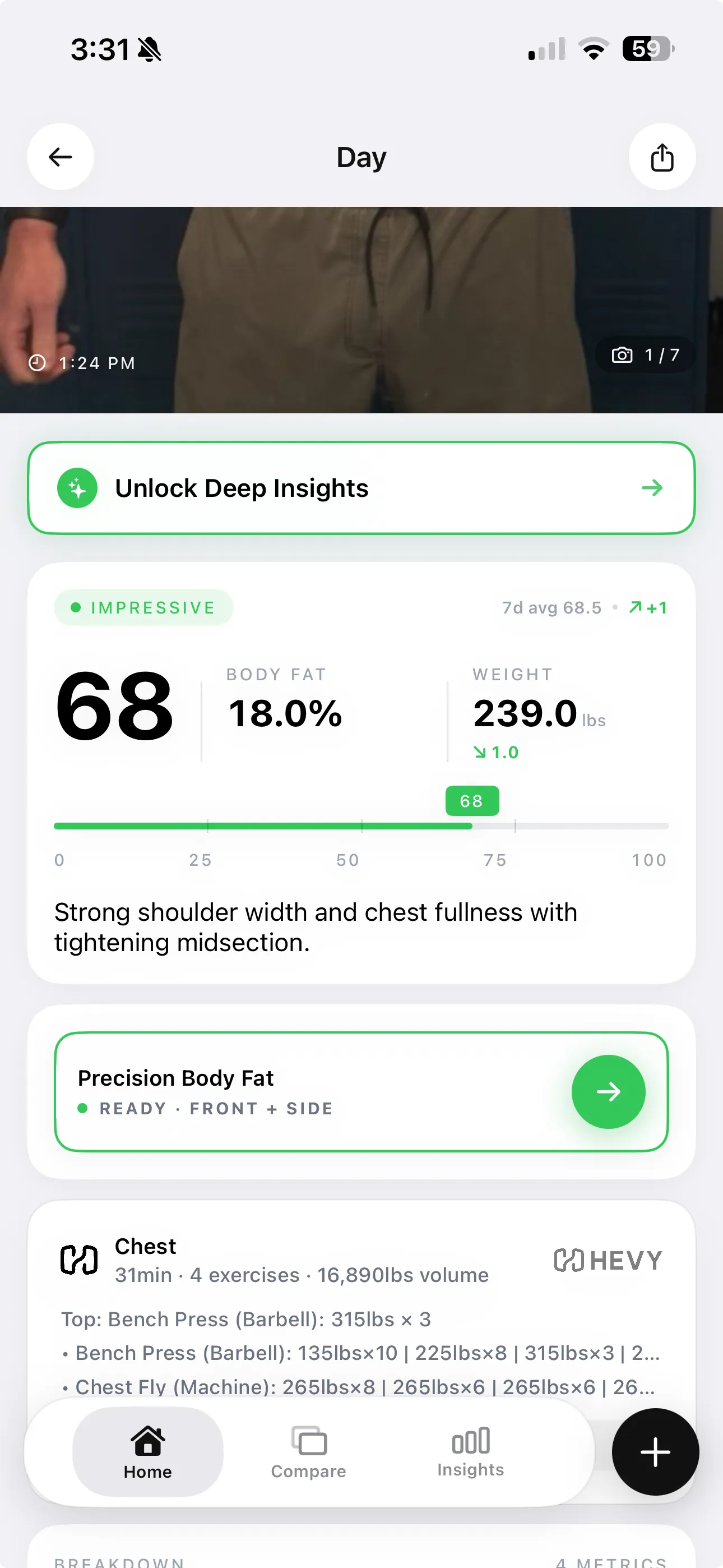
A photo, appearance-based estimates and workout data give you several records to compare. Each has limits; look for a sustained pattern across them.
GainFrame keeps body-photo estimates and per-muscle scores alongside your check-ins. These are estimates from appearance, so use them as supporting context alongside your measurements and training log. A score change alone does not establish how much muscle you gained.
What does a skinny fat to muscular transformation actually look like?
Visible change can take months, and its pace varies with your starting point, training, nutrition and recovery. There is no week when everyone reaches a visual tipping point.
Use a scheduled review, such as after twelve weeks, to compare your records and decide whether the plan needs adjusting. That date is a checkpoint rather than a promise that your shoulders, chest or waist will look a particular way.
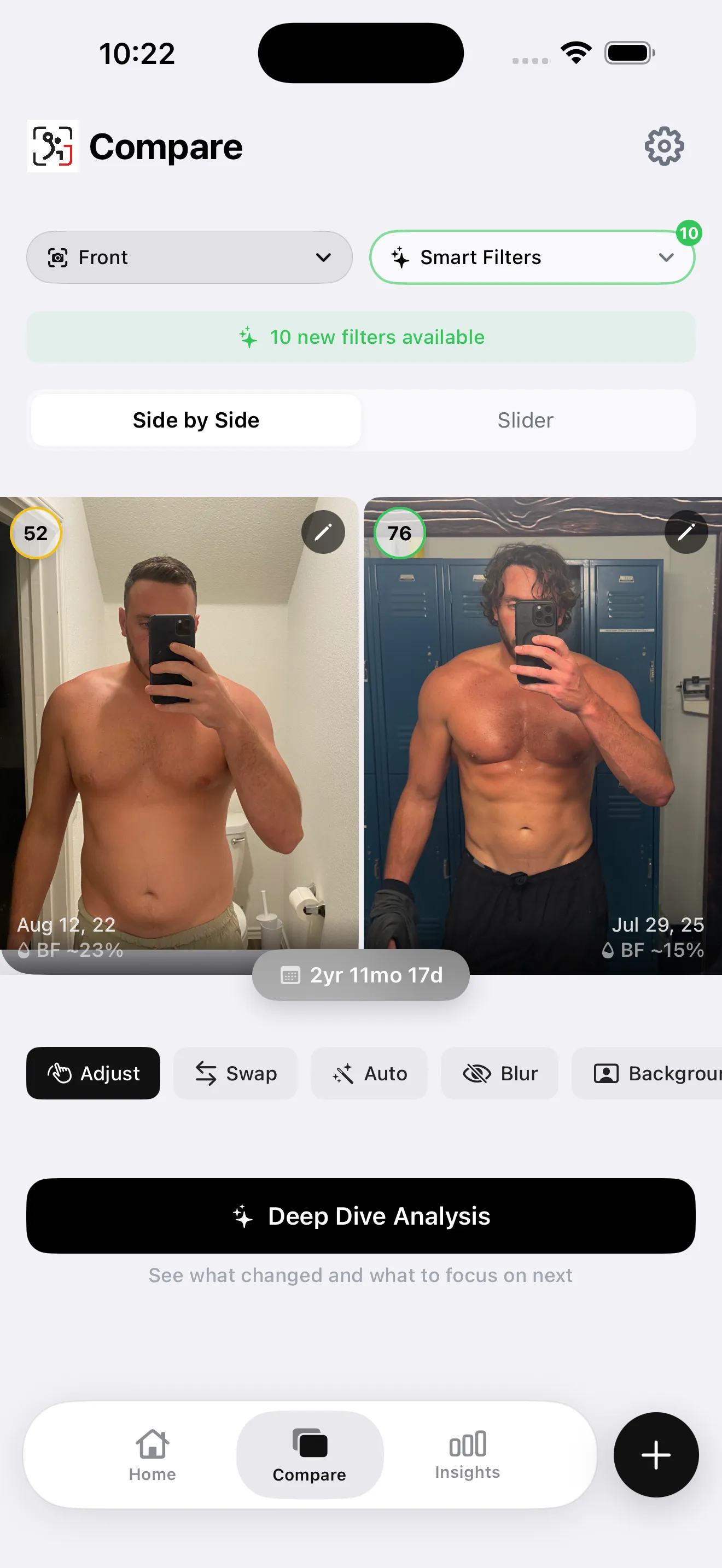
An app comparison displaying an estimated body-fat change over nearly three years. This example does not establish the expected result or accuracy for another person.
The muscle map organizes appearance-based ratings by muscle group. Its labels can help you review photos, while training records and consistent measurements provide additional context:
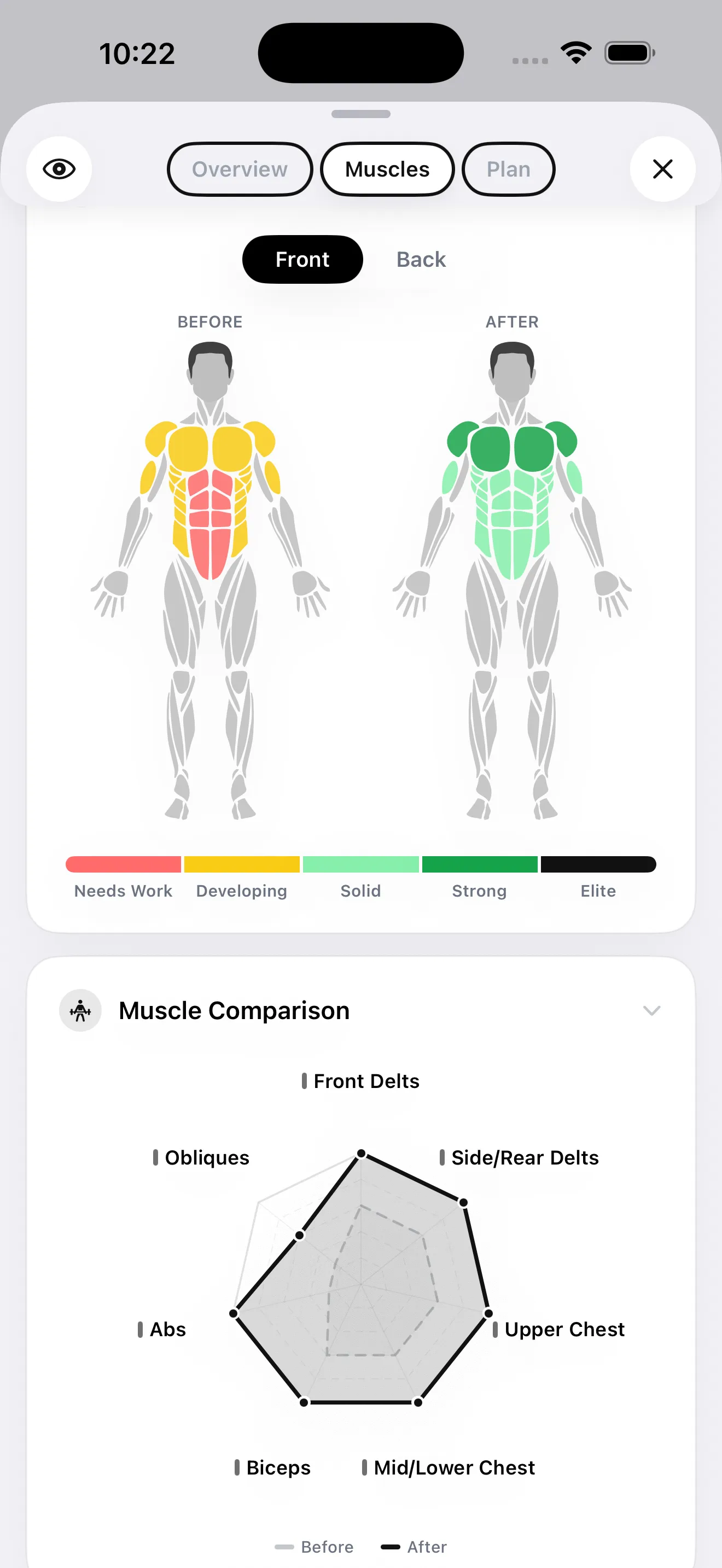
The example shows different appearance ratings across two photos. The colors are app estimates rather than measurements of muscle tissue.
Keep comparing your records over time and reassess when the measures disagree. Neither a flat scale nor a rising app score proves recomposition on its own.
What else should you know about skinny fat recomposition?
Should a skinny fat person bulk or cut first?
A beginner who wants more muscle and less fat can start with consistent resistance training and maintenance calories or a modest deficit. The right choice depends on starting weight, training history, recovery and health. Avoid assuming an appearance label requires weight loss. Use several weeks of measurements and training records to guide adjustments.
How much protein does a skinny fat person need?
This plan uses roughly 0.8-1g of protein per pound of body weight daily as a practical starting target. Spread it across meals that fit your routine. Individual needs vary with training, body size and health, so adapt the plan with a qualified dietitian if a generic target is unsuitable for you.
How long does skinny fat recomposition take?
Expect to assess progress over months, with substantial individual variation. A twelve-week review can help you evaluate training, nutrition and recovery, but it is not a transformation deadline. Compare measurements, strength records and standardized photos over time. Stored fat and a beginner training history do not guarantee a particular amount or pace of muscle gain.
What happens to the scale during a skinny fat recomp?
Weight may fall, rise or stay relatively stable, depending on changes in fat, lean tissue, water and other factors. The scale measures total mass accurately within its limits; it cannot separate those components. Use its trend alongside measurements, training records and photos. A flat scale alone is not evidence that recomposition is working.
What are the best exercises for a skinny fat body type?
Choose resistance exercises that cover your major muscle groups and fit your experience and equipment. Squats or leg presses, hip hinges, presses and rows are useful options, with isolation work where helpful. Three to four sessions a week is one possible schedule. Technique, gradual progression and recovery matter more than a particular exercise list.
Can you do cardio when fixing skinny fat?
Yes. Cardio can fit alongside resistance training and support general fitness. Walking, cycling and other activities you enjoy are options. Choose a volume you can recover from while completing your lifting sessions and eating adequately. If fatigue repeatedly disrupts strength training, review your overall workload, sleep and calorie intake before adding more exercise.
How do I know when I've fixed skinny fat?
There is no diagnostic cutoff for an informal appearance label. Set specific goals for strength, measurements, fitness or how you want to look, then review them over time. Body-fat estimates and photos have limits, so avoid relying on one percentage or score. Improved performance and sustainable habits can matter even when visual change is gradual.
How can you put the recomp plan into practice?
- Set a manageable calorie target. Estimate maintenance and decide whether a modest deficit fits your starting point and health. Review your response over several weeks.
- Plan your protein intake. Use the protein target above as a starting point and distribute it across meals. Adapt it to your needs rather than treating it as a guarantee.
- Follow a resistance-training routine. Choose exercises for your major muscle groups, record your sessions and gradually increase the challenge as you recover and improve.
- Record several progress measures. Take comparable photos every two to four weeks. Track measurements, body-weight trends and training performance alongside them.
- Schedule a review. After twelve weeks, compare your records with your starting point. Adjust the plan if recovery or progress is poor; no single number decides the outcome.
Keep a clearer progress record
GainFrame keeps your photo check-ins and appearance-based estimates in a timeline. Compare them with your training log and measurements to review change over time. Photo estimates have uncertainty and are not clinical measurements. Available on iPhone.
Download GainFrame Free