
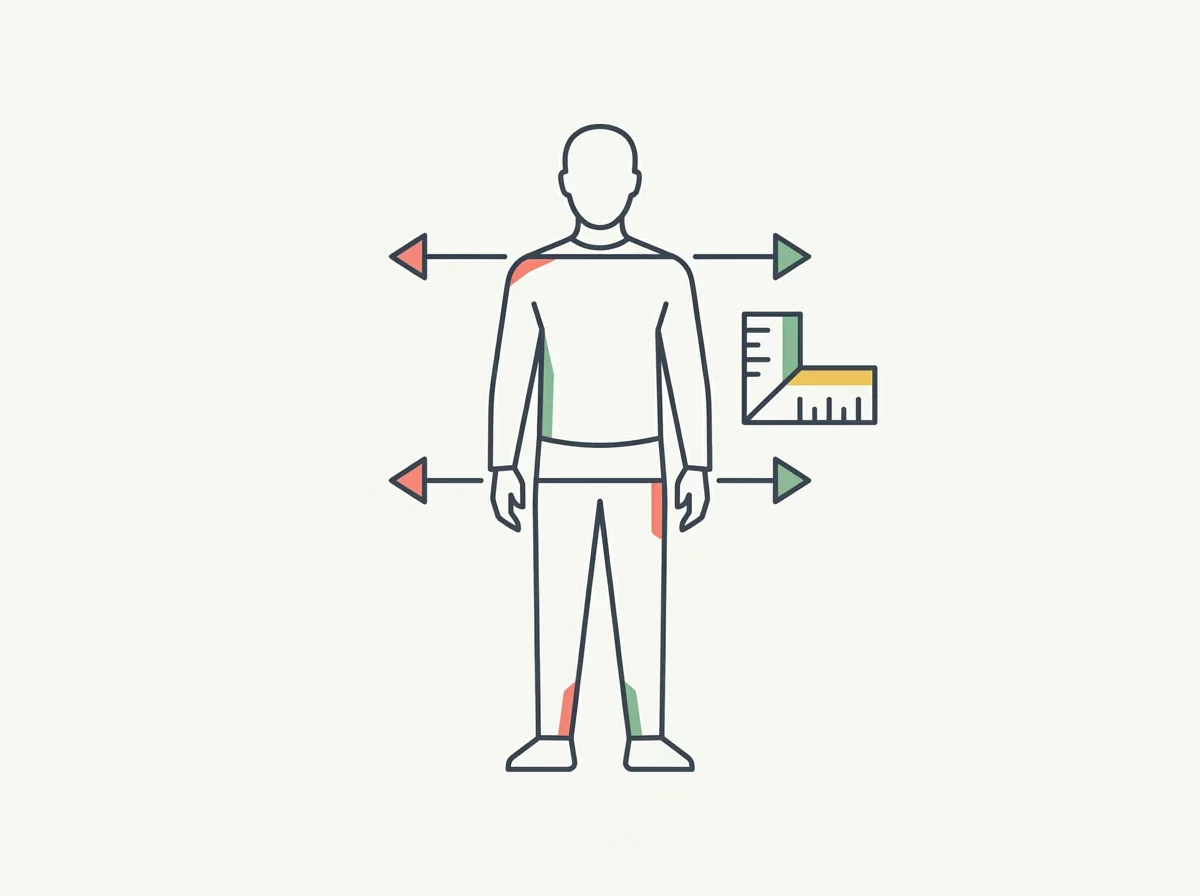
Quick answer: Shoulder-to-hip ratio is shoulder measurement divided by hip measurement, using the same units and measurement type. Width divided by width and circumference divided by circumference describe different proportions. Record which method you used. Do not substitute shoulder-to-waist ratio or treat a body-shape ratio as a medical assessment.
Two people can report different shoulder-to-hip ratios from the same body if one uses a tape around the torso and the other measures widths in a photograph. Before calculating, choose the dimension you want to compare.
This guide uses shoulder-to-hip ratio as a descriptive proportion. It does not assign an ideal value, diagnose health, or use a number to rank bodies.
How do you calculate shoulder-to-hip ratio?
Shoulder-to-hip ratio = shoulder measurement ÷ hip measurement.
Use the same units for both measurements. Keep widths together or circumferences together. Include the method in the label when you save the result.
| Method | Numerator | Denominator | Useful label |
|---|---|---|---|
| Circumference | Tape around the shoulders and upper torso at your defined shoulder line | Tape around the fullest hip and buttock line | Shoulder-to-hip circumference ratio |
| Frontal width | Horizontal outside-shoulder width in a standardized front view | Horizontal outside-hip width in the same view | Frontal shoulder-to-hip width ratio |
| Skeletal breadth | Specified bony shoulder landmarks | Specified pelvic landmarks | Name both anatomical breadths and the protocol |
A result above one means the numerator is larger. Below one means it is smaller. That arithmetic does not establish whether the result is healthy, attractive or useful for a sport.
How can you take repeatable tape measurements?
Ask someone to help with the shoulder loop so you can keep your arms relaxed. Use a flexible, nonstretch tape and describe your chosen shoulder line in your notes. Keep the tape level around the widest shoulder and upper-torso line, without squeezing the skin or deliberately expanding your chest.
For hip circumference, keep the tape horizontal around the fullest buttock level. The CDC anthropometry manual describes a standardized hip-circumference protocol. Our practical shoulder-loop method is not a CDC clinical ratio protocol.
Record both original measurements alongside the ratio. Repeat the setup if the tape has tilted, moved or compressed the skin. A saved ratio alone hides whether a later difference came from the shoulder measurement, the hip measurement or inconsistent technique.
For shoulder breadth rather than a loop, see how shoulder width is measured. The two measurements should never share the same comparison chart.
Can you calculate the ratio from a photo?
You can calculate a frontal image-width ratio, but that measures proportions in the image. It is not a direct circumference or skeletal measurement.
Use a front-facing image with a neutral stance, the camera level and centered, arms positioned consistently, and the same distance each time. A turned torso, angled camera, loose clothing or raised arms can change the outline. Mark the outside shoulder and hip boundaries consistently, then divide the horizontal widths measured in the same image.
Pixels are sufficient for this within-image calculation because the units cancel. They do not make the result immune to perspective. Avoid comparing your photo ratio with someone else's tape ratio or with a study that uses different anatomical landmarks.
How is shoulder-to-hip different from shoulder-to-waist ratio?
The denominator changes. Hips and waist describe different locations, so the ratios answer different questions.
| Ratio | What it compares | Common source of confusion |
|---|---|---|
| Shoulder-to-hip | Upper-body dimension with hip dimension | Mixing outside widths with circumferences |
| Shoulder-to-waist | Shoulder dimension with waist dimension | Applying a waist-based target to hips |
| Waist-to-hip | Waist circumference with hip circumference | Treating shoulder proportions as an equivalent health measure |
If you want to compare shoulder size with your midsection, use the separate shoulder-to-waist guide. Do not transfer its numbers to a shoulder-to-hip calculation.
What is an ideal shoulder-to-hip ratio?
This guide does not prescribe one. A target needs a clear purpose and a defined measurement method. A styling preference, a research measurement and a medical threshold are different things; a number from one context cannot automatically answer another.
For clothing, the individual dimensions and the garment's own size chart are more useful than a ratio alone. For progress tracking, repeatable measurements and photos provide context. For health concerns, ask a clinician about appropriate assessments rather than interpreting a shoulder ratio as a diagnosis.
If you are comparing aesthetic targets online, our women's body-measurement guide adds context about proportions and the limits of idealized measurements.
How should you track this ratio over time?
Save the date, shoulder measurement, hip measurement, units and method in the same row. Include notes about clothing and posture. Keep the raw measurements so you can investigate a change rather than react to a single ratio.
A consistent photo record can sit alongside the numbers. Follow the progress-photo setup guide and compare similar views. Treat the ratio as one descriptive entry in that record, not the purpose of your training.
What else should you know?
Is shoulder-to-hip ratio calculated with width or circumference?
Both versions can be calculated, but they describe different things and need different labels. Divide shoulder width by hip width for a width ratio, or shoulder circumference by hip circumference for a circumference ratio. Keep the units and protocol consistent, and do not compare results across those methods.
Can I use inches instead of centimeters?
Yes, provided both measurements use the same unit. Converting both lengths by the same factor leaves their ratio unchanged. Do not divide a shoulder measurement in inches by a hip measurement in centimeters. Save the original values and units so you can check the calculation later.
Does a larger ratio mean a healthier body?
A shoulder-to-hip proportion alone does not establish health. This guide uses it as a description of dimensions, not a clinical screening result. Health questions need an appropriate assessment and context. Do not substitute shoulder-to-hip ratio for a different measurement simply because both are described as body ratios.
Why does my photo ratio differ from my tape ratio?
A frontal photograph records projected width, while a tape loop includes the distance around the body. Those dimensions are different even with perfect technique. Camera angle, clothing and posture add further differences. Compare repeated measurements made with the same method instead of expecting the two ratios to match.
Should men and women aim for the same shoulder-to-hip ratio?
This article does not set an ideal target for either group. The usefulness of a ratio depends on the purpose and measurement protocol, and personal preferences are not medical standards. Keep your own measurements consistent and avoid treating an online proportion target as a requirement for a good physique.