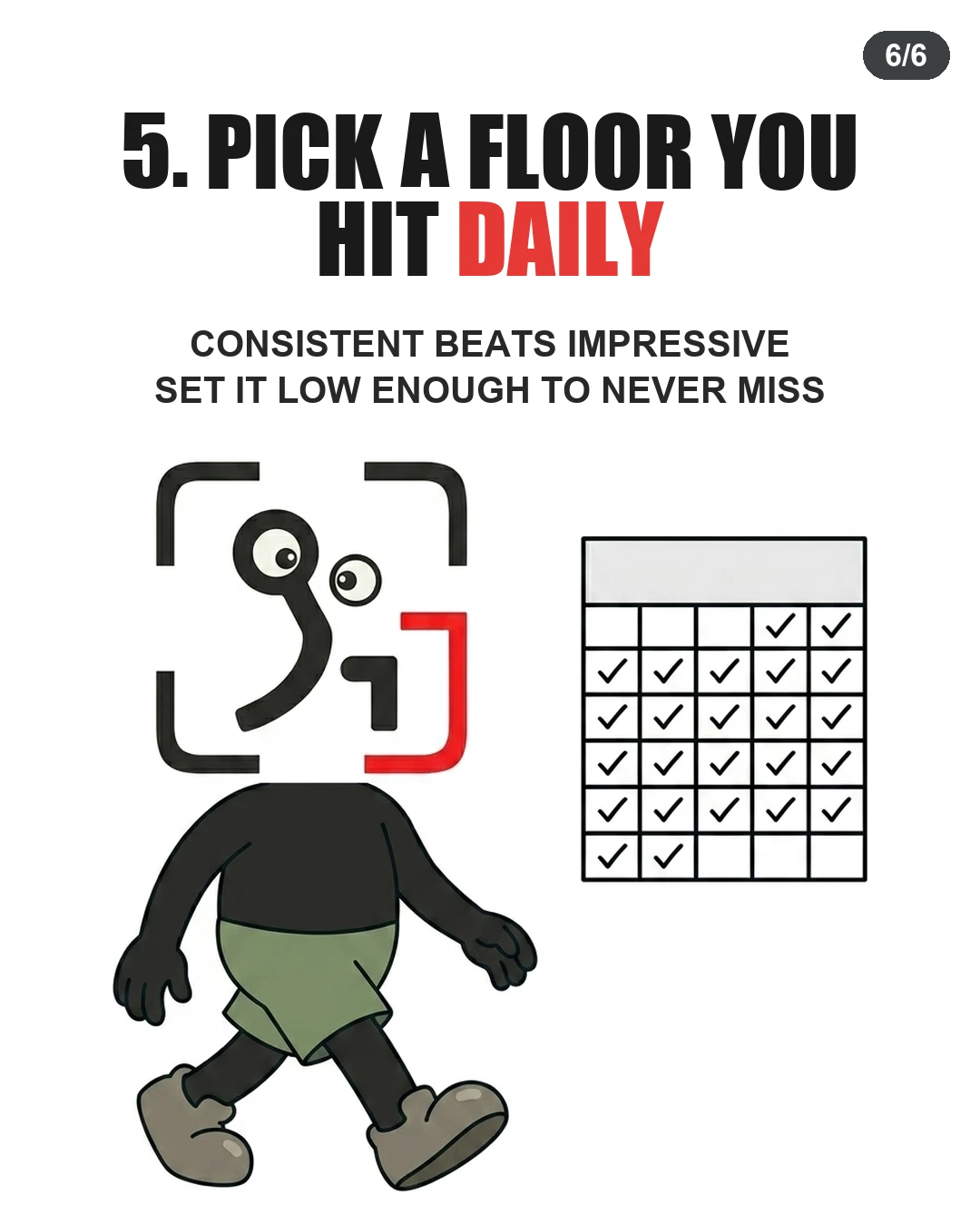
The popular 10,000-step goal originated from a 1960s marketing campaign rather than scientific research, with most health benefits actually plateauing around 7,000 steps daily. Increasing steps from a low baseline yields the greatest return on effort without compromising workout recovery. Setting an easily achievable daily minimum step count encourages long-term consistency over unrealistic targets.
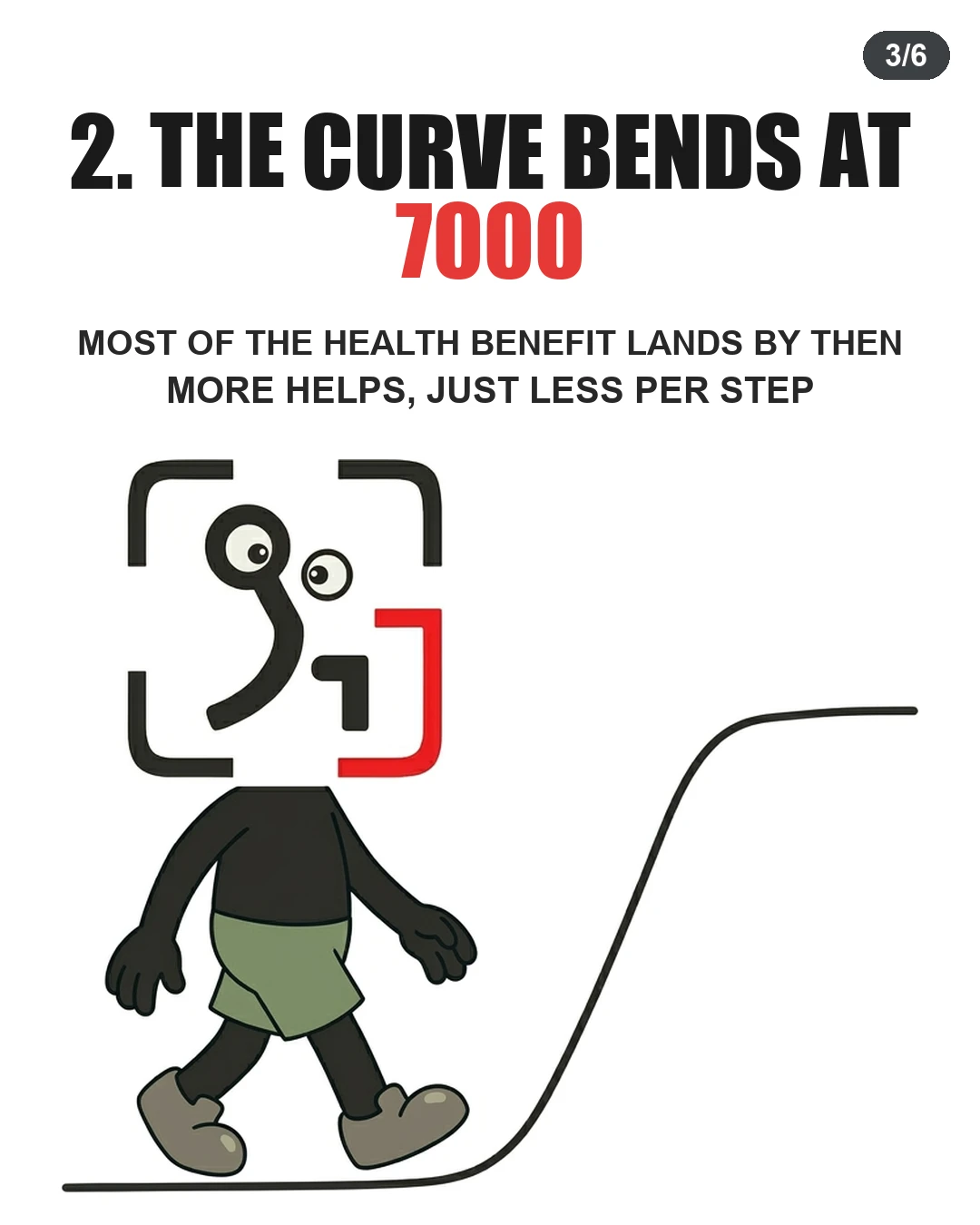
Do you really need 10k steps?1. 10000 came from an ad. It was a 1960s pedometer slogan, not one study behind the number.2. The curve bends at 7000. Most of the health benefit lands by then, more helps, just less per step.3. Steps are free fat loss. Walking burns without wrecking recovery, it will not cost you a leg day.4. Going from 3k to 6k is the win. The jump off the floor matters most, chasing 12k is not where the gain is.5. Pick a floor you hit daily. Consistent beats impressive, set it low enough to never miss.
Like the comics? The app does the tracking.
GainFrame turns progress photos into body fat estimates, muscle scores, and honest trend lines — the stuff these comics keep nagging you about. Free to start on iOS.