BMI can be misleading for individuals who lift weights because it only accounts for height and weight, failing to distinguish muscle mass from body fat. Rather than relying on BMI, lifters should use metrics like Fat-Free Mass Index (FFMI), body fat percentage, and visual mirror progress to track body composition changes.
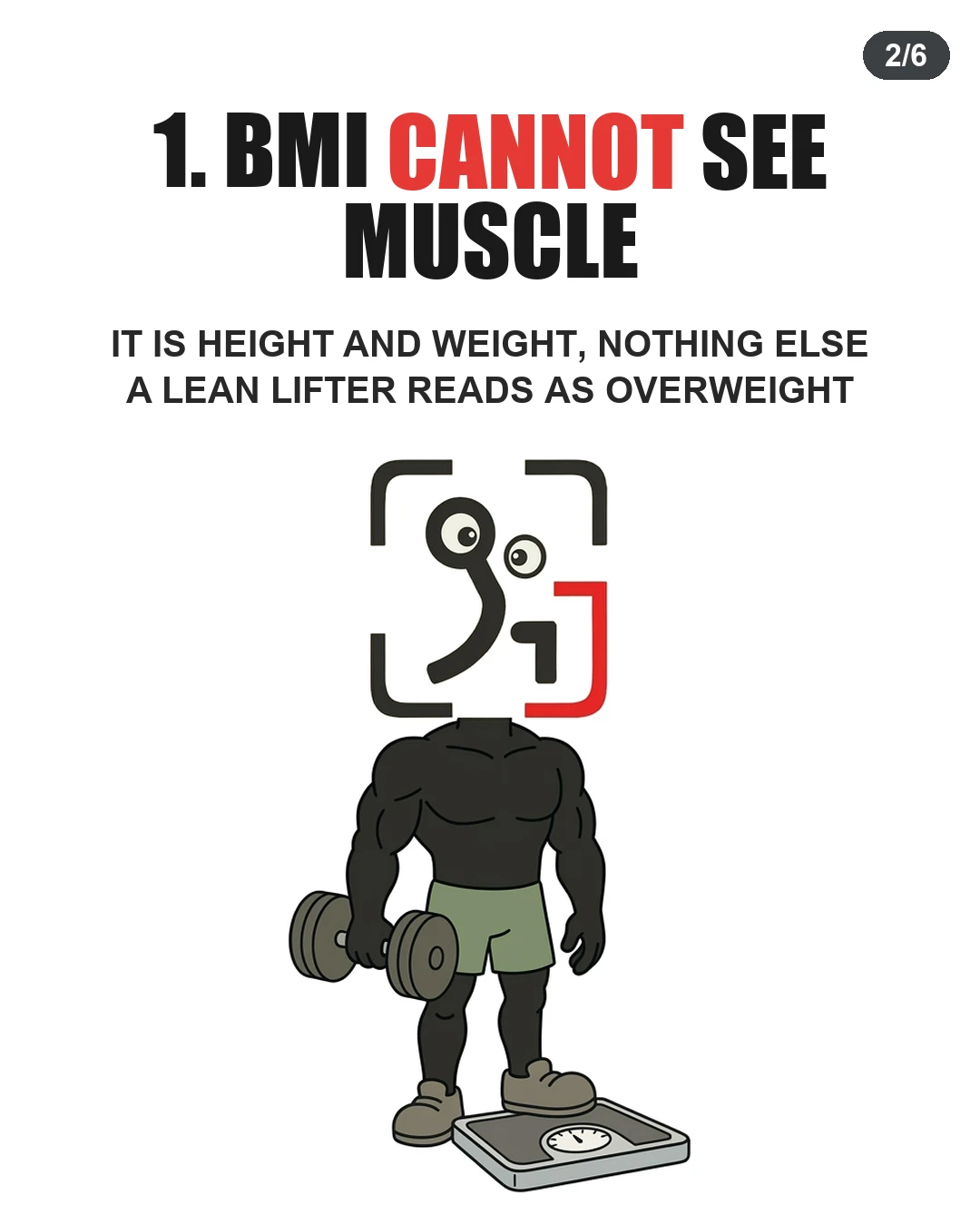
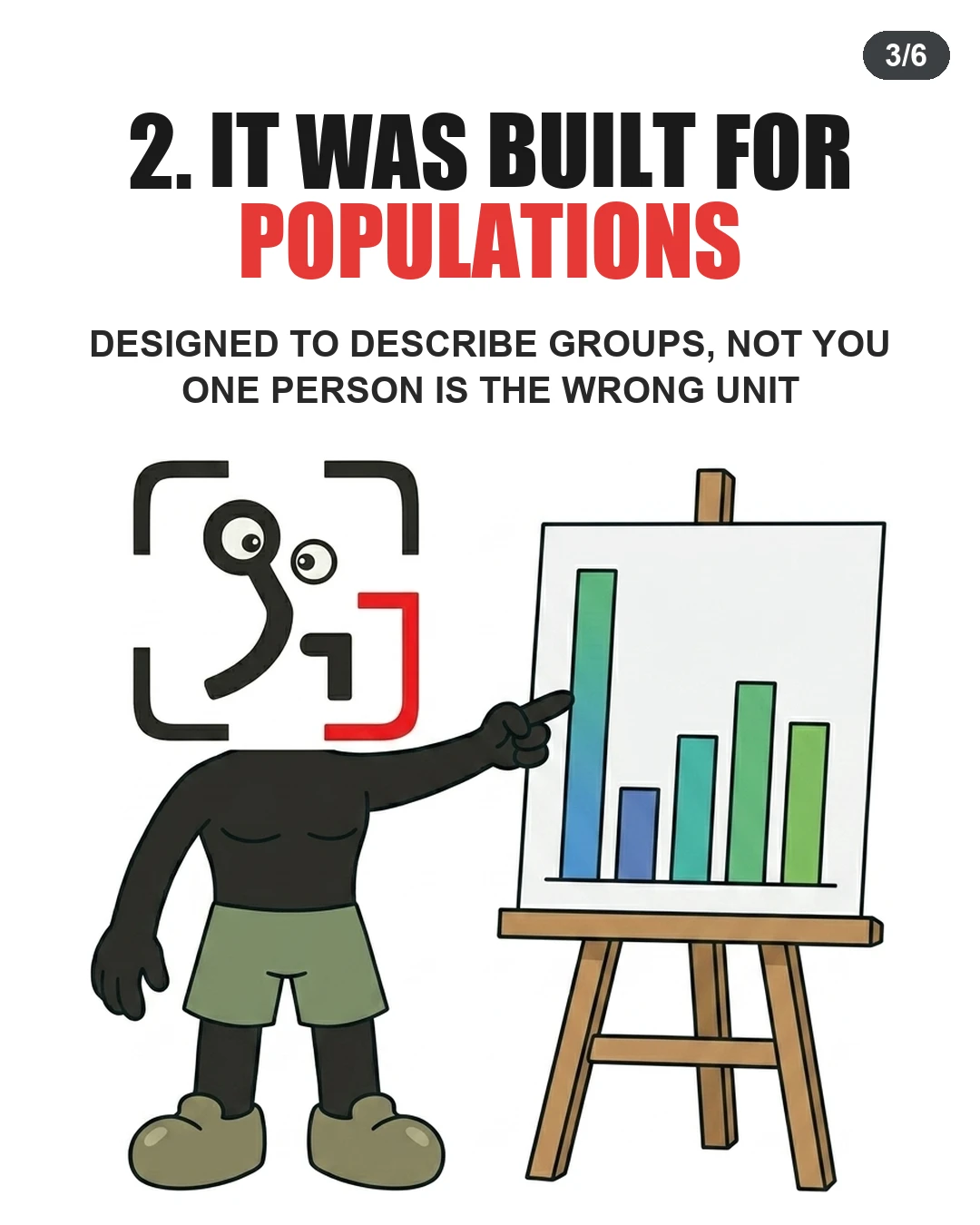
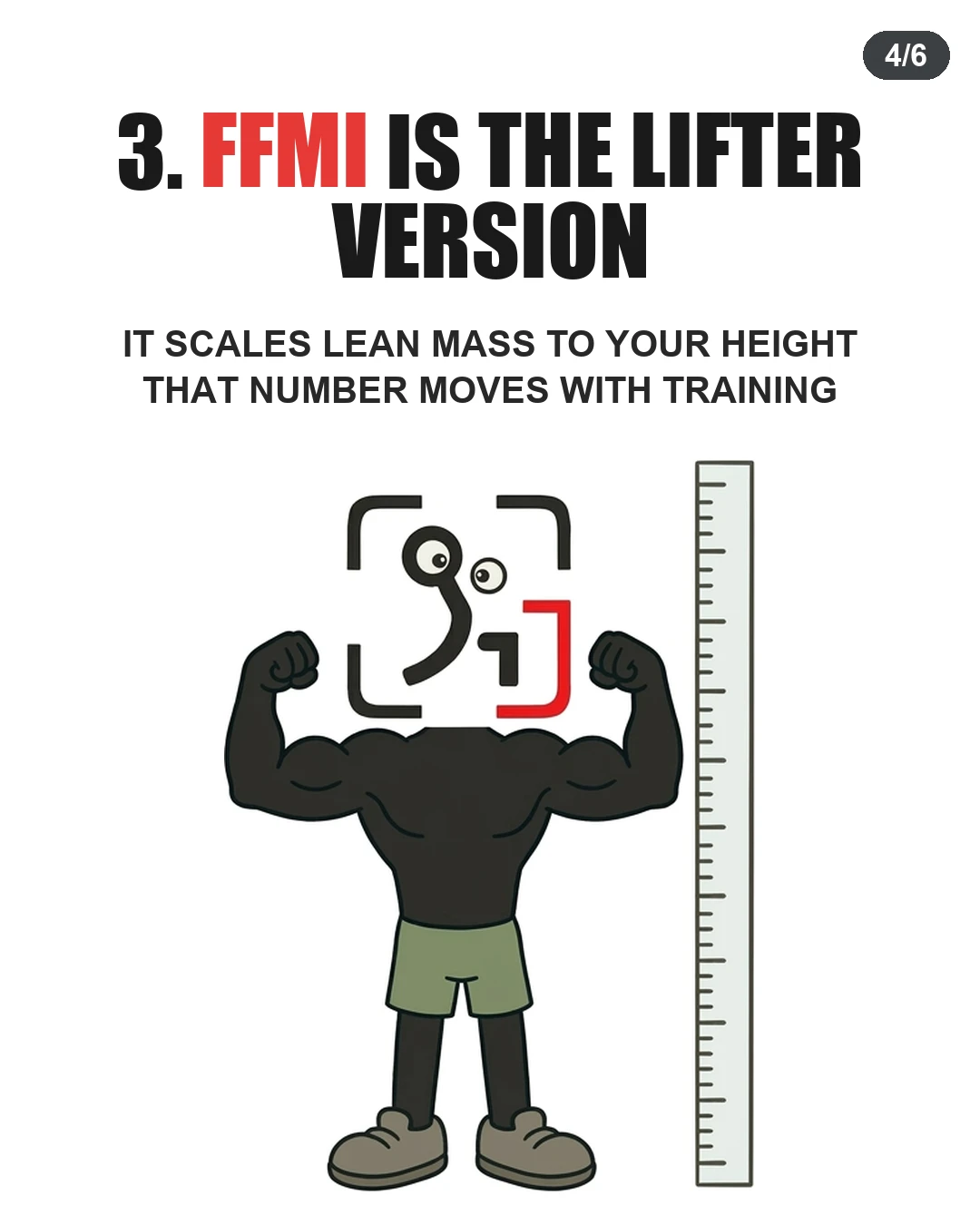
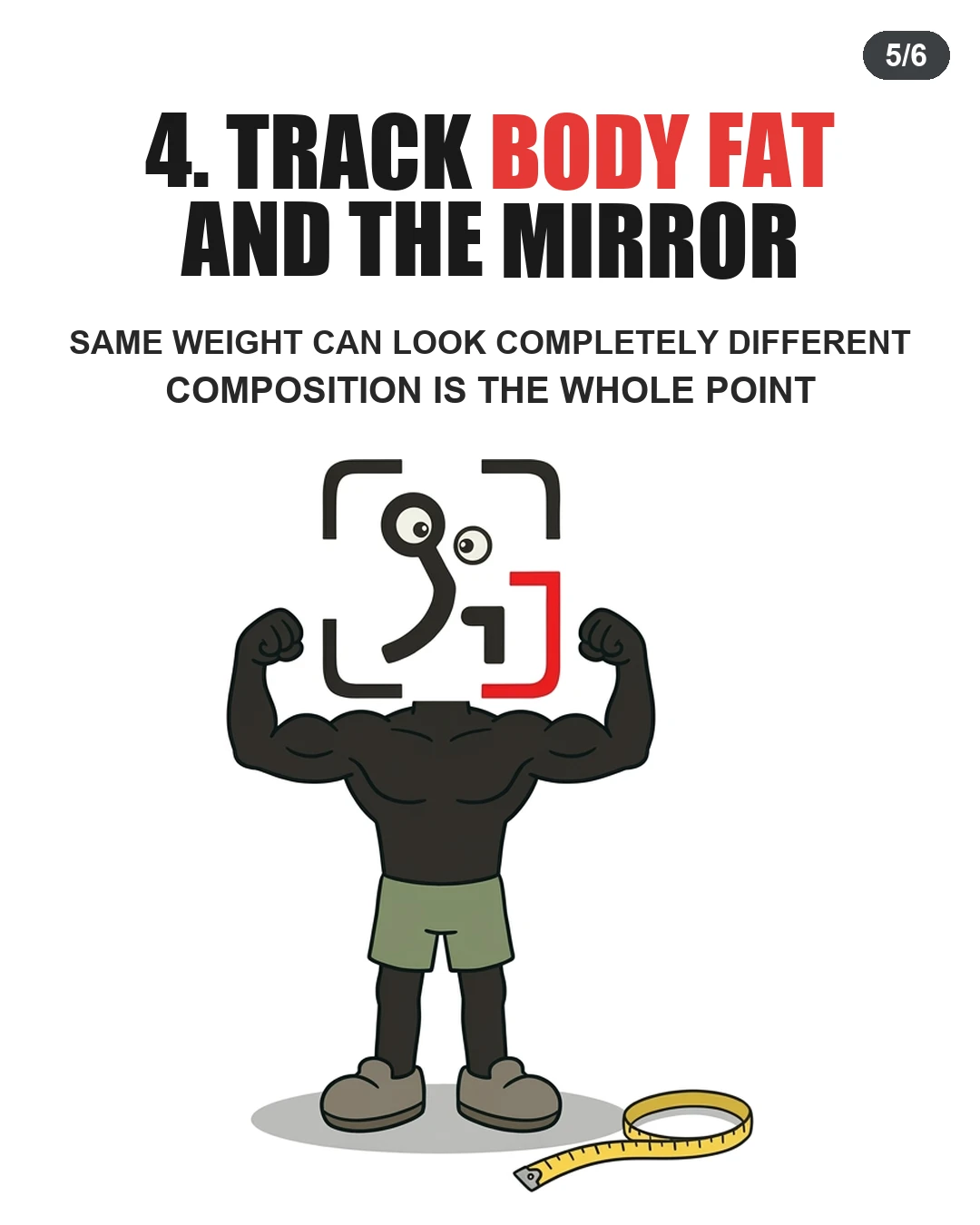
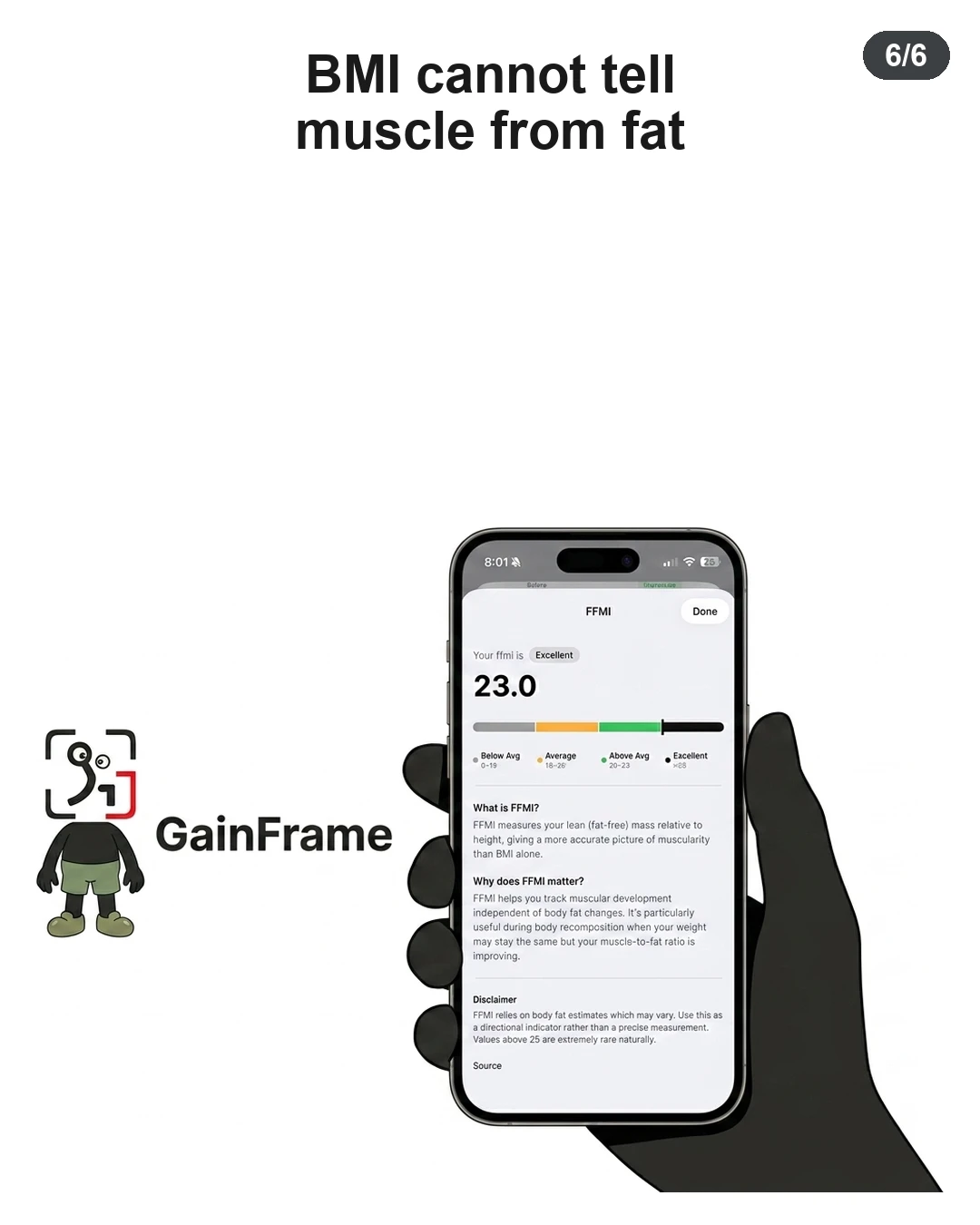
Is BMI useless if you lift?1. BMI cannot see muscle. It is height and weight, nothing else. A lean lifter reads as overweight.2. It was built for populations. Designed to describe groups, not you. One person is the wrong unit.3. FFMI is the lifter version. It scales lean mass to your height. That number moves with training.4. Track body fat and the mirror. Same weight can look completely different. Composition is the whole point.BMI cannot tell muscle from fat. GainFrame. FFMI. Done. Your ffmi is Excellent 23.0. Below Avg 0-19. Average 18-26. Above Avg 20-23. Excellent >28. What is FFMI? FFMI measures your lean (fat-free) mass relative to height, giving a more accurate picture of muscularity than BMI alone. Why does FFMI matter? FFMI helps you track muscular development independent of body fat changes. It's particularly useful during body recomposition when your weight may stay the same but your muscle-to-fat ratio is improving. Disclaimer: FFMI relies on body fat estimates which may vary. Use this as a directional indicator rather than a precise measurement. Values above 25 are extremely rare naturally. Source.
Like the comics? The app does the tracking.
GainFrame turns progress photos into body fat estimates, muscle scores, and honest trend lines — the stuff these comics keep nagging you about. Free to start on iOS.