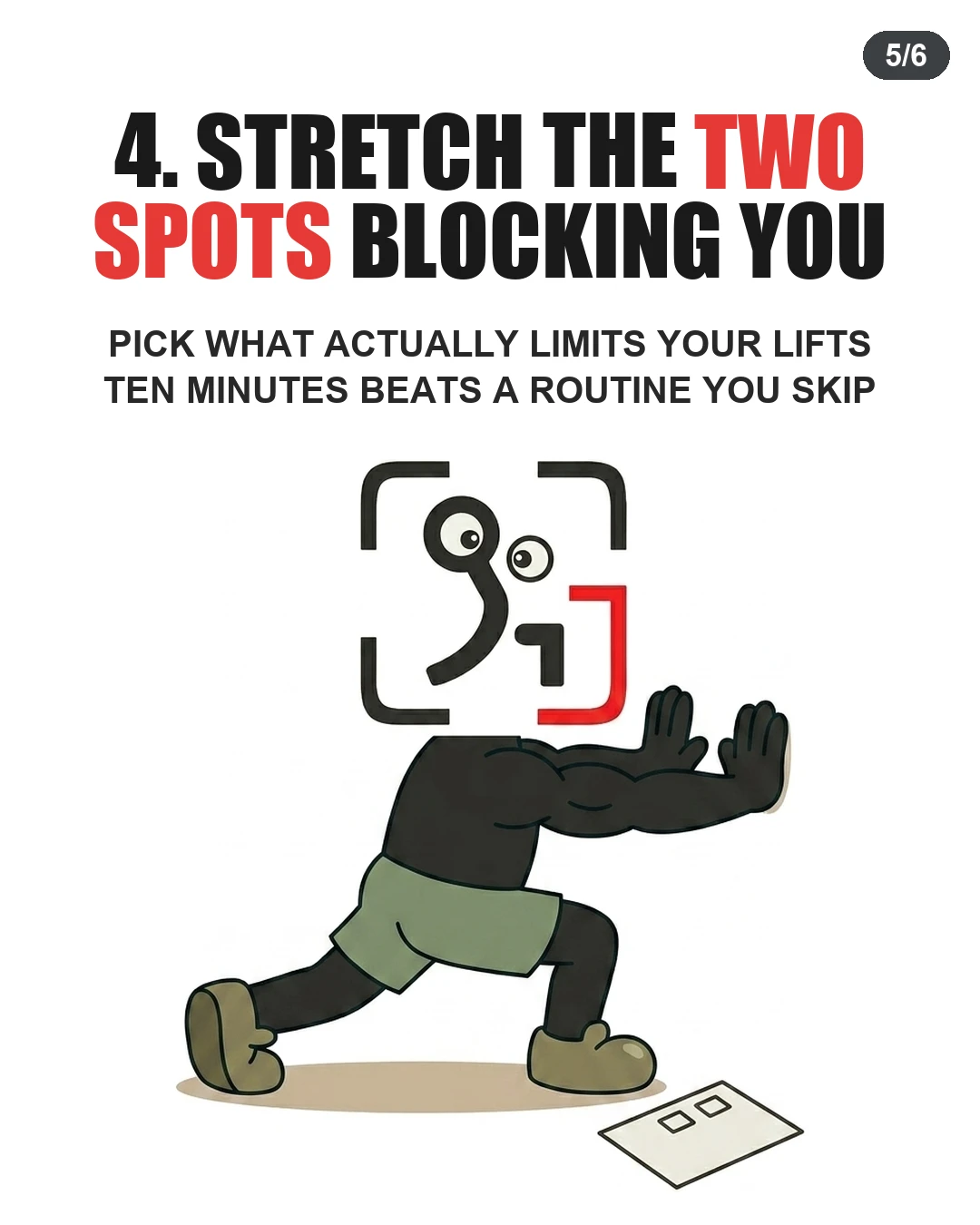
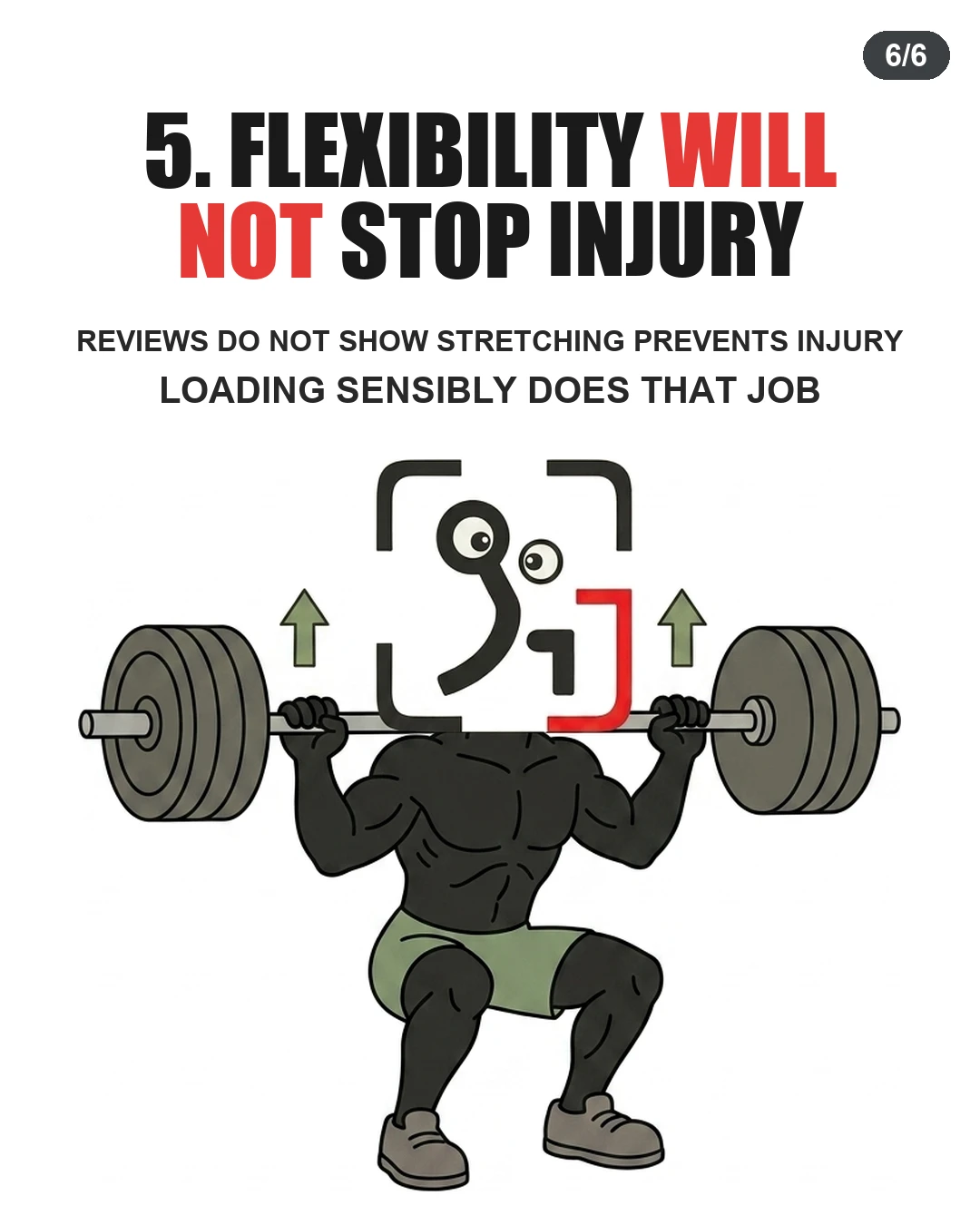
Stretching is most effective when done after lifting, while pre-workout warm-ups should focus on dynamic movements to raise body temperature. Mobility issues are often resolved by strengthening muscles at full range of motion under load rather than passive holding. To avoid injury, focus on sensible load management and target only the specific tight spots that limit your movement.
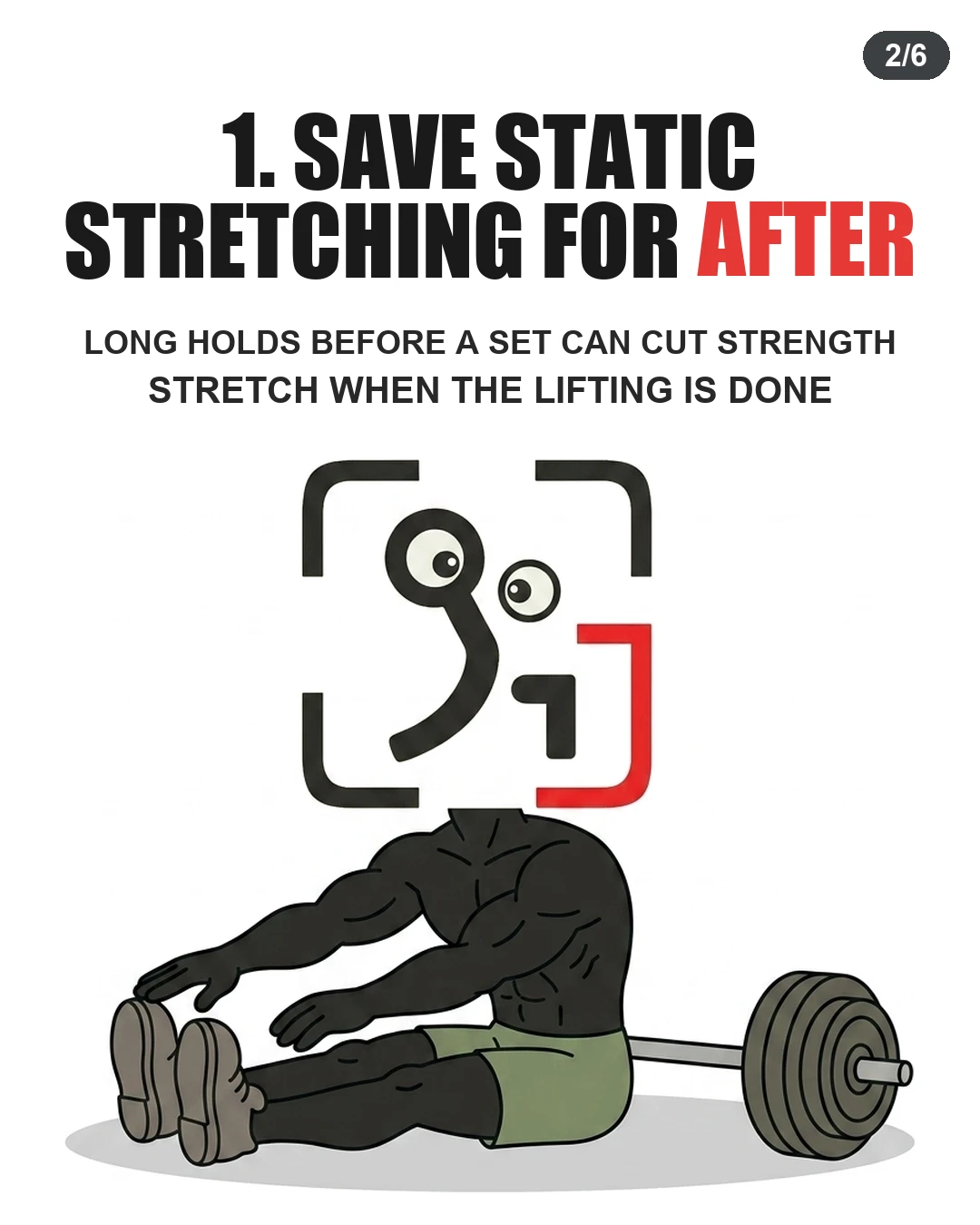
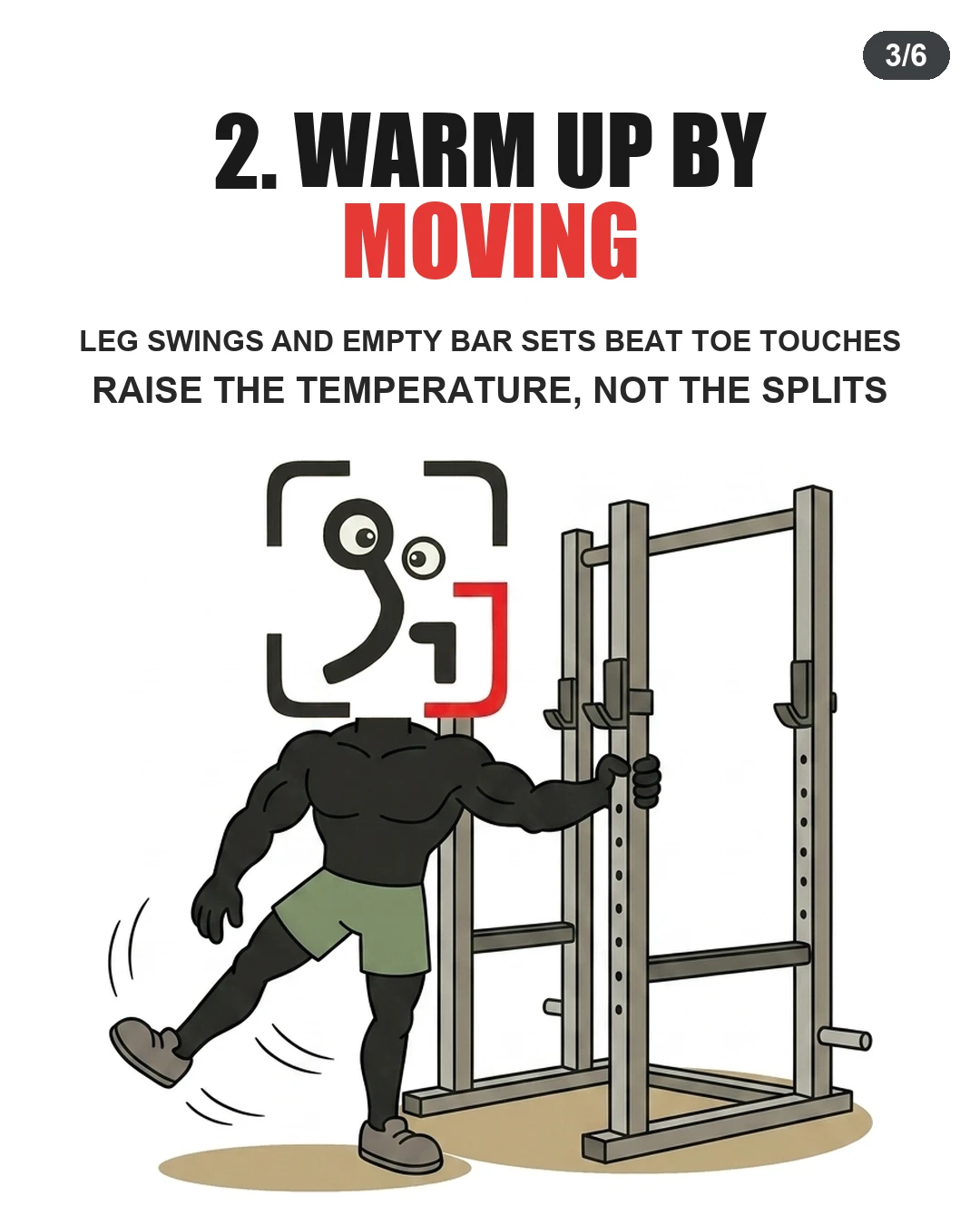
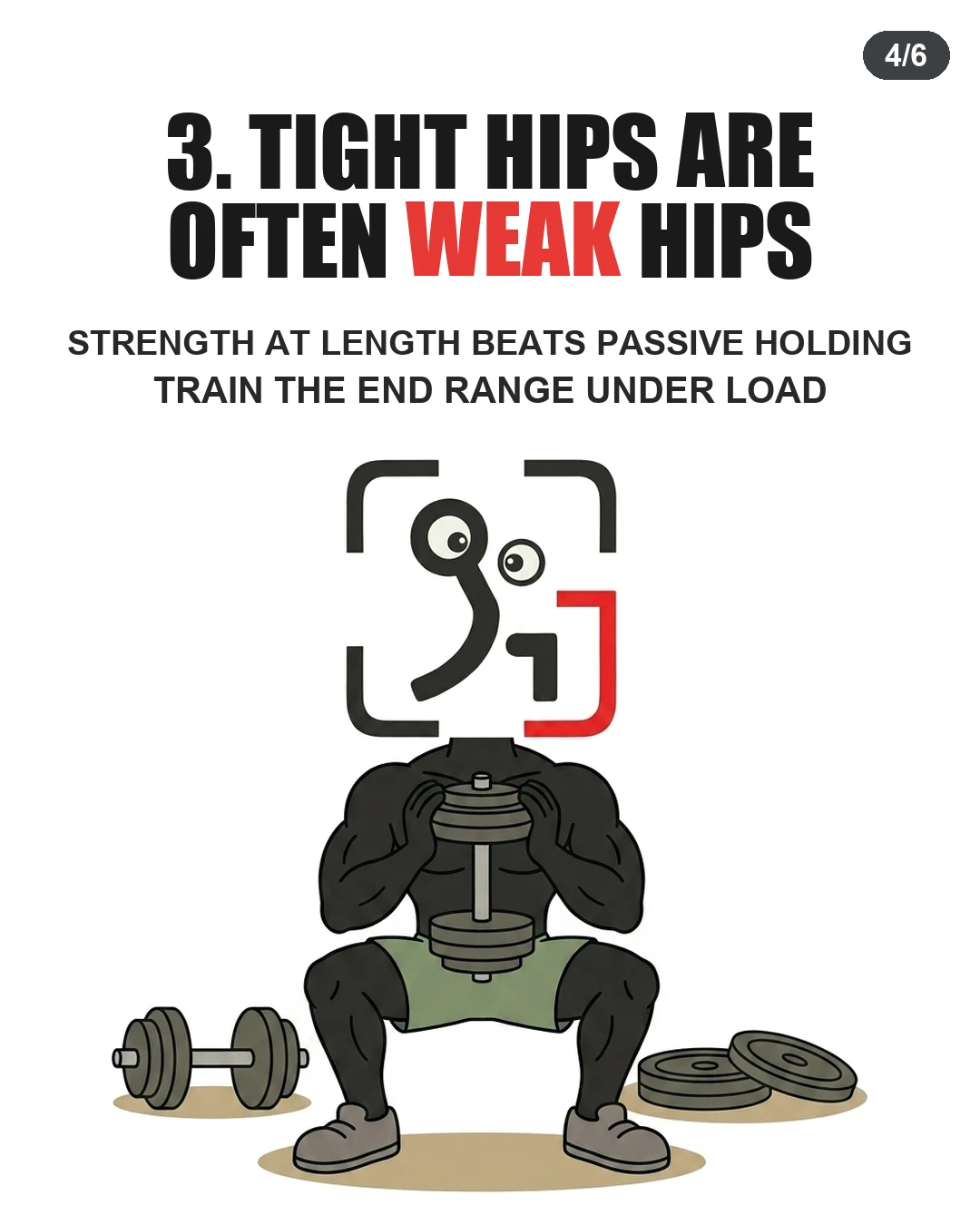
Is stretching a waste of time?1. Save static stretching for after. Long holds before a set can cut strength stretch when the lifting is done.2. Warm up by moving. Leg swings and empty bar sets beat toe touches raise the temperature, not the splits.3. Tight hips are often weak hips. Strength at length beats passive holding train the end range under load.4. Stretch the two spots blocking you. Pick what actually limits your lifts ten minutes beats a routine you skip.5. Flexibility will not stop injury. Reviews do not show stretching prevents injury loading sensibly does that job.
Like the comics? The app does the tracking.
GainFrame turns progress photos into body fat estimates, muscle scores, and honest trend lines — the stuff these comics keep nagging you about. Free to start on iOS.