
Quick answer: A dad bod usually sits around 20–25% body fat — a soft midsection over a decent base of muscle. It's a cultural label, not a clinical category. At that range you're typically one focused 12–16 week cut away from the "fit dad" look at roughly 17–18% body fat.
Somewhere between the first kid and the second sleep regression, the gym membership went from three visits a week to a monthly donation. You're not out of shape exactly — you can still carry both kids and the groceries up the stairs — but the shirtless pool photo from last summer surprised you. Ten years ago that stomach wasn't there.
That's the dad bod, and the first useful thing to know is that it's a specific, measurable, and very fixable body composition — not a character flaw. Let's put numbers and pictures on it.
What body fat percentage is a dad bod?
There's no clinical definition — "dad bod" is a cultural term that showed up in internet vernacular around 2015 — but the look it describes maps consistently to roughly 20–25% body fat with a reasonable base of muscle underneath. That second half matters. A dad bod isn't just "higher body fat"; it's the specific combination of some padding over a frame that clearly used to (or still does) do physical things.
Rough boundaries, hedged as any informal term deserves:
| Body fat (men) | Common read |
|---|---|
| 14–18% | Fit dad — visible shape, no abs required |
| 20–25% | Classic dad bod territory |
| 28%+ | Reads as overweight rather than dad bod |
If you want the full range with reference photos at every level, our body fat percentage chart covers it.
What does a dad bod actually look like?
The images below are standardized, photorealistic AI renders from our body fat visualizer — same build, pose, and lighting, so only the stated variable changes between images. First, the canonical dad bod range at 23% body fat, in a man's 30s and 40s.
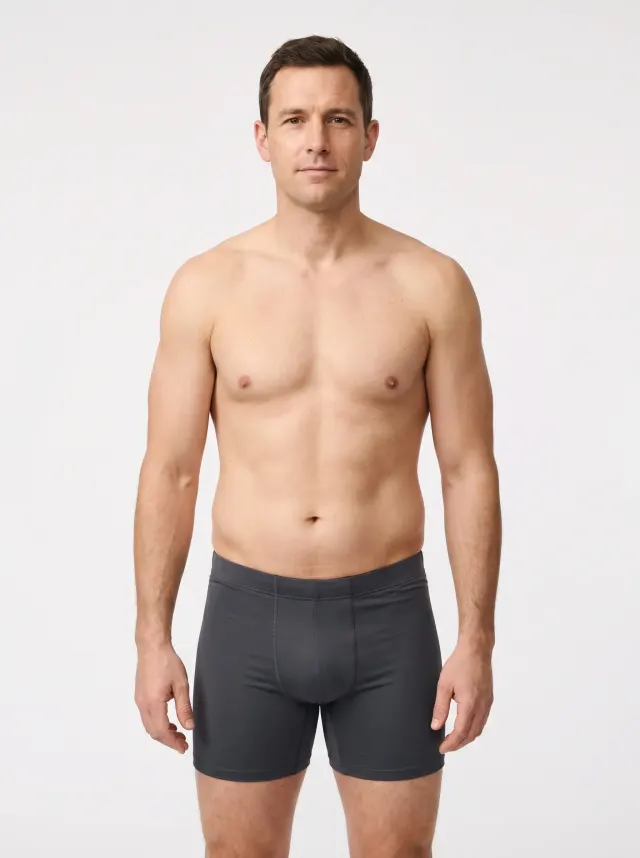
23% body fat, 30s — the canonical dad bod. Solid through the chest and shoulders, soft through the middle. Looks strong in a t-shirt.
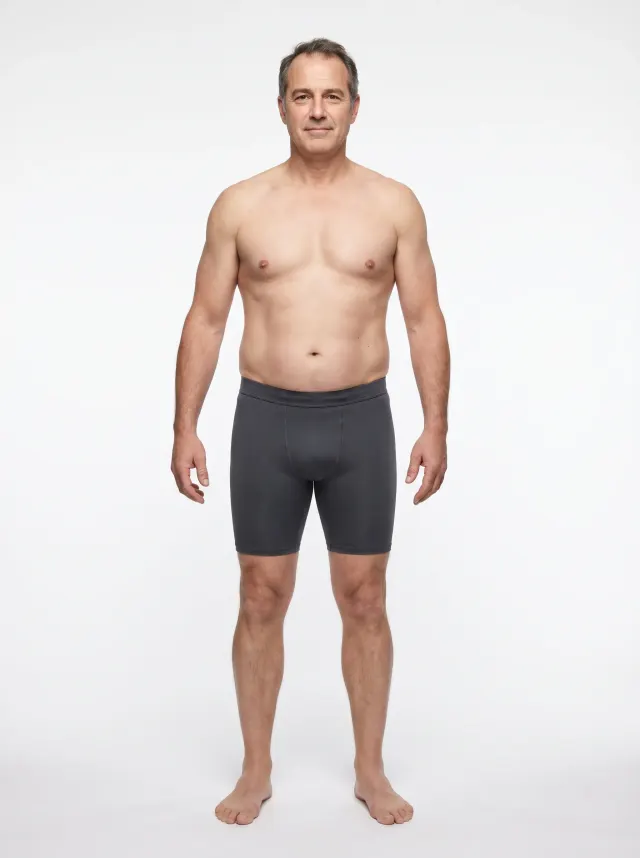
The same 23% in the 40s. Identical body fat, but fat distribution commonly shifts toward the midsection with age — which is why the same number can feel worse a decade later.
And here's the target most guys actually mean when they say they want to lose the dad bod — not shredded, just visibly fit:
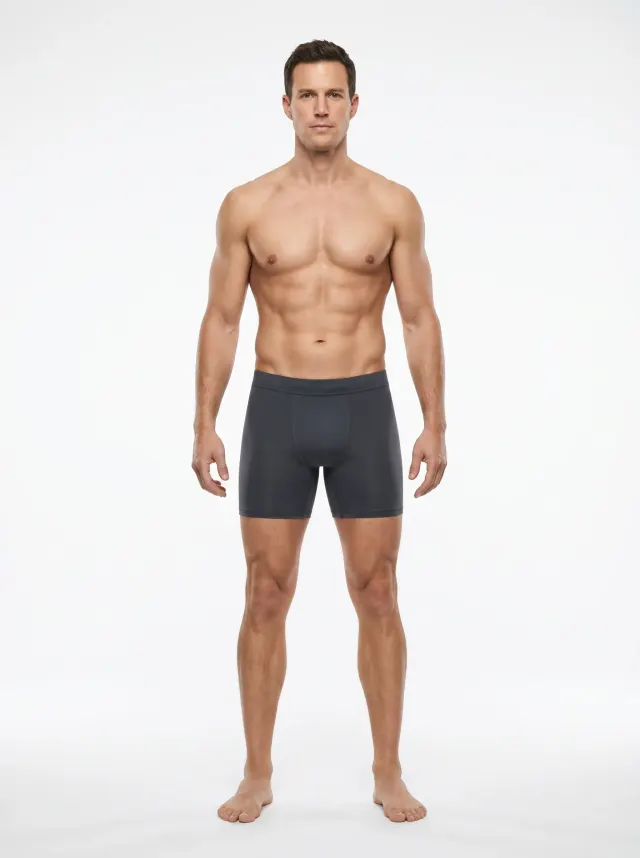
18% — the "fit dad" target. Flat stomach, visible shape, zero abs required. From 23%, this is one focused cut away, not a lifestyle overhaul.
Look at the 23% and 18% renders again. Same man, same muscle — the entire difference is roughly one layer of fat. That's the most encouraging fact in this post: dad bod vs fit isn't a different body, it's the same body minus about 12 weeks of consistency.
The 20% and 25% body fat reference pages cover the dad-bod band level by level, and the full body fat picture gallery runs the whole scale.
Why does the dad bod happen?
Not laziness. Arithmetic, applied to a life that changed shape.
- Time collapsed. The 6 p.m. gym slot now belongs to daycare pickup, dinner, and bedtime. Workouts didn't get deprioritized so much as evicted.
- Sleep debt compounds. Broken nights with young kids do two things at once: they push appetite up (short sleep and increased hunger are a well-documented pairing) and they drain the energy you'd otherwise train with.
- Daily movement quietly dropped. The commute changed, the weekend pickup games stopped, the walking happened with a stroller at toddler pace. A few hundred fewer calories burned per day is invisible day-to-day and very visible over three years.
Run that math — a modest daily surplus, repeated for a few years, deposited where men store fat first — and 23% is just the output. Nothing about it says anything about your discipline. It says your calendar changed faster than your habits.
Is a dad bod unhealthy?
Honest answer: it depends, and mostly on something the mirror can't show you. A body fat percentage of 20–25% overlaps with ranges many references consider acceptable for men in their 30s and 40s — plenty of men live long healthy lives there.
The bigger question is where the fat sits. Fat under the skin (the pinchable kind) is relatively benign; visceral fat packed around the organs is the metabolically risky kind, and a firm, protruding belly is a stronger warning sign than the percentage alone. We cover how to read that signal — and what actually lowers it — in our visceral fat guide. If you're carrying most of your weight in front and it doesn't pinch, that's a conversation worth having with your doctor, not a shame spiral.
So: dad bod at 22% with fat spread evenly? Probably fine, keep an eye on bloodwork. Same number concentrated hard in the gut? Worth taking seriously — for health reasons, not aesthetic ones.
What's the realistic 12-week path out?
No detox, no 5 a.m. bootcamp. The commonly effective recipe is boring, which is exactly why it survives contact with parenting:
- A small deficit — roughly 300–500 calories under maintenance. Big enough to move roughly 0.5–1 pound a week, small enough that you're not snapping at your kids by Thursday.
- Two to three strength sessions a week. Thirty to forty-five minutes counts. The lifting isn't for burning calories — it's to make sure the weight you lose is fat, not the muscle that makes the "fit dad" render work. Here's what timeline to expect from lifting.
- Protein at most meals. No spreadsheet needed — a palm-sized portion each meal covers most men.
- Twelve to sixteen weeks of it. From 23%, that's commonly enough to land in the 18–19% range. Results vary with sleep, stress, and starting point — parents of young kids should expect the timeline to stretch sometimes, and that's fine.
If your version of the dad bod is more "thin arms, soft middle" than "solid but padded," you're closer to skinny fat, and the plan tilts more toward building than cutting — our skinny fat to muscular guide covers that path.
One practical note on knowing whether it's working: the scale is a poor referee here, because losing fat while adding a little muscle can leave the number nearly flat while your body visibly changes. A weekly progress photo is the more honest signal. GainFrame makes that a two-minute habit — a photo check-in returns an estimated body fat %, physique score, and muscle-group ratings, so week eight is comparable to week one even when the scale shrugs. Estimates from photos, not clinical measurement, and it's iOS only — but the trend is the thing, and trends it does well.
Frequently asked questions
What body fat percentage is a dad bod?
There's no official definition — dad bod is a cultural term, not a clinical one — but it's most commonly described as roughly 20–25% body fat with a reasonable base of muscle underneath. That's the soft-but-solid look: no visible abs, some midsection padding, but clearly someone who was or is active. Below that range reads as fit; well above it reads as simply overweight.
Is a dad bod unhealthy?
Not automatically. Roughly 20–25% body fat overlaps with ranges many references consider acceptable for men in their 30s and 40s. The more important question is where the fat sits: visceral fat around the organs carries more metabolic risk than the fat under your skin, and a hard, protruding belly is a better warning sign than the percentage alone. Bloodwork beats vibes.
What is the difference between a dad bod and being fit?
Mostly one layer of fat. A dad bod at 23% and a fit dad at 17–18% can carry nearly identical muscle — the difference is roughly 10–15 pounds of fat covering it. That's why the gap looks bigger than it is: the fit version isn't a different body, it's the same body after one focused cut of about 12–16 weeks.
How do I get rid of a dad bod?
The commonly effective recipe is unglamorous: a small calorie deficit (roughly 300–500 below maintenance), two to three strength sessions a week to keep the muscle you have, protein at most meals, and 12–16 weeks of patience. Results vary with sleep, stress, and consistency — parents of young kids should expect the timeline to stretch, not the method to change.
Why do men get a dad bod?
Rarely laziness — usually arithmetic. Kids and career compress the hours that used to hold workouts, sleep debt raises appetite and drains training energy, and daily activity quietly drops. A few hundred surplus calories a day, repeated for a few years, adds fat exactly where men tend to store it first: the midsection. The same math run in reverse fixes it.
Track the cut the scale can't see
GainFrame turns a weekly photo into an estimated body fat %, physique score, and muscle-group ratings — so you can watch the dad bod trend toward fit dad even when the scale barely moves. Free to start on iOS.
Download GainFrame Free