
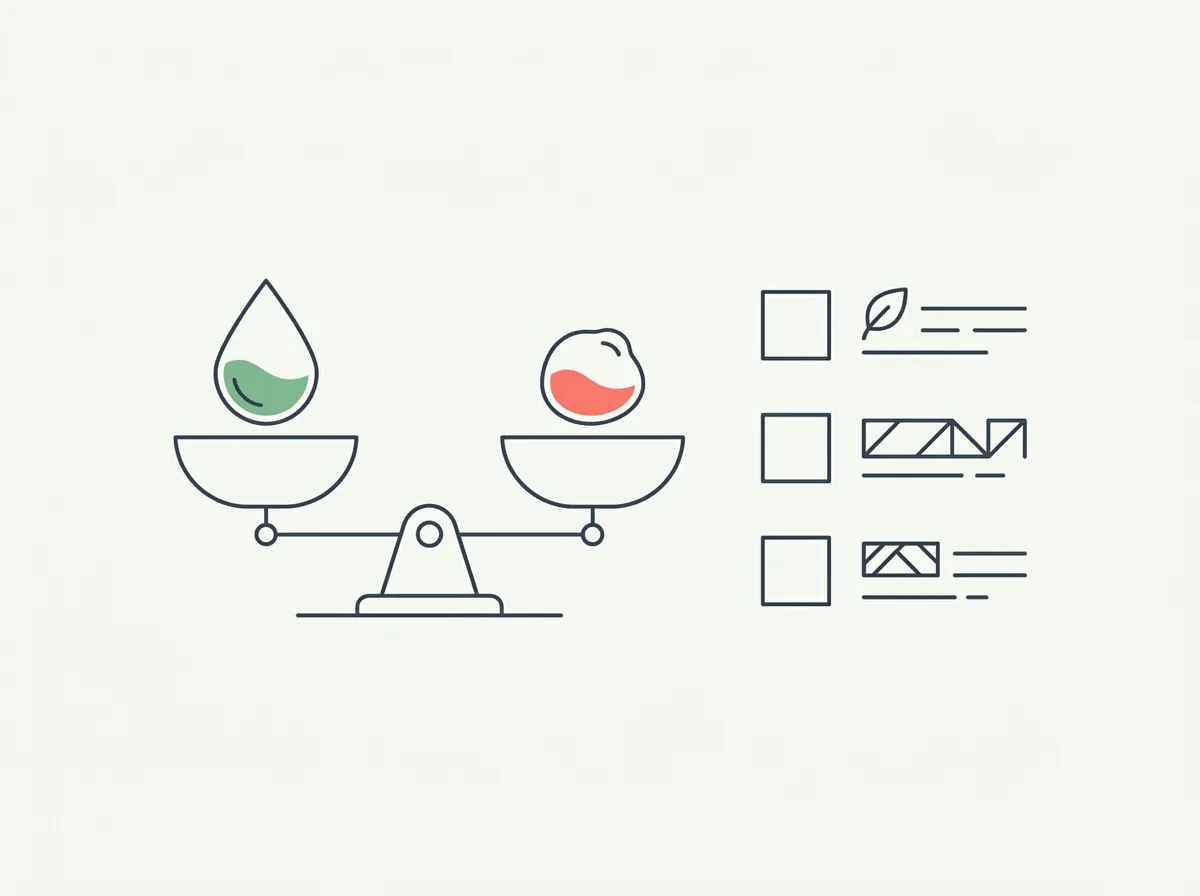
Quick answer: Water weight is fluid your body holds from glycogen storage, sodium, hormones, or inflammation — and it commonly swings 2–5+ pounds. The tell is speed and pattern: fat can't add or drop pounds overnight, water can. If the change appeared in a day or two and follows salt, carbs, travel, or new training, it's water.
Sunday morning the scale said 182. Monday morning, after a restaurant dinner and nothing else unusual, it says 185. Three pounds. If that were fat, you'd have needed roughly 10,000 surplus calories by the commonly cited math — call it 18 burritos above maintenance, consumed in secret, by you, without noticing.
You didn't eat 18 burritos. You ate salt and carbs, and you're holding water. The daily physics of why the scale bounces is covered in our weight fluctuation guide — this page is about the follow-up question that actually matters: when the scale moves, how do you tell whether it's water or fat, and how many pounds can water plausibly explain?
What is water weight, actually?
"Water weight" is retained fluid — total body water sitting above your personal baseline. Your body is commonly cited as roughly 50–60% water by weight, so the reservoir is huge and small percentage shifts move whole pounds. Four mechanisms drive most of it:
Glycogen storage. Your body stores carbohydrate as glycogen in muscle and liver, and each gram of glycogen is commonly cited to bind around 3 grams of water. Fill or drain those stores — a high-carb weekend, a low-carb week — and several pounds move with them. This is the single biggest lever, and it's why low-carb diets commonly show dramatic first-week losses.
Sodium. Your body defends a sodium concentration, so a salty day means holding extra water to dilute it. One restaurant meal can commonly carry a full day's typical sodium on its own, with the resulting water showing up on the scale by morning.
Hormones. Cycle-phase retention is commonly reported at 1–3+ pounds in the days before a period. Stress hormones like cortisol are also commonly associated with retention, which is part of why high-stress weeks read heavier.
Inflammation and repair. Damaged muscle holds fluid while it repairs. A new training program, a return after a layoff, or an unusually hard session commonly adds a pound or two of repair-related water for days afterward.
How much water weight can you hold?
More than most people guess, which is why it so convincingly impersonates fat.
Normal day-to-day swings of 2–5 pounds are commonly observed in people doing nothing unusual. Stack triggers — a carb refeed after a low-carb stretch, plus heavy sodium, plus a flight, plus a new lifting program — and 5+ pounds of held water is commonly reported. Physique competitors manipulating water and glycogen deliberately can swing more still.
Now put that range next to actual fat math. At the commonly cited ~3,500 calories per pound, a serious 500-calorie daily deficit removes about one pound of fat per week. Your water noise band is therefore two to five times wider than a whole week of disciplined fat loss. On any given morning, the scale is mostly reporting your water state, with your fat trend buried somewhere underneath.
How do you tell if it's water or fat?
Run the change through four checks. Water and fat behave differently on every one.
Speed. Fat doesn't move pounds overnight — the commonly cited energy math caps plausible daily fat change at fractions of a pound in either direction. Any multi-pound move inside a day or two is water and gut content by default. This check alone settles most scale panics.
Pattern. Water spikes follow identifiable triggers: a salty or carb-heavy meal, travel, the start of a new program, a brutal workout, short sleep, high stress, cycle phase. Fat changes follow weeks of eating pattern instead. If you can point at yesterday and name the trigger, you're almost certainly looking at water.
Where it sits. Retained water commonly reads as generalized puffiness — tight rings, sock lines, a rounder face, an ankle-and-finger feel. Fat accrues slowly in your personal storage pattern, belly and hips most commonly. Puffy-everywhere overnight is water; gradually thicker in your usual spots over a month is fat.
Timeframe. Water resolves. Sodium and glycogen effects commonly clear in 2–5 days once the trigger passes; new-program retention fades over a couple of weeks. Fat persists and compounds. A spike that melts by Friday was water; a level that's still there after three normal weeks is a real trend.
One honest caveat: these checks identify acute spikes well, but slow-building retention — creeping stress, a new medication, anything medical — can blur the timeframe test. Persistent unexplained swelling is a doctor conversation, and no checklist replaces that.
What are the classic water-weight traps?
Two situations fool nearly everyone, in opposite directions.
The first-week diet "whoosh." Start a diet — especially lower-carb — and the first week commonly drops 3–6+ pounds. Almost all of it is glycogen water and reduced gut content leaving, which is why week two's "mere" pound feels like failure by comparison. It isn't. Week two is the real fat-loss rate; week one was a water event wearing a before-and-after costume.
The first-week bulk or new-program gain. Run it in reverse: start lifting, or start eating to build, and glycogen, repair fluid, and extra food volume commonly add several pounds almost immediately. New lifters see the scale jump and conclude they're getting fat at record speed. They're watching water arrive, and our why weight goes up when lifting guide walks through exactly this panic. The same effect produces the recomp illusion where measurements shrink while the scale holds — covered in losing inches but not weight.
Both traps share one structure: a plan change causes an immediate water shift, and the water shift gets misread as the plan's verdict. The verdict on any plan takes weeks. Water just votes first.
When should you just ignore water weight entirely?
Once you understand it, mostly always. Identifying water weight morning by morning is a skill you need exactly until you adopt a tracking system that makes it irrelevant.
That system is the standing playbook: weigh daily if you like, but read only the weekly average, and let photos carry the verdict on what kind of weight changed. Averages flatten the water noise into a trend; monthly photos under identical conditions show whether the trend is fat, muscle, or nothing. Daily single readings, taken seriously, mostly measure sodium and carbs — our daily weigh-in psychology piece covers what that does to decision-making over a long diet.
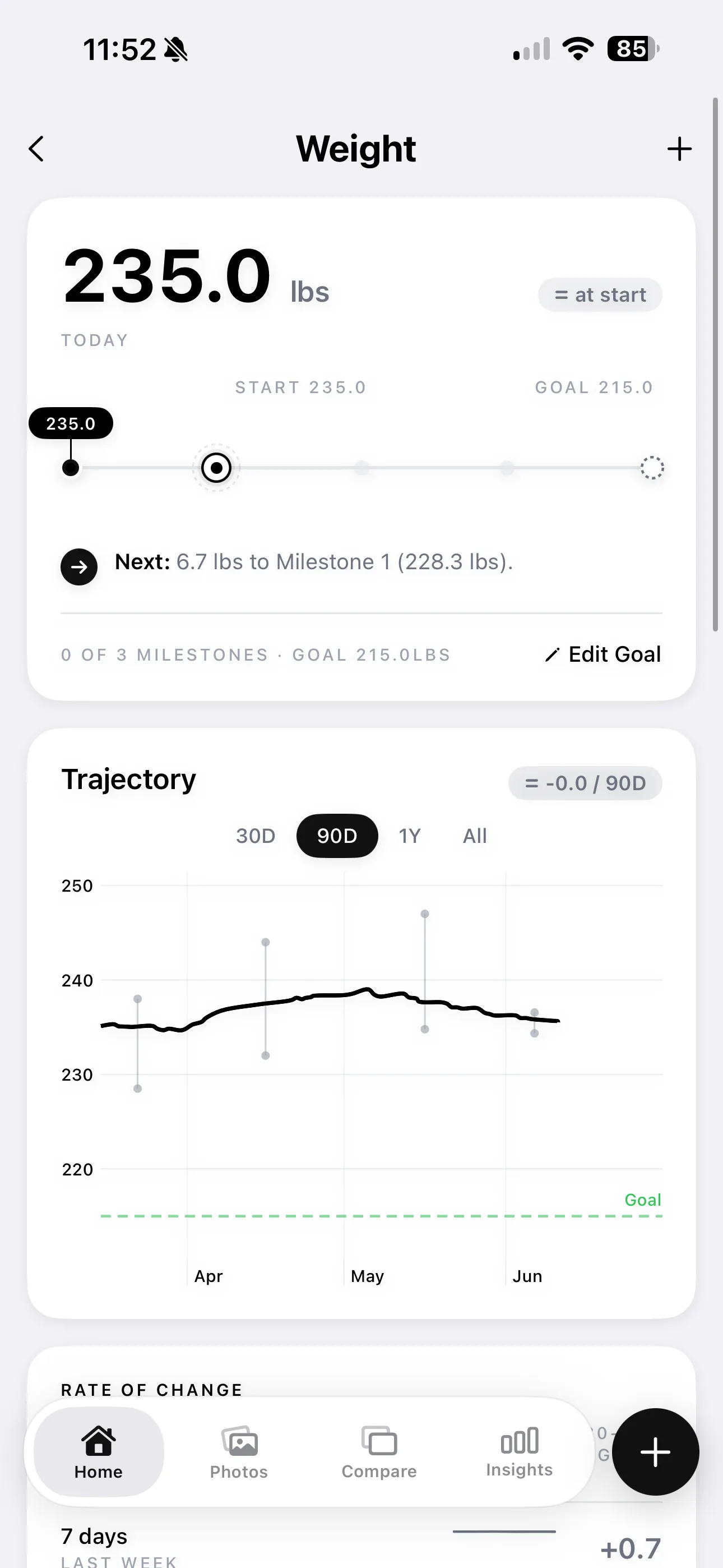
Daily readings feed the trend line, and the trend line ignores the water. No single salty dinner gets a vote.
GainFrame pairs that weight trend with photo-based body composition estimates — body fat percentage and physique scores from standardized progress photos — so when the scale moves, you can see whether your body actually changed. Estimates from photos rather than clinical measurement, but water weight barely touches a photo taken under consistent morning conditions, which makes the photo trend the tiebreaker the scale can't be.
Frequently asked questions
How do you tell if weight gain is water or fat?
Check speed first: gaining a pound of fat requires roughly 3,500 surplus calories by the commonly cited figure, so a 2–3 pound overnight jump is essentially never fat. Then check pattern — water spikes follow salty meals, carb-heavy days, travel, new training, poor sleep, and cycle phase — and timeframe: water resolves within days, fat trends persist for weeks.
How much water weight can you hold?
Day-to-day swings of 2–5 pounds are commonly observed in normal circumstances, and larger holds happen: a big refeed after low-carb eating, heavy sodium plus travel, or the start of a new training program can commonly stack to 5+ pounds. Glycogen alone accounts for several pounds of range, since each gram is commonly cited to bind about 3 grams of water.
How long does water weight take to go away?
Most acute water retention resolves within roughly 2–5 days once the trigger passes — sodium normalizes, glycogen levels out, travel stiffness fades. Training-related retention from a new program commonly lingers a couple of weeks while your muscles adapt. If elevated weight persists beyond a few weeks with no obvious trigger, it's likelier a real trend, worth reading as fat or muscle.
Why did I gain 3 pounds overnight?
Almost certainly water and gut content. Three pounds of fat would require roughly 10,000 surplus calories by commonly cited math — a physical feat you'd remember. A salty restaurant dinner, more carbs than usual, a late meal still in transit, and slight dehydration rebound can each add a pound or more, and they commonly arrive together after exactly the kind of evening that precedes a scary weigh-in.
Does drinking more water reduce water weight?
Counterintuitively, staying well hydrated is commonly associated with less retention, while chronic underhydration and sodium swings are associated with more. Deliberately dehydrating yourself to drop scale weight is a bad trade — you lose water, not fat, feel worse, and it rebounds within a day. Consistent hydration plus normal sodium keeps the daily baseline calmer and the trend easier to read.
See past the water
GainFrame tracks your weight trend and estimates body composition from progress photos — so a salty dinner moves the scale without moving your verdict. Free to start on iOS.
Download GainFrame Free