
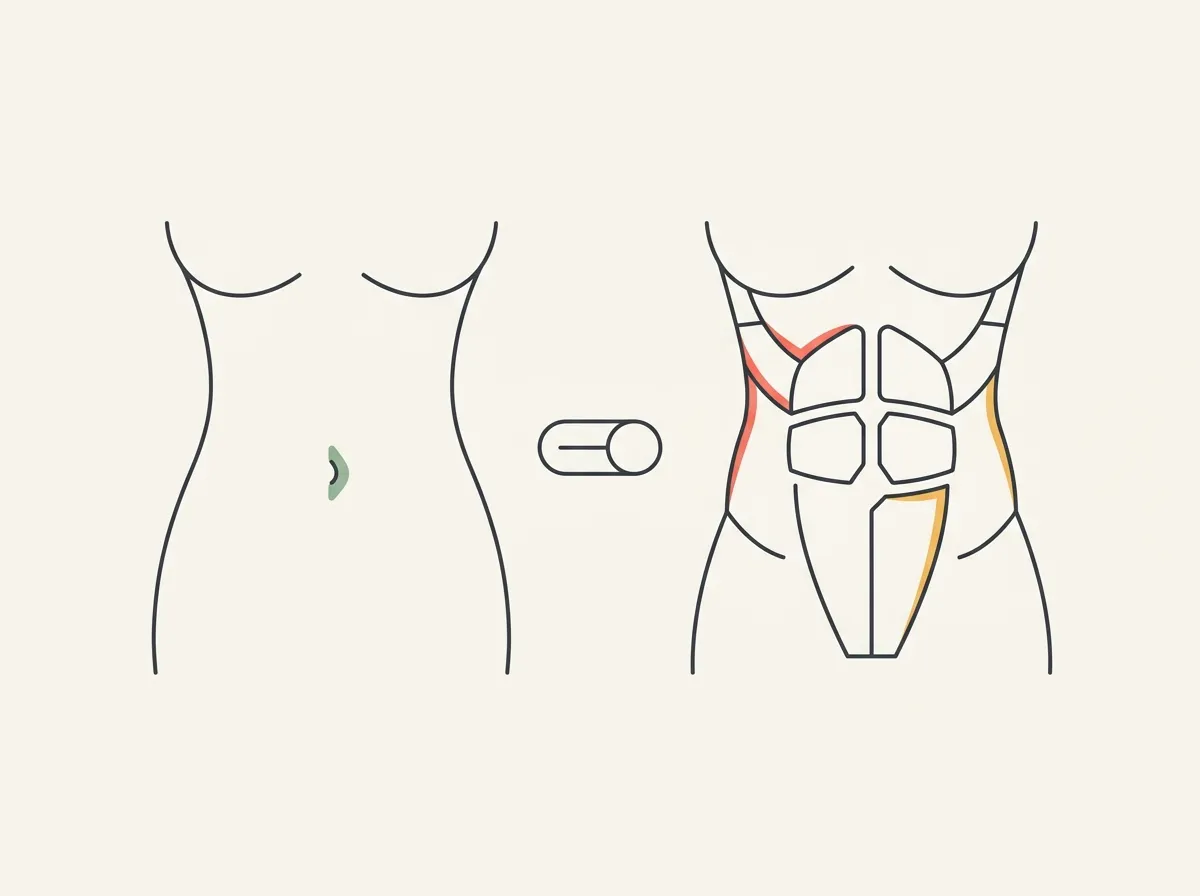
Quick answer: Flexing contracts your abs hard enough to push definition through the fat layer that covers them — which is why they appear at roughly 14–17% body fat flexed but commonly need around 12% or below to show relaxed. The fix for relaxed abs is a few more points of fat loss.
Post-workout mirror, quick flex: six visible ridges. An hour later, sitting at dinner, you glance down: smooth. Nobody at the table would guess you have abs at all, and you start wondering which version is the real one.
Both are. You're standing in a specific, well-mapped body fat window where a contracted muscle clears the fat layer and a slack one doesn't. If your abs also come and go with the bathroom bulb, that's a separate mechanism covered in why abs show in some lighting — and if the question is how long until they show at all, the realistic abs timeline covers that. This page is about the flex gap specifically: why it exists, and what actually closes it.
Why do abs show when you flex and vanish when you relax?
Your abs are always there — the rectus abdominis is a functional muscle you'd have with or without a gym membership. What varies is whether its shape reaches the surface through the subcutaneous fat sitting on top of it.
Flexing changes the geometry on the muscle's side of that fat layer. A contracted rectus abdominis is harder, thicker, and more sharply ridged — the tendinous lines that create the six-pack grid pull taut, and the segments between them bunch and rise. That extra relief is enough to print through a few millimeters of fat that a relaxed, flat muscle can't get past.
Relaxed, the muscle softens and the fat layer wins. Think of a hand pressed under a duvet: make a fist and you see knuckles, open flat and you see duvet. Nothing about the hand changed except its shape against the covering.
What body fat percentage do flexed vs relaxed abs need?
Commonly cited figures for men put flexed abs appearing somewhere around the 14–17% body fat range in decent conditions, while relaxed, walking-around definition commonly needs roughly 12% or below. Women's thresholds run higher — commonly around 18–22% for visible definition — because essential fat shifts the whole scale.
| State | Commonly cited threshold (men) |
|---|---|
| Faint outline, flexed, good light | ~15–17% |
| Clear when flexed | ~13–15% |
| Visible relaxed | ~12% and below |
| Sharp relaxed, most conditions | ~10% and below |
Treat the table as orientation rather than a contract — fat distribution is genetic, and a man who stores fat on his stomach first may need a lower number than one who stores it on his hips. The full body fat percentage chart shows what each range looks like across the whole body.
Here's the same man at the two ends of this article's question — standardized, photorealistic AI renders from our body fat visualizer — same build, pose, and lighting, so only body fat changes between images.
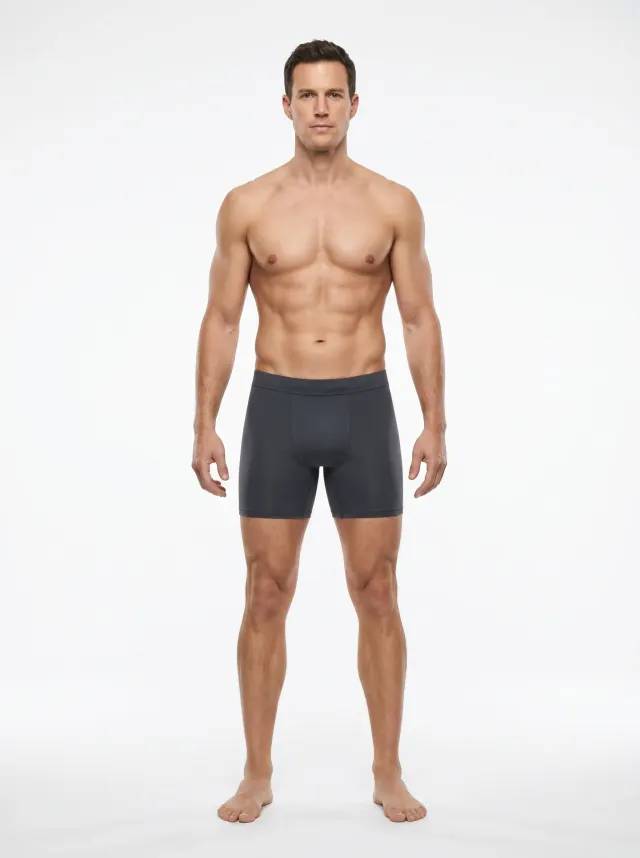
~18% body fat: fit-looking, flat stomach, no relaxed definition. This is the zone where a hard flex can summon abs that disappear the moment you exhale.
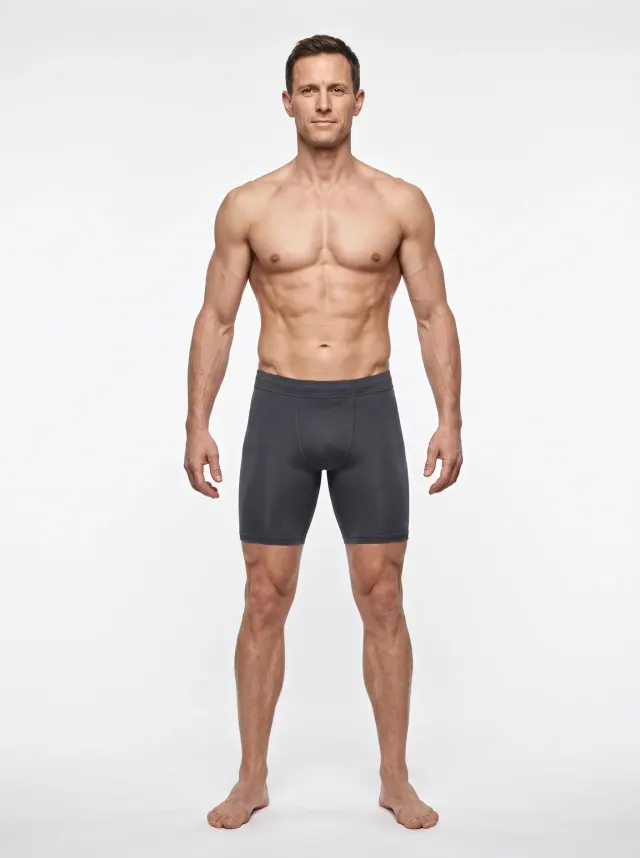
The same frame at ~13%: definition starting to hold without the flex. A few more points is the entire distance between these two photos.
How do you get abs that show without flexing?
A useful starting point is knowing where you are now: the free AI ab analyzer reads your ab visibility and estimated body fat from one relaxed photo. If you want to turn that starting point into a date range, the six-pack timeline calculator adds your weight and planned calorie deficit, then shows a leaner AI preview.
The honest answer is a few more points of body fat, and most people are closer than they think. If you can produce abs with a flex, you're plausibly somewhere in the mid-teens — which commonly puts the relaxed threshold about 3–5 points away, a matter of a couple of months of modest cutting rather than some distant genetic gift. Our first cut guide covers how to do that without burning muscle.
More ab training is the answer people prefer, and it helps less than they hope. Thicker abs do push slightly further through the remaining fat — direct ab work moves the flexed threshold a little and can sharpen what shows. But the effect is commonly described as marginal next to the fat layer itself. A thousand crunches build the muscle under the duvet; they don't thin the duvet.
So the working plan is unglamorous: keep training abs like any other muscle, run a modest deficit, and let the relaxed threshold come to you. The flex test even becomes a progress marker — the less effort a flex needs to show definition, the closer the relaxed version is.
Why do your abs change through the day?
Two daily variables move your abs without touching your body fat, and knowing them saves you a lot of false readings.
Bloat. Morning-empty-stomach you and post-dinner you can differ by an inch of waist and a full visibility tier. Food volume, fluid, sodium, and carbs all add abdominal distension across the day, which is why abs commonly look best before breakfast and worst at night. Same fat layer, different pressure behind it.
Posture. Standing tall with ribs lifted stretches the abdominal wall taut and definition sharpens; slouching compresses and folds it, and even a lean stomach creases over. A deliberate slouch can make 12% look like 18% — which you can verify in ten seconds side-on in a mirror.
Neither of these is progress or regress. If you assess yourself at random times of day in random postures, you'll ride a mood swing that has nothing to do with your actual trend.
Should you flex in progress photos?
Flex if you want — but label it, and never compare a flexed photo against a relaxed one. A relaxed week-1 baseline against a flexed week-8 photo manufactures a transformation; the reverse buries one. The comparison is only worth anything when both frames share the same state, the same time of day, and the same stance, which is the core argument of our progress photo poses guide.
The practical habit: shoot your standard relaxed poses every session, add a flexed set if you like, and keep the two streams separate. Consistency is also what photo-based tracking runs on — GainFrame estimates body fat percentage from progress photos and compares them over time, and it can only read a real trend if you feed it the same conditions each week. Estimates from photos rather than clinical measurement, but week-to-week consistency is exactly the job here: watching that relaxed-abs threshold approach, one honest photo at a time.
Frequently asked questions
Why do my abs only show when I flex?
Flexing contracts the rectus abdominis, which hardens and thickens the muscle enough to push its ridges through the layer of fat covering it. Relaxed, the muscle flattens and those same few millimeters of fat smooth everything over. For most men this flexed-versus-relaxed gap is widest in roughly the 14–17% body fat range.
What body fat percentage do you need for abs without flexing?
For most men, relaxed abs commonly require around 12% body fat or below, while flexed abs can appear in the 14–17% range under decent lighting. Women commonly need roughly 18–22% for visible definition. These are typical figures rather than laws — where your body stores fat shifts the threshold in either direction.
Do more ab exercises make abs show relaxed?
Only marginally. Thicker abdominal muscle pushes slightly further through the fat layer, so direct ab work helps at the edges. The dominant variable is the fat layer itself — losing a few more points of body fat does more than any volume of crunches. Training abs is worthwhile; expecting it to substitute for a cut is the common mistake.
Why do abs show in the morning but not at night?
Overnight you reach your least bloated state — an empty stomach and lower water retention in the midsection. Through the day, food, fluid, and sodium add abdominal distension that smooths definition away. Posture matters too: standing tall stretches the abdominal wall taut, while slouching folds it. Same body fat, different presentation.
Should progress photos be flexed or relaxed?
Pick one state and keep it constant — comparisons only work when both photos share the same conditions. A relaxed baseline compared against a later flexed photo exaggerates progress, and the reverse hides it. Many people take both each session and label them clearly, which keeps the record honest either way.
Track the distance to relaxed abs
GainFrame estimates body fat percentage from your progress photos and tracks it over time — so instead of flexing at mirrors and guessing, you watch the number close in on the threshold. Free to start on iOS.
Download GainFrame Free