
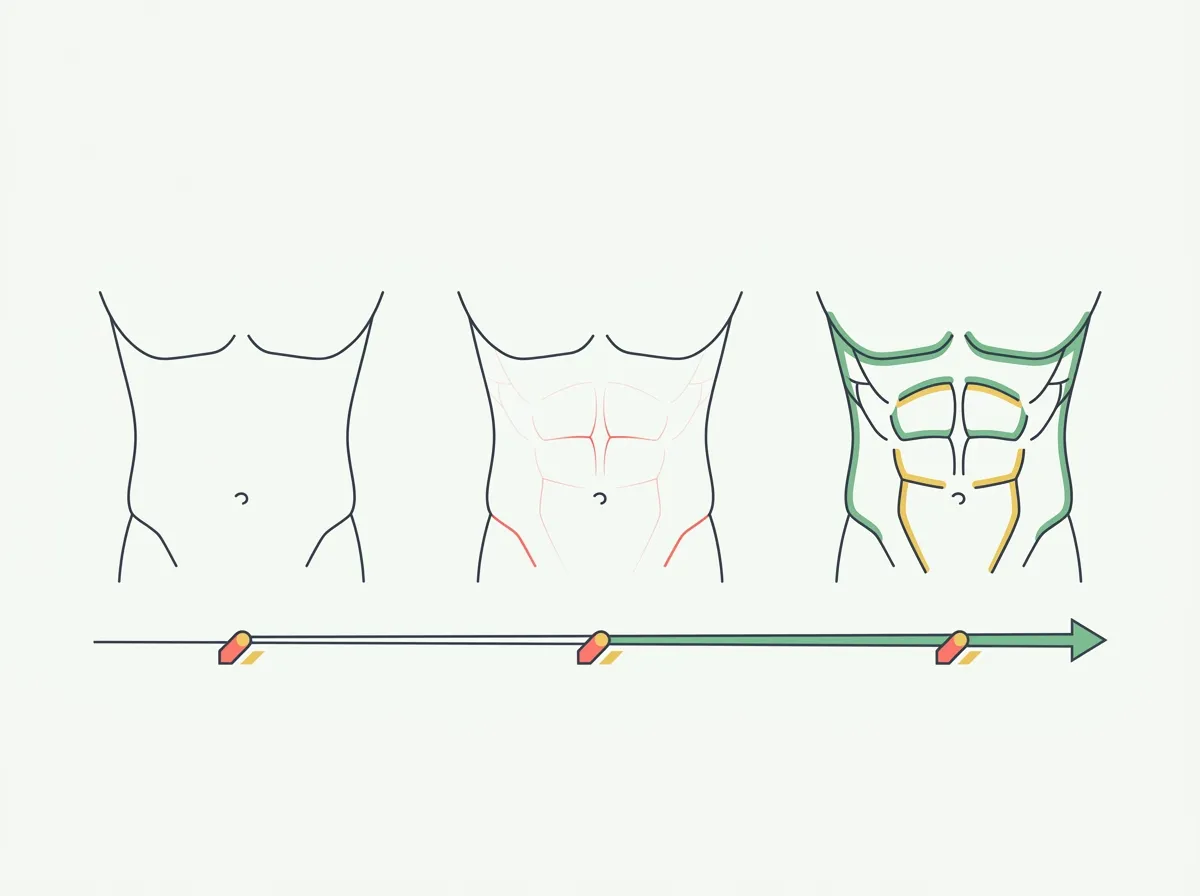
Quick answer: Abs typically become visible around 12% body fat for men and 18% for women. Estimate your timeline by dividing your distance to that threshold by a sustainable loss rate, commonly around 0.5 to 1 percentage point per month. A man starting at 22% is realistically looking at 10 to 20 months of consistent dieting.
If you want that estimate read from your own body instead of a table, the free six-pack timeline calculator combines your photo, current weight, and one of four calorie deficits to project a week range and render a leaner preview.
Eight weeks into a program, three core sessions a week, maybe 400 crunches behind you, and your stomach looks the same as it did in April. So you search "how long does it take to get abs" and get answers ranging from 30 days to never, none of which use your numbers.
This post runs the actual math for the abs question specifically. If you're asking the broader version, when strength, muscle, and mirror changes show up from training in general, our lifting results timeline covers that. Abs are a different problem, because abs aren't something you build so much as something you uncover.
For a photo-based starting point, check your current ab visibility. Use that assessment alongside the timeline estimate when planning your next check-in.
At what body fat percentage do abs show?
For most men, abs become clearly visible around 12% body fat. In the 14 to 17% range you'll commonly get a faint upper-ab outline in good lighting, and below 10% the full six-pack shows in any lighting. For most women, visible definition commonly arrives around 18%, with the same roughly-six-points-higher offset running down the whole scale because women carry more essential fat.
Genetics move these thresholds a point or two in either direction. Some men hold a visible four-pack at 14%; others need 11% before anything separates. Fat distribution is the reason, where your body stores its last few pounds of fat decides when your midsection clears. Our body fat percentage chart shows what each level looks like on a standardized build if you want to place yourself first.
That placement matters more than any advice in this post. The difference between "I'm at 17%" and "I'm at 24%" is roughly a year of timeline.
How do you calculate your abs timeline?
The formula is one line:
Months to abs ≈ (your current body fat % − your visibility threshold) ÷ monthly loss rate
The threshold you have: ~12% for men, ~18% for women. The loss rate is the part people get wrong. With a sensible deficit and good adherence, body fat commonly drops around 0.5 to 1 percentage point per month, that's percentage points, so going from 22% to 21% is one point. Leaner people tend to sit at the slow end of that range, and people starting heavier sometimes beat it early on. Treat anything faster than about a point a month as unsustainable past the first stretch.
So a man at 22% has 10 points to cover, which pencils out to 10 to 20 months. That number surprises almost everyone, and it's why most abs attempts die at month three, the expectation was a summer project and the math said otherwise.
How many months until you see abs?
Here's the table for men, using the ~12% threshold and the 0.5 to 1 point per month range:
| Starting body fat | Points to lose | Fast pace (~1 pt/month) | Steady pace (~0.5 pt/month) |
|---|---|---|---|
| 18% | 6 | ~6 months | ~12 months |
| 22% | 10 | ~10 months | ~20 months |
| 26% | 14 | ~14 months | ~28 months |
| 30% | 18 | ~18 months | ~36 months |
For women, run the same table against the ~18% threshold, a woman at 28% has the same 10-point journey as a man at 22%.
Two honest adjustments. First, real cuts include diet breaks, holidays, and stalls, so lived timelines commonly run longer than the fast column. Second, from higher starting points the early months often move faster than a point a month, then slow as you lean out. The table is orientation, and the direction of the error is almost always the same: it takes longer than you hoped and less long than forever.
If you're starting from the 22%+ rows, the process is a proper cut, and doing it without losing muscle is its own skill, our first cut guide walks through the setup.
Can you crunch your way to visible abs?
No, and the reason is worth understanding so you stop budgeting time toward it. The rectus abdominis, the six-pack muscle, sits under a layer of subcutaneous fat. Visibility is determined almost entirely by how thick that layer is, and spot reduction doesn't hold up: training a muscle doesn't preferentially burn the fat sitting on top of it.
Ab training still earns a small supporting role. A thicker, better-developed rectus abdominis presses against the fat layer from underneath, which can make definition appear a point or so of body fat earlier. That's a real but minor lever, worth two or three short sessions a week, never worth trading against the deficit.
The split is roughly this: the calorie deficit is 90%+ of the abs timeline, ab training is the rounding. Anyone selling the reverse is selling the fun part because the effective part is boring.
Why do abs show up in the wrong order?
There's a stage of every cut that breaks people's confidence, and it helps to see it coming. Fat doesn't leave the midsection evenly, for most men the upper abdomen clears first and the lower abdomen holds out longest. So mid-journey you get a top row of abs over a soft lower belly, look at it, and conclude the diet stopped working.
It didn't. Here's the actual sequence on the same man, these are standardized, photorealistic AI renders from our body fat visualizer, same build, pose, and lighting, so only body fat changes between images.
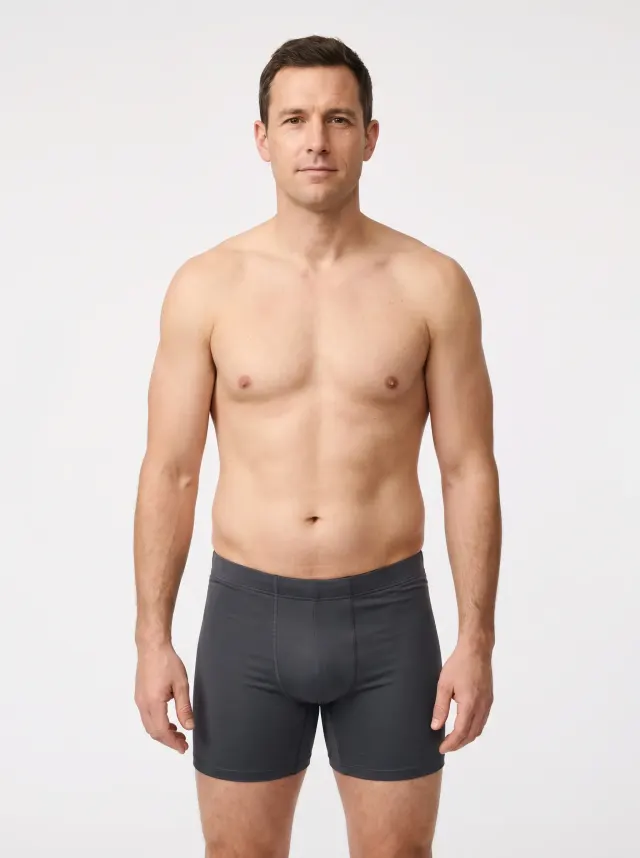
~23%, a common starting point. No definition, softness concentrated at the waist. From here, the 12% threshold is roughly 11 to 22 months away.
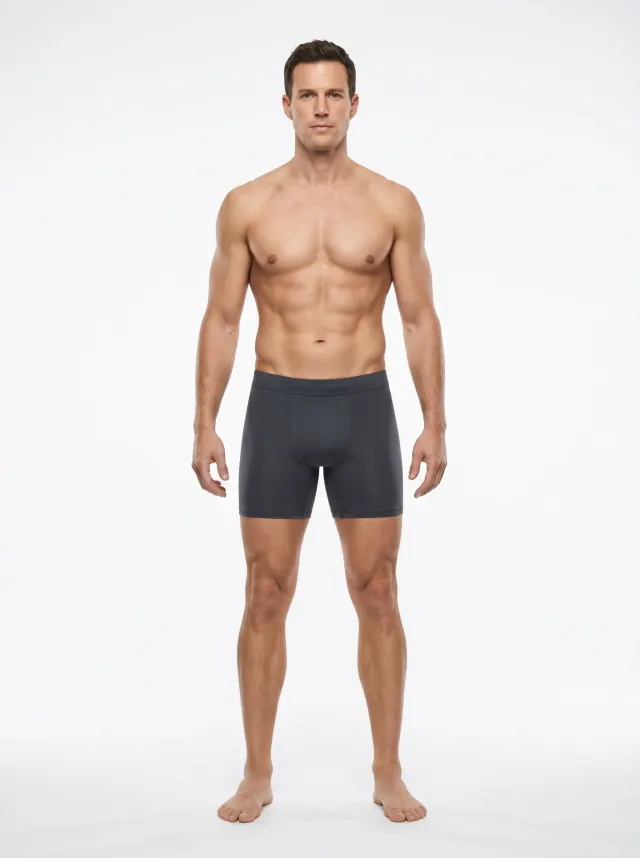
~18%, the mid-journey trap. Flat stomach, faint upper-ab outline in good lighting, lower belly still soft. Most people quit here, months of progress in and feeling like nothing happened.
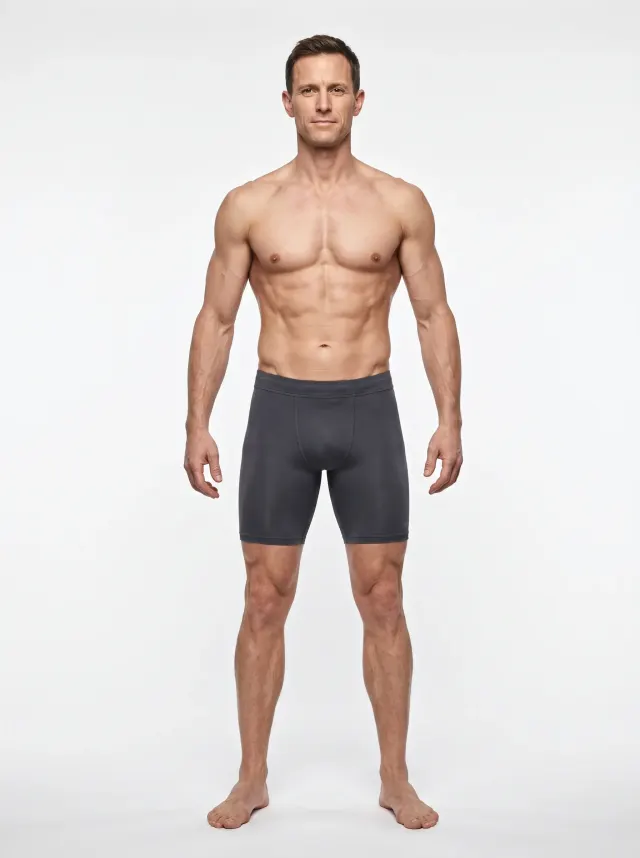
~13%, crossing the line. Abs visible in decent lighting, clear separation through the trunk. One more point or two and they hold in any light.
Notice how little changes anywhere except the midsection between 18% and 13%, and how much the midsection changes. The last third of the journey carries most of the visual payoff, which is exactly why quitting at 18% feels so unjust in hindsight. If you want to preview your own version of this sequence, what you'd look like with less body fat covers how to generate it from a photo.
How do you know the timeline is on track?
A months-long project with a slow-moving output needs measurement, because the mirror lies day to day. The scale helps but conflates water, food, and muscle. What actually confirms a 0.5 to 1 point monthly trend is body fat tracked the same way at regular intervals, plus photos taken under the same conditions.
That's the tracking problem GainFrame was built for, it estimates body fat percentage from progress photos and plots the trend, so you can see whether your months are buying the points the table says they should. Estimates from photos, and honest about that, the value is consistency week to week, which is what a trend needs. iOS only, free tier covers 25 photos lifetime. For a one-off placement today, the free browser body fat estimator gives you a starting number without a download.
However you track it, decide the check-in schedule up front: one body fat estimate and one set of photos per week, same morning, same light. Then let the table do its slow work.
Frequently asked questions
How long does it take to get visible abs?
It depends on your starting body fat. Abs commonly appear around 12% for men and 18% for women, and a sustainable cut moves body fat down by roughly 0.5 to 1 percentage point per month. A man starting at 22% is realistically looking at 10 to 20 months. Starting at 18%, the range drops to roughly 6 to 12 months.
At what body fat percentage do abs show?
For most men, abs become clearly visible around 12% body fat, with a faint upper-ab outline appearing in the 14 to 17% range under good lighting. For most women, definition commonly shows around 18%. Genetics shift these thresholds a point or two in either direction, because fat distribution decides whether your midsection leans out early or late.
Can you get abs in 30 days?
Only if you're already close. One month of disciplined dieting moves body fat down roughly 0.5 to 1 percentage point, sometimes slightly more from higher starting points. A man at 14% might cross into visibility in 30 days. A man at 20% won't, the math requires several months, and programs promising otherwise are selling water loss and lighting.
Do ab exercises make your abs show faster?
Slightly, and indirectly. Building thicker abdominal muscle can make definition appear a point or so earlier, because there's more muscle pressing against the fat layer above it. What ab exercises can't do is remove that fat layer, spot reduction doesn't hold up in the research, so the calorie deficit still sets the timeline.
Why do my upper abs show but not my lower abs?
Fat distribution. For most men the lower abdomen is among the last places fat leaves, so the top two abs commonly appear a few body fat points before the bottom row does. It's a normal mid-cut stage, and the fix is more time at the same deficit rather than extra lower-ab exercises.
Watch the timeline actually move
GainFrame estimates body fat percentage from your progress photos and tracks the trend toward your abs threshold, so a slow month reads as progress instead of failure. Free to start on iOS.
Download GainFrame Free