
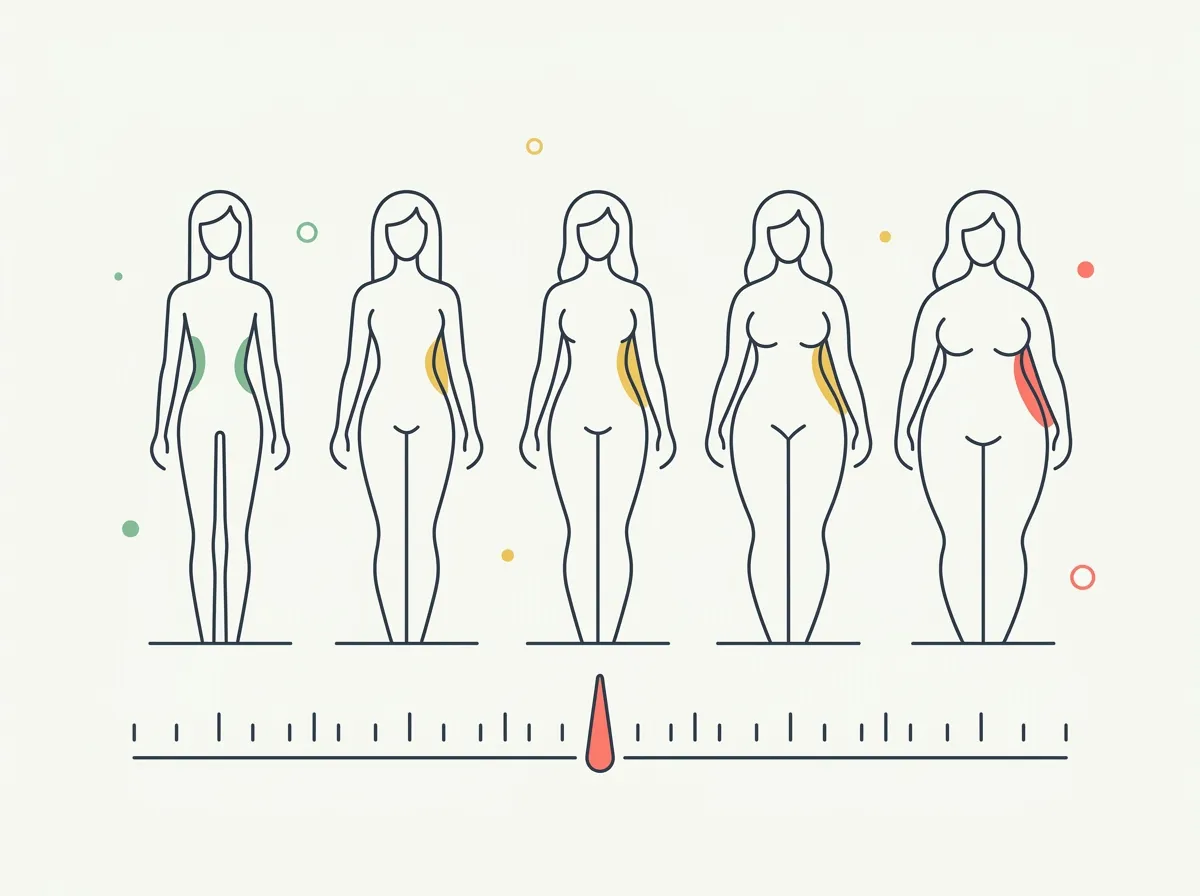
Quick answer: For women, athletic body fat is 14–20%, fitness 21–24%, average 25–31%, and 32%+ carries elevated health risk, with essential fat at 10–13%. The renders below show one woman at 18, 22, 27, 32, 37, and 42 percent so you can match your own level visually.
Type "what does 25% body fat look like" into a search bar and the results are almost entirely men — which is worse than useless for a woman, because 25% on a man reads soft and average while 25% on a woman reads visibly fit. Same number, different bodies, different verdicts.
This page is the women-only chart. If you want both sexes side by side, our full body fat percentage chart covers men from 8% to 33% along with the complete classification tables; this page goes deeper on the female levels specifically — six reference photos of the same woman from 18% to 42%, with an honest description of what changes at each step.
Why do women's body fat numbers work differently?
Two mechanisms separate the female chart from the male one, and both are hormonal rather than negotiable.
Essential fat. A woman's body requires roughly 10–13% fat just to keep reproductive and hormonal systems running, against 2–5% for men. That floor shifts every classification band upward: the leanest sustainable female physiques sit at percentages that would read "average" on a men's chart.
Distribution. Estrogen routes storage to the hips, thighs, and buttocks first, so women keep a curved silhouette at levels where men would already be carrying a visible belly. The midsection typically fills in later, past the average range — which is also when metabolic risk starts climbing faster.
The practical consequence: never benchmark yourself against a man's number. The bands that matter for women are these —
| Classification | Women (body fat %) |
|---|---|
| Essential | 10–13% |
| Athletic | 14–20% |
| Fitness | 21–24% |
| Average | 25–31% |
| Elevated / obese | 32%+ |
What does each body fat level look like on a woman?
The six references below are standardized, photorealistic AI renders from our body fat visualizer — the same build, pose, and lighting at every level, so the only thing changing between images is body fat. That's the control you can't get from random internet photos, where genetics, tan, and camera angle muddy every comparison.
What does 18% body fat look like on a woman?
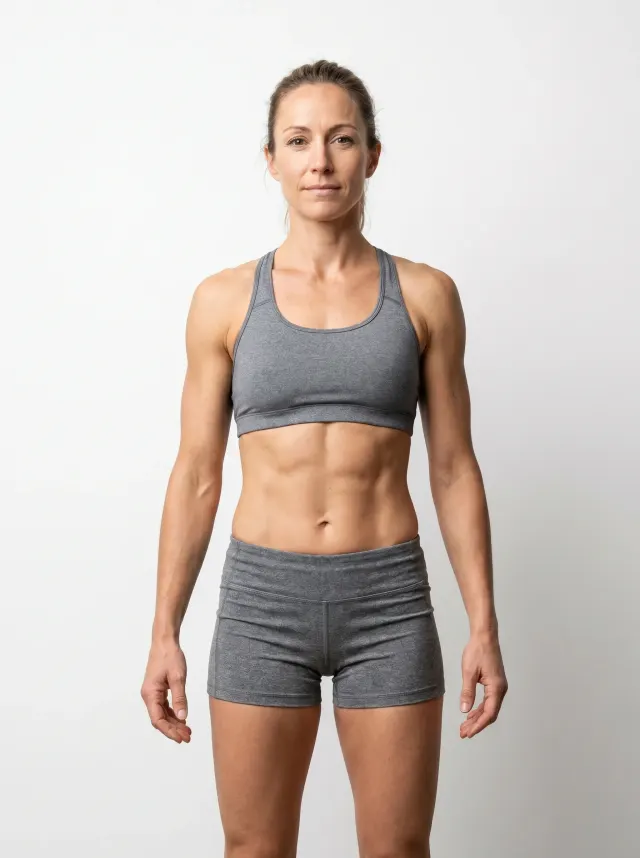
~18% body fat: athletic, and near the sustainable floor for many women.
This is the athletic range, and roughly where abs become visible on most women. Shoulders and arms carry clear definition, the waist is tight, and the lower-body curves are noticeably reduced because that's where the fat came from. For many women this is close to the practical floor — holding much leaner long-term commonly costs hormonal and menstrual health.
What does 22% body fat look like on a woman?
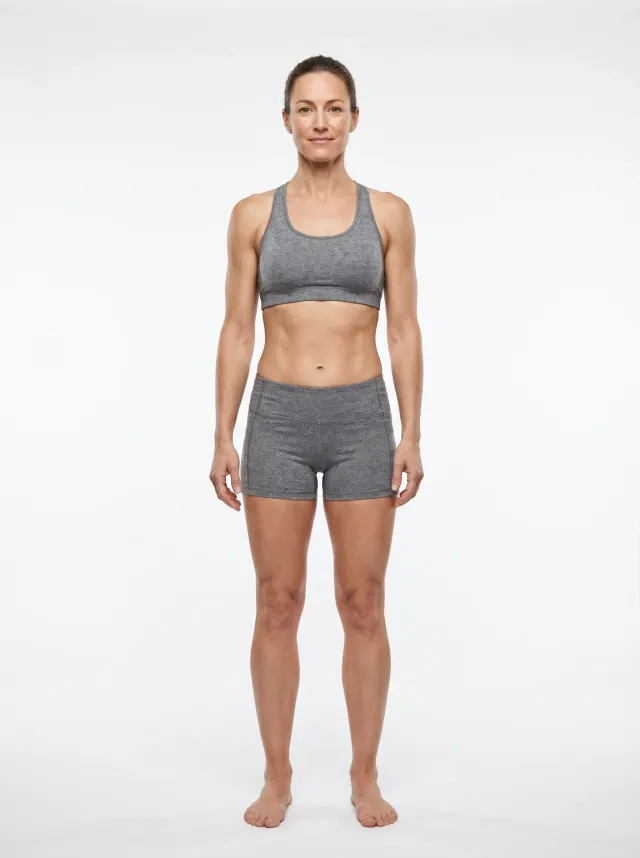
~22% body fat: the classic fit look, fully sustainable.
The look most "toned" goals are actually describing. The stomach is flat with a hint of line in good light, arms and legs are firm, and the hips and chest keep their shape. This is the fitness band (21–24%) — visibly in shape while leaving hormones, energy, and social dinners intact.
What does 27% body fat look like on a woman?
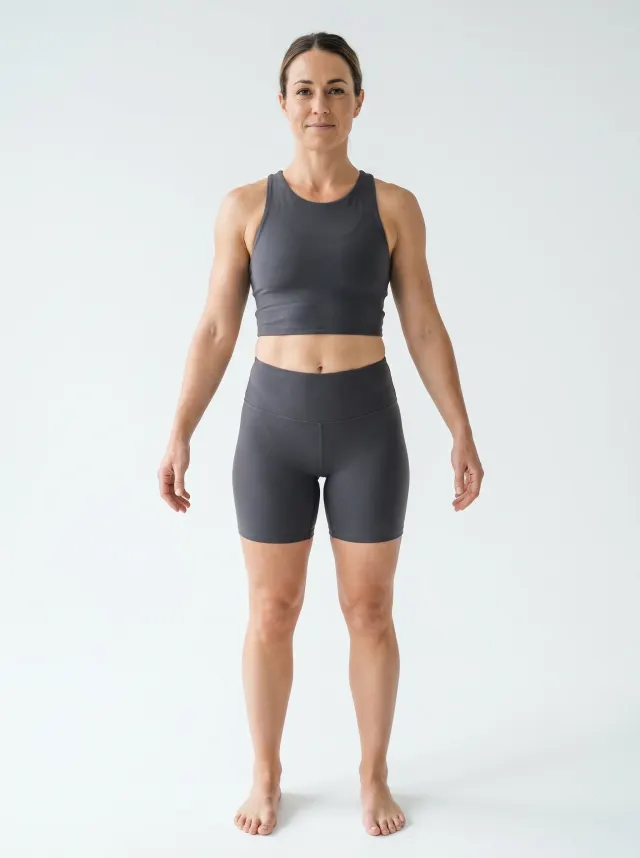
~27% body fat: the middle of the average range.
The middle of average (25–31%), and statistically where an enormous number of healthy women live. The stomach is soft without protruding, the hips and thighs are fuller, and resting muscle definition is minimal. Health markers are usually fine here — the gap between 27% and 22% is a preference, and closing it is a modest project rather than an overhaul.
What does 32% body fat look like on a woman?
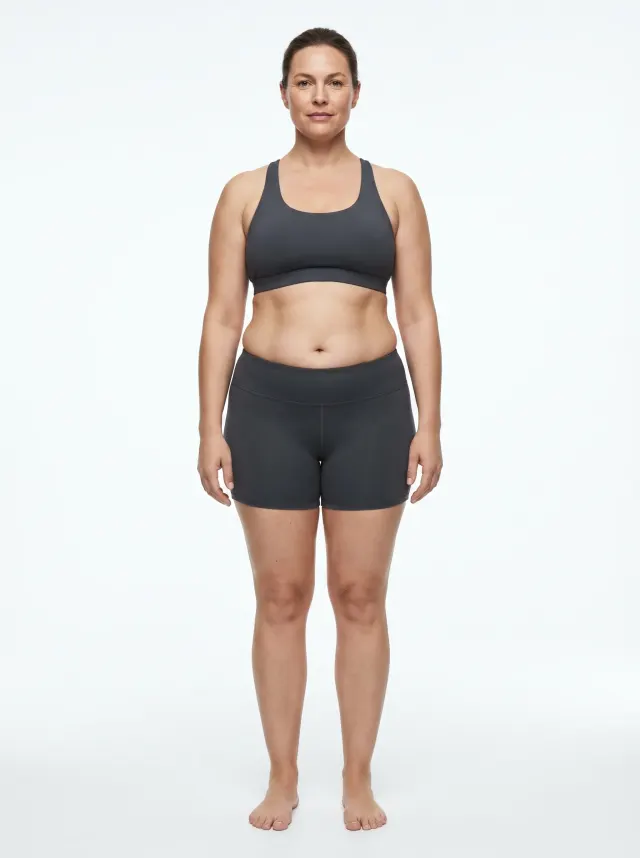
~32% body fat: the border between average and elevated.
The top edge of average. Lower-body fat is prominent, and the midsection has started catching up — the signal that storage is spilling past estrogen's preferred sites. Nothing here is an emergency, but this is the level where holding the line is dramatically easier than reversing later.
What does 37% body fat look like on a woman?
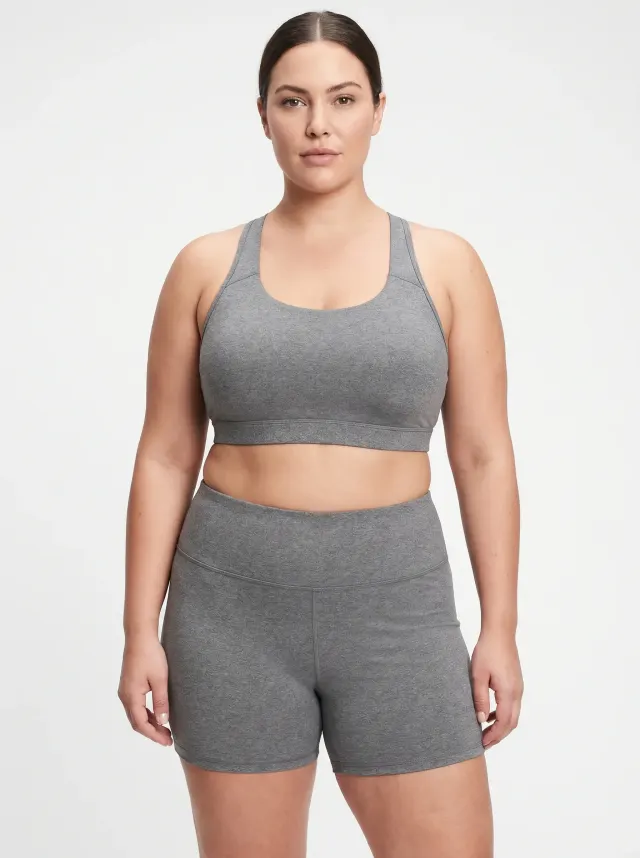
~37% body fat: the elevated range.
Clearly in the elevated range. The midsection rounds, the arms and back fill in, and fat now accumulates through the trunk rather than mostly below the waist — the pattern most associated with rising metabolic risk. The encouraging math: modest loss from here, on the order of 5 percentage points, commonly moves health markers more than the same loss anywhere else on this chart.
What does 42% body fat look like on a woman?
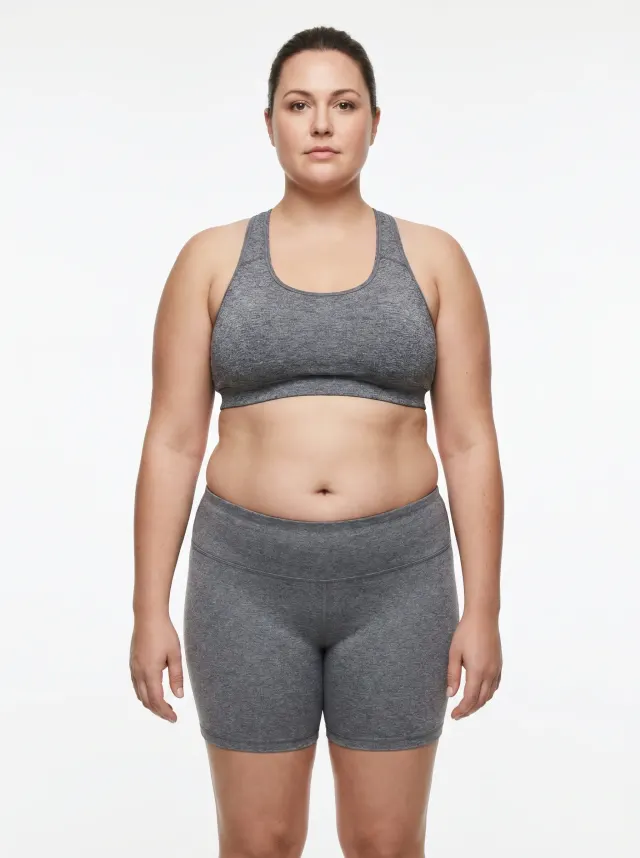
~42% body fat: the high-risk range.
The high-risk range, with significant accumulation everywhere — midsection, hips, and limbs — and a visceral component you can't see doing most of the damage. This level is best treated as a long-horizon health project, ideally with medical support, where the first 5% matters far more than the last 15%.
How does your number compare to the average woman?
Averages are their own topic, and they're higher than most people guess — the average body fat percentage for women breaks down the commonly cited figures by age group and what drives them upward through the decades. The short version worth keeping: the average American woman sits above the 25–31% "average" classification band's midpoint, so being statistically normal and being in the fitness range are different goals.
How do you find your own number?
Match yourself against the renders above under similar conditions: front-on, relaxed, honest lighting. Pay attention to where the softness sits — stomach versus hips — because distribution shifts your read by a level in either direction. Expect your visual estimate to land within a few points rather than exactly.
To tighten it, get an actual estimate. Our free body fat estimator reads a single photo in the browser, no signup. And if the number is the start of a project rather than a curiosity, GainFrame tracks it over time — body fat estimates, muscle ratings, and a physique score from each progress photo, so a cut or a recomp shows up as a trend instead of a guess. Estimates from photos, iOS only, free tier covers 25 photos.
Frequently asked questions
What does 22% body fat look like on a woman?
At 22% a woman has the classic fit look: a flat, toned stomach, defined arms and shoulders, and curves fully retained through the hips and thighs. Abs may show faintly in good lighting but usually aren't sharply visible at rest. It sits in the fitness range (21–24%) — visibly athletic and sustainable for most women.
What does 27% body fat look like on a woman?
At 27% a woman is in the middle of the average range (25–31%): a soft stomach, fuller hips and thighs, and minimal visible muscle definition at rest, with distinct curves. Health markers are typically fine here. The visual difference between 27% and 22% is aesthetic preference rather than a medical concern.
What body fat percentage do women need to see abs?
Visible abs typically appear around 18% body fat for women, compared with roughly 12% for men — the difference is the extra essential fat women carry. For many women, holding much below 18% long-term disrupts hormones, energy, and menstrual health, which is why athletic women often cycle between leaner and softer phases rather than staying shredded year-round.
Why do women carry more body fat than men?
Women need roughly 10–13% essential fat for reproductive and hormonal health, against 2–5% for men. Estrogen also directs storage toward the hips, thighs, and buttocks before the midsection. Both effects mean a woman at 25% body fat can be as lean relative to her physiology as a man at 15% — comparing raw numbers across sexes misleads.
Is 32% body fat obese for a woman?
Most classification tables place the elevated-risk threshold for women at 32%+, so 32% sits at the border of average rather than deep in the risk zone. Distribution matters as much as the number: fat accumulating around the midsection carries more metabolic risk than the same percentage held in the hips and thighs. Trend direction matters more than the snapshot.
See your level change, not just guess it
GainFrame estimates body fat percentage from your progress photos and tracks the trend — so moving from one level on this chart to the next is something you watch happen. Free to start on iOS.
Download GainFrame Free