
Quick answer: The mirror can't answer this reliably — glass curvature, lighting, and daily water shifts change what you see. A repeatable check works better: a fixed-pose photo in consistent lighting, compared against standardized body fat reference images or scored by a free AI estimator. That turns a feeling into a number you can retest.
You caught your reflection in a shop window and didn't like it. Twenty minutes earlier, your bathroom mirror said you looked fine. Both happened to the same body on the same day.
If you're typing "do I look fat" into a search bar, you already know the frustrating part: everyone around you is either too kind or too harsh to trust, and your own eyes change their verdict by the hour. What you want is an honest answer. This page is the closest thing to one.
One thing before the method. Asking this question occasionally is normal. If it's running on a loop and shaping your day, the second-to-last section of this page is for you — no tool here is the right response to that, and it says so plainly.
Why can't you trust the mirror on this?
The mirror is the least reliable instrument you own for this question. Glass that bows by a millimetre stretches or compresses your reflection. Overhead bathroom lighting throws shadows that exaggerate midsection softness; diffuse daylight erases them.
Your body is also genuinely different across a single day. Water, glycogen, and food in transit swing scale weight by 2–5 lbs and visibly change your midsection between morning and night — the same reason you look leaner in the morning and why photos often read heavier than the mirror thanks to lens distortion and unflattering focal lengths.
So the honest answer to "do I look fat?" starts with a correction: fat compared to what, in which mirror, at what hour? Remove those variables and the question finally becomes answerable.
What does each level of body fat actually look like?
Comparing yourself to strangers on the internet fails because their frame, muscle, height, and lighting all differ from yours. Standardized images fix that. The renders below come from our body fat visualizer — photorealistic AI renders of the same build, pose, and lighting, where the only variable is body fat percentage.
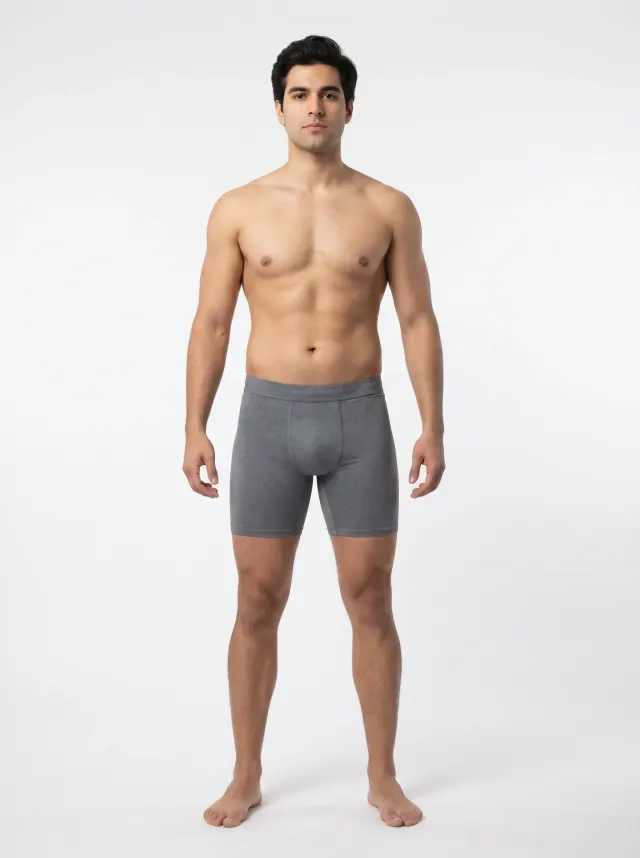
18% — the upper end of the "fitness" range for men. Healthy, a little soft, no visible abs. Most people who ask this question and land here are fine.
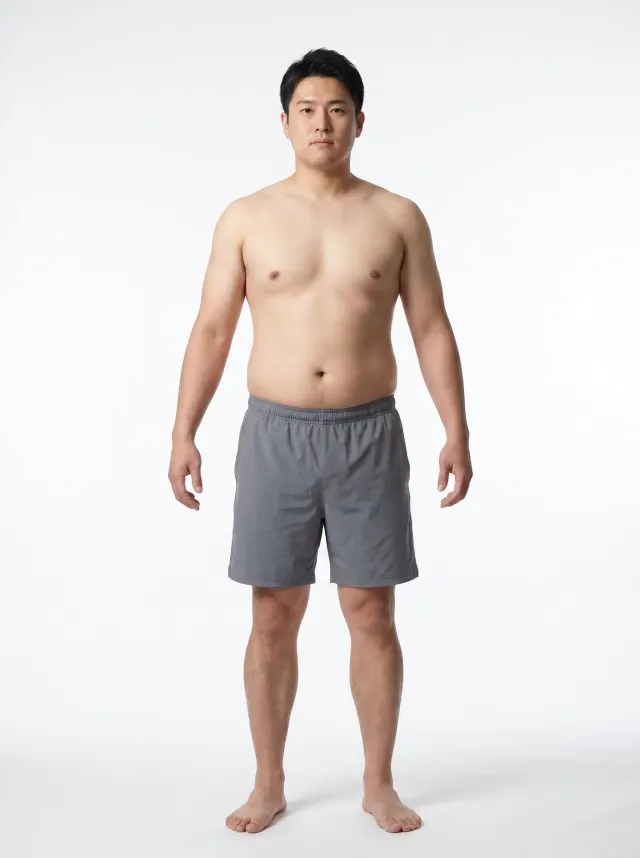
23% — the middle of the average range for US men. Soft midsection, no definition. "Average" and "fat" are different words for a reason.
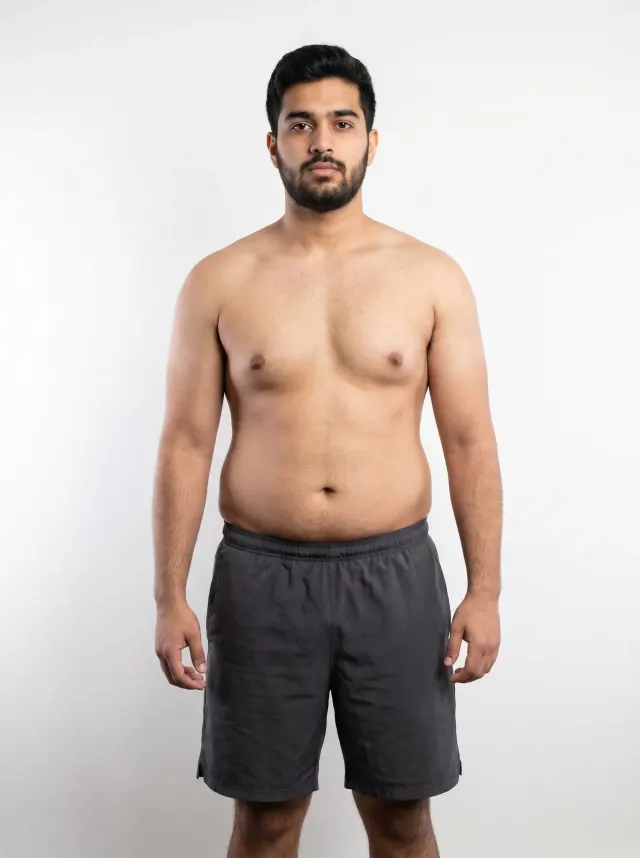
28% — past the point where reference ranges commonly describe visible excess fat on men (roughly 25%+).
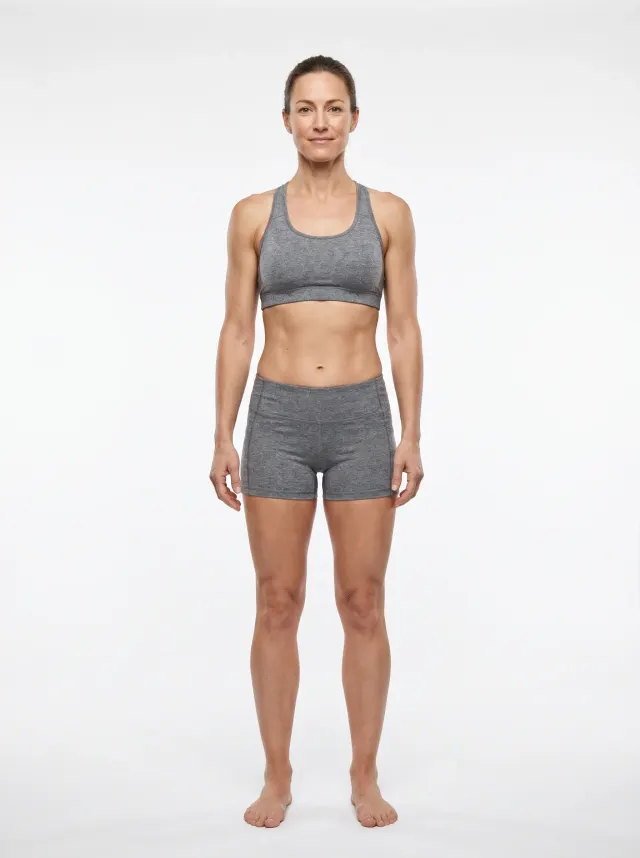
22% on a woman — athletic range. Note how different the same number reads across sexes; women carry essential fat differently.
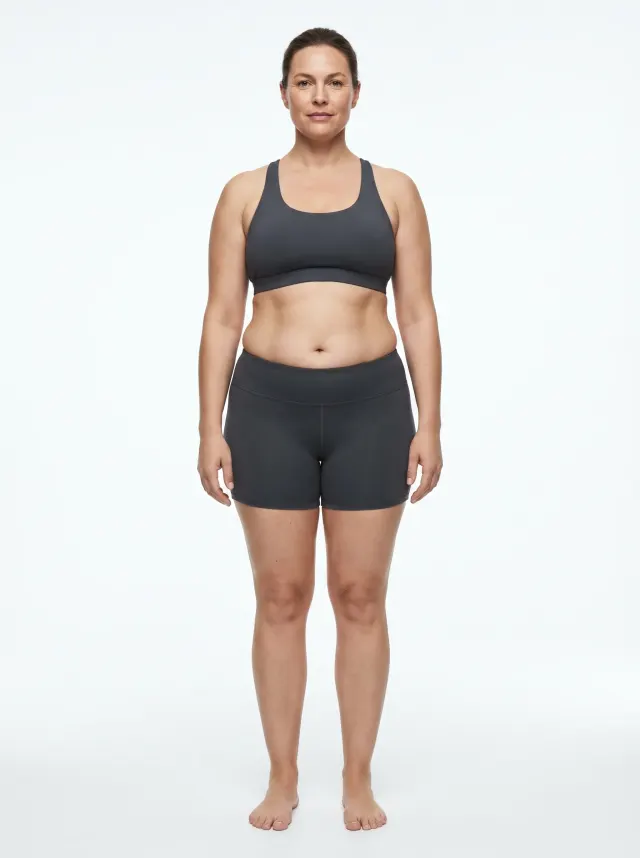
32% on a woman — around the top of the average range. Reference ranges commonly place "elevated" for women above roughly 32%.
Find the render that looks most like your fixed-pose photo and you have a rough percentage band — which is a far more useful thing to know than a yes or no. The full chart with every level covers the complete range for both sexes, and the body composition picture gallery shows all twelve renders side by side. For one level at a time, the body fat picture gallery has a dedicated reference page per level.
How do you get an objective answer in two minutes?
Three steps, all free:
- Take a standardized photo. Phone propped at chest height, arms slightly out, relaxed posture, diffuse daylight, same spot every time. No sucking in, no flexing — the point is repeatability.
- Get a number. Our AI body fat estimator reads that photo in the browser and returns a percentage estimate — no signup, nothing stored. Accuracy varies with lighting and body type, so treat it as a band rather than a decimal.
- Compare like-for-like. Match your photo against the renders above, or your own photo from last month. Your previous self is the only comparison that controls for frame, height, and genetics.
A feeling can't be retested. A photo protocol can — and retesting is what turns "do I look fat?" into "am I trending the direction I want?"
When is this question about more than body fat?
Sometimes the honest answer to "do I look fat?" is a number. Sometimes the question itself is the thing to pay attention to. If any of these are true, the tools above are the wrong instrument:
- The question runs constantly, and no measurement quiets it for long.
- You've checked mirrors or photos multiple times today.
- A "bad" reflection changes what you'll let yourself eat or do.
- People you trust consistently see something different from what you see.
Body image and body fat are separate things, and progress photos can help or hurt depending on how you use them. If the checking feels compulsive, talking to a doctor or therapist is a genuinely stronger move than any app. The NEDA helpline (nationaleatingdisorders.org) exists for exactly this.
What should you do if you don't like the answer?
If the photo and the renders put you above where you want to be, you have a normal, solvable training-and-food problem — the same one most people at the gym are quietly working on.
The direction depends on the shape of the number. Softness at a normal weight is usually the skinny-fat pattern, where recomposition beats dieting. Carrying genuine excess is a bulk, cut, or recomp decision. Either way, the fix is measured in months, and the photo protocol above is how you'll see it working — which is what GainFrame automates if you want the tracking handled for you: scored photos, body fat estimates, and a trend line instead of a daily mirror verdict. iOS only, estimates rather than clinical measurement, free for your first 25 photos.
Frequently asked questions
Why do I look fat in some mirrors and fine in others?
Mirror glass that bows even slightly stretches or compresses your reflection, and overhead lighting exaggerates softness by shadowing the midsection. Add clothing, posture, and how recently you ate, and the same body can read very differently across two mirrors in the same day. A fixed camera setup removes most of that variation.
Can AI actually tell if I look fat from a photo?
AI tools can estimate body fat percentage from a photo and score physique traits, which turns a vague feeling into a number you can retest. Accuracy varies with lighting, pose, and body type, so treat any single estimate as a starting point and the trend across repeated photos as the real signal.
What body fat percentage looks overweight?
There is no single threshold, because muscle changes everything about how a percentage looks. That said, reference ranges commonly describe men above roughly 25% and women above roughly 32% as carrying visible excess fat. Two people at the same number can still look noticeably different depending on frame and muscle.
Why do I feel fat even though my weight is normal?
A normal scale weight with low muscle and higher body fat — the skinny-fat pattern — looks softer than the number suggests. Water retention, bloating, and time of day also shift how you look and feel by the hour. If the feeling is persistent and distressing regardless of any measurement, that is worth raising with a professional rather than another tool.
How do I check if I look fat without obsessing over it?
Pick one repeatable check and a long interval: same pose, same lighting, same time of day, every two to four weeks. Compare against your own previous photo instead of strangers online. A monthly like-for-like comparison answers the question with far less noise than daily mirror checks, which mostly measure lighting and digestion.
Get a number, then watch it move
GainFrame scores a standardized photo — body fat %, FFMI, and a 1–100 physique score — so next month's answer comes from a trend line instead of a mirror. Free to start on iOS.
Download GainFrame Free