
Quick answer: Waist size is mostly body fat, posture, and bloat. No exercise shrinks the fat on your waist directly — a sustained calorie deficit does that. Posture work can change how your waist looks almost immediately, and building wider shoulders makes it read smaller. Waist trainers and sweat belts only compress; they remove nothing.
You've done the oblique twists. Maybe you bought the sweat belt, or gave a waist trainer an honest month. And the tape at your navel still reads 38 — the same 38 it read before you started, minus a half inch that came back by dinner.
Here's the part the products skip: your waist measurement is set by three things — the fat stored around your midsection, the posture holding it, and whatever your gut is doing today. Everything that genuinely shrinks a waist works on one of those three. Everything that doesn't is compression, sweat, or wishful thinking. This guide sorts the two piles.
What actually determines your waist size?
Three inputs, in descending order of importance.
Body fat. For most men, the midsection is the primary fat storage site, so waist circumference tracks total body fat closer than any other single measurement. Move body fat down and the waist follows — eventually. This is the slow lever and the big one.
Posture. Anterior pelvic tilt — hips rotated forward, lower back arched — pushes the belly out and can add visible inches to how your waist presents without adding any fat. It's common in people who sit all day. It's also the only lever on this list that can change this week.
Bloat and gut contents. Sodium, carbs, fiber timing, and hydration commonly swing a waist measurement by an inch or more within a single day. This is why a Friday-evening measurement telling you the trainer "worked" and a Monday-morning one telling you it didn't are both noise.
Bone structure sets a floor — rib cage and pelvis width are yours for life — but almost nobody reading this is at their structural floor. The gap between your current waist and your skeleton's minimum is fat, posture, and bloat.
Can you shrink your waist with exercises?
Not the way the workout titles imply. The idea that exercising a muscle burns the fat on top of it — spot reduction — has been tested repeatedly, and the research commonly comes back negative. Your obliques don't send an invoice to the fat cells sitting over them. Fat comes off the whole body on a schedule your genetics set, and for most men the midsection is stubbornly late in that schedule.
So a thousand side bends can build the muscle underneath while the tape doesn't move — or moves the wrong way, which we'll get to. What empties the fat layer is a calorie deficit held over weeks. If you've never run one properly, our first cut guide covers the setup: a modest deficit, adequate protein, and lifting to keep the muscle you have.
Exercise still matters — it makes the deficit easier to hold and decides what's under the fat when it's gone. It just can't aim.
What actually works for a smaller waist?
Five levers, ranked roughly by impact. Every one comes with an honest asterisk.
1. A sustained calorie deficit. This is most of the answer. Expect the waist to move around half an inch to an inch per month in a well-run cut — and expect it to lag the scale by several weeks, because abdominal fat is commonly among the last to mobilize. If the scale is dropping and the tape isn't, that's usually sequencing, and our guide to a stalled waist measurement walks through the six reasons in order of likelihood.
2. Posture correction. If you carry anterior pelvic tilt, fixing it — stretching hip flexors, strengthening glutes and abs, cueing a neutral pelvis — can visibly flatten your waistline in days rather than months. The measurement change is modest; the appearance change can be striking. This is the closest thing to a fast result on this list, and it's the one almost nobody tries first.
3. Vacuum and deep-core training. The stomach vacuum trains the transverse abdominis, the deep muscle that wraps your midsection like a natural corset. Better TVA control can improve how flat your stomach holds at rest, and some lifters swear by it. The honest framing: the effect is modest, commonly debated, and capped by the fat layer on top — a supplement to the deficit, never a substitute.
4. Skipping heavy oblique work. Muscles grow when trained hard, and obliques are muscles. If your goal is a narrower waist, heavy weighted side bends and loaded twists can thicken the very region you're trying to slim. The effect is minor and slow, but it points the wrong direction — most physique-focused lifters get all the oblique work they need from compound lifts.
5. Building the illusion. A waist reads relative to what's above it. Add shoulder and back width and the identical waist measurement looks smaller — the V-taper effect. The math is asymmetric in your favor here: shoulder-to-waist ratio improves from both ends, and the appearance dividend of wider shoulders costs zero inches of actual waist.
Which waist-shrinking methods are myths?
Waist trainers. Compression garments compress. While the trainer is on, your waist is mechanically smaller; when it comes off, the tissue returns — a criticism commonly made and, as far as the evidence goes, correct. There is no mechanism by which external pressure removes fat cells. Extended daily wear mostly buys you discomfort, and any measured "loss" is typically fluid shift that reverses with a meal and a glass of water.
Spot-reduction workouts. The "5 exercises to melt your love handles" genre fails at the premise — see above. The exercises are usually fine; the promise attached to them isn't.
Sweat belts and sauna wraps. These raise local skin temperature and sweat rate. The weight that leaves is water, and it returns as soon as you rehydrate — which your body will insist on. Fat is not sweated out; it's metabolized, overwhelmingly on the other side of a calorie deficit.
The pattern worth internalizing: anything promising a smaller waist without a deficit is describing compression or dehydration, both of which expire within about a day.
What does a smaller waist actually look like?
Numbers on a tape are abstract, so here's the same man at two body fat levels — standardized, photorealistic AI renders from our body fat visualizer — same build, pose, and lighting, so only body fat changes between images. The gap between 28% and 18% on this frame is the deficit's work: several inches of navel waist, no gimmicks involved.
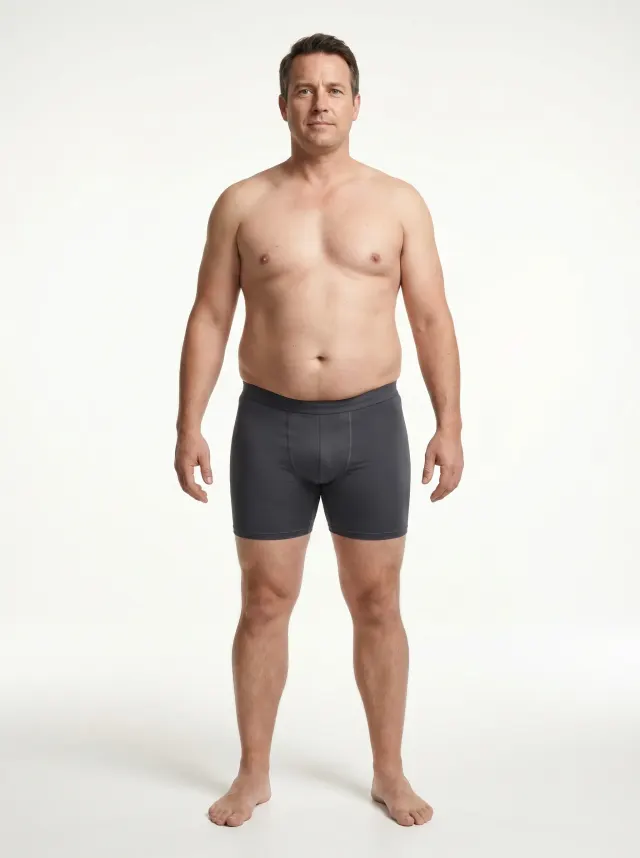
28% body fat — the waist is the widest visual point, and no amount of oblique work changes that while the fat layer stays.
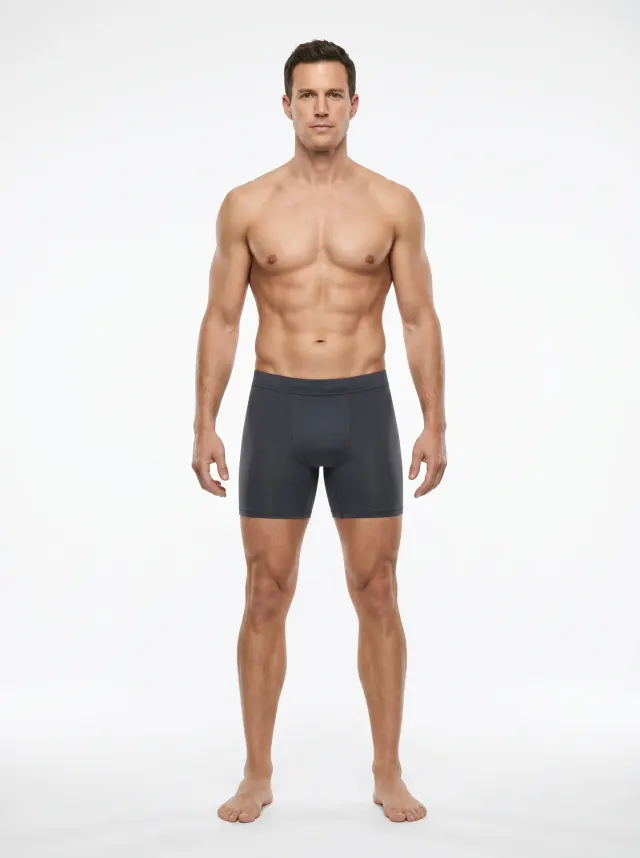
The same frame at 18% — several inches off the waist and the taper is back. Every inch came from the deficit.
Notice where the change concentrates. Arms and legs are close to identical between the two images; the waistline carries nearly the entire difference. That's typical male fat distribution, and it's why the waist is simultaneously the most frustrating measurement to move and the most rewarding.
How should you track your waist?
Weekly, under identical conditions — morning, before food, tape at the navel, normal exhale. Anything less consistent and the daily bloat swing will bury the real trend. Our body measurements guide covers the exact protocol for the waist and nine other sites.
Pair the tape with weekly photos, because the tape can't see posture or proportion — the two levers that change how the number looks on you. GainFrame reads an estimated body fat percentage and physique scores from progress photos, so the waist trend and the visual change sit in one timeline. Estimates from photos, not clinical measurement — but consistent week to week, which is what a trend needs.
Frequently asked questions
Can you shrink your waist with exercises?
Not directly. No exercise burns the fat sitting on your waist specifically — spot reduction has been tested repeatedly and commonly fails to show up in the research. Exercise helps by burning calories overall and, in the case of posture and deep-core work, by changing how your midsection sits. The fat itself comes off through a sustained calorie deficit.
How long does it take to get a smaller waist?
With a sustained deficit, waist measurements commonly move around half an inch to an inch per month, and the waist often lags the scale by several weeks because abdominal fat tends to come off later. Posture correction can change how your waist looks within days. A visibly smaller waist typically takes two to four months of consistency.
Do waist trainers actually work?
As a fat-loss tool, no — a common and fair criticism. A waist trainer compresses your midsection while you wear it, and the shape returns when it comes off. There is no mechanism by which external pressure removes fat cells. Any measured loss usually reflects temporary fluid shift, and the discomfort can make real training harder to do.
Does the stomach vacuum reduce waist size?
It can modestly help how your waist sits, though the size of the effect is commonly debated. The vacuum trains the transverse abdominis, the deep muscle that acts like a natural corset, and better control there can improve how flat your stomach holds at rest. It does not remove fat, so its effect is capped by the layer sitting on top.
Why is my waist not shrinking even though I'm losing weight?
Usually timing. Fat loss is not uniform, and abdominal fat is commonly among the last to go for men — so the scale can drop for weeks before the tape at your navel moves. Water retention, food volume, and inconsistent measuring conditions add noise on top. Hold the deficit, measure weekly under identical conditions, and the waist typically follows.
Watch the inches come off
GainFrame estimates body fat percentage and physique scores from your progress photos — so a shrinking waist shows up as visible, tracked change instead of a number you second-guess. Free to start on iOS.
Download GainFrame Free