
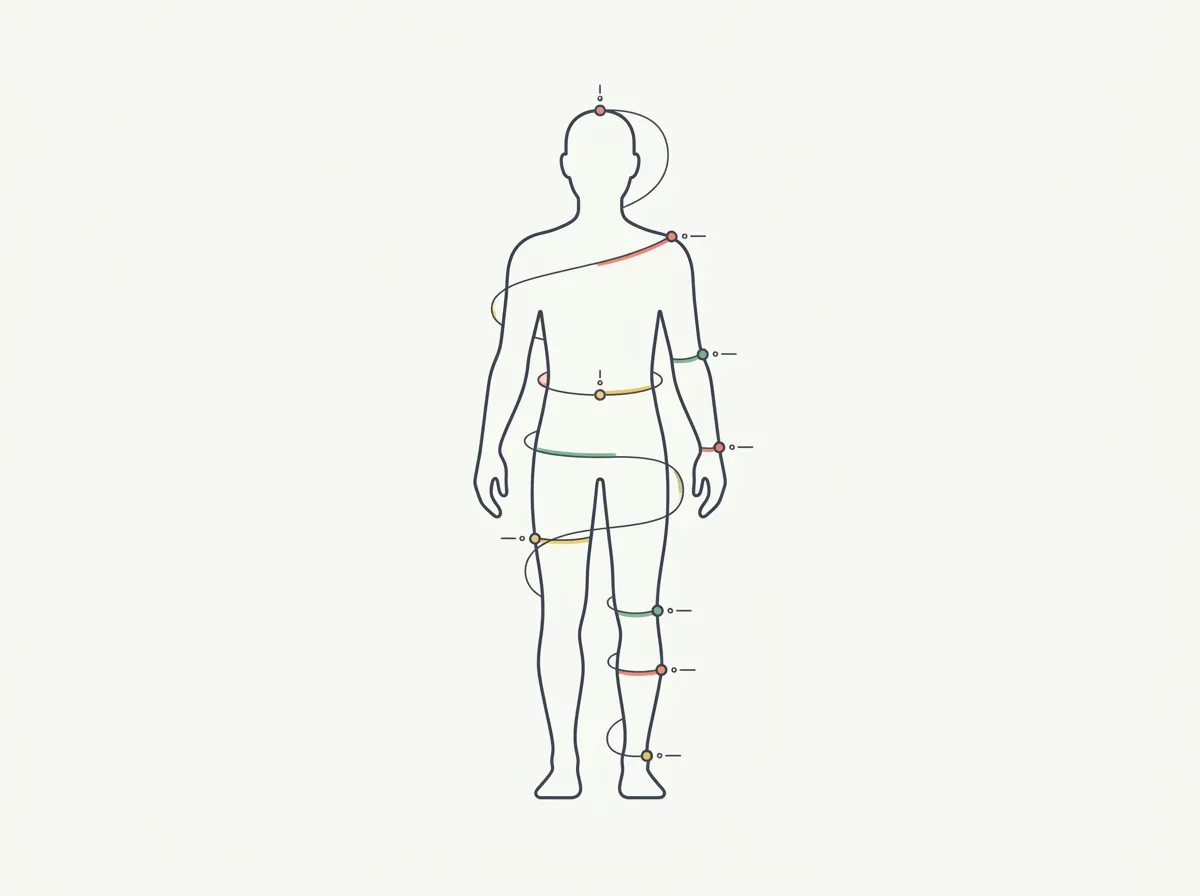
Quick answer: Use a soft tape, measure relaxed rather than flexed unless noted, at the same time of day, with the tape horizontal and snug but never compressing the skin. Log every number immediately. Do a full session monthly (weekly for the waist during a cut) and judge the trend, not any single reading.
Measure your bicep three times in a row and you can get 14.1, 14.6, and 13.9 inches, a spread wider than three months of actual muscle growth. Same arm, same tape, same minute. The difference was where the tape sat, how hard you pulled it, and whether you flexed a little on attempt two.
That's the whole problem with body measurements: the tool is accurate, the technique is the variance. Fix the technique and a $5 soft tape becomes one of the most reliable progress trackers there is, especially for weight loss, where inches at the waist often move while the scale sulks. This guide covers the universal rules first, then the exact protocol for all 10 sites.
What are the universal rules for taking body measurements?
Six rules apply to every site. Get these right and the per-site details below are mostly just tape placement.
- Use a soft, flexible tape. A cloth or vinyl sewing tape, or a spring-loaded body tape. A metal construction tape can't follow a curve and will read wrong everywhere. No tape at hand? A string plus a ruler works in a pinch.
- Stay relaxed, not flexed, unless a site's convention says otherwise (the bicep is the one common exception, covered below). Flexing adds size you can't reproduce consistently.
- Measure at the same time of day. Morning, before food, is the least noisy. Torso sites can swing an inch or more between a fasted morning and a salty dinner.
- Keep the tape horizontal, parallel to the floor all the way around. Check in a mirror. A tape that dips an inch at the back can change a waist reading by half an inch.
- Snug, not compressing. The tape should touch skin around the full circumference without denting it. Pulling tight feels precise and quietly deletes real inches.
- Log the number immediately. Two sites later you will not remember whether the chest was 41.5 or 42. Write it down before moving the tape.
Take each measurement twice. If the two readings differ by more than a quarter inch, take a third and use the median.
How do you measure each of the 10 sites?
Same order every session, top to bottom, so you never skip a site. Each one below links to its dedicated stats page if you want to see how your number compares to averages.
Neck
Wrap the tape just below the larynx (the Adam's apple on men), sloping very slightly downward toward the front, head level and eyes forward. Don't tuck your chin. This is also the site the Navy body fat formula uses alongside the waist. See where you land against the average neck size.
Shoulders
Stand relaxed, arms at your sides, and run the tape around the widest point of both deltoids, level across your back. This is the site where a helper matters most. Solo, use a mirror to catch the tape dipping behind you. Compare against average shoulder width.
Chest
Tape at nipple line, level all the way around, arms down at your sides. Take the reading at the end of a normal exhale. A full inhale adds an inch-plus of air, and you can't standardize a half-breath. Reference numbers are on the average chest size page.
Bicep
The exception site. Measure at the widest point between shoulder and elbow, either relaxed at your side or flexed at 90 degrees. Flexed is the common lifter convention because the peak is easy to find. Both work; mixing them doesn't. Note your choice in the log. Stats at average bicep size.
Forearm
Arm hanging relaxed, tape around the widest point, an inch or two below the elbow. Don't make a fist. Clenching pumps the reading. Compare at average forearm size.
Wrist
Tape just below the wrist bone, on the hand side, snug. The wrist is nearly all bone and tendon, which makes it the one site that basically never changes. That's why it's used to estimate body frame size rather than progress. Stats at average wrist size.
Waist
At the navel, relaxed, end of a normal exhale, no sucking in. This is the highest-value site on the list: it tracks fat loss faster than any other measurement and feeds every health ratio worth knowing. Full context on thresholds at average waist size for men.
Hips
Feet together, tape around the widest point of the glutes, level front to back. A mirror or a side-angle phone photo helps confirm the tape isn't riding up in front. Reference data at average hip size.
Thigh
Stand with weight even on both feet and measure the widest point of the upper thigh, usually just below the glute fold. Some protocols use the midpoint between hip and knee instead; either is fine if you never switch. Stats at average thigh size.
Calf
Weight even, tape around the widest point of the calf. Don't rise onto your toes. A flexed calf reads a half inch bigger. Calf averages are covered on the same thigh and calf stats page.
How often should you take body measurements?
Monthly, for the full circuit. Circumference changes at most sites are slow. A good month of muscle gain might add an eighth of an inch to an arm, so weekly full sessions mostly measure hydration and tape placement, and the noise will mess with your head.
The one exception is the waist during a cut. It's the fastest-moving site and the best free fat-loss signal there is, so weekly waist readings under the standard conditions are worth the 30 seconds. If the scale stalls while the waist keeps shrinking, believe the tape. Losing inches without losing weight is a normal recomp pattern, and it's the tape that catches it.
Here's the full protocol in one place:
| Site | Tape position | Frequency |
|---|---|---|
| Neck | Just below the larynx, head level | Monthly |
| Shoulders | Widest point of both delts, arms relaxed | Monthly |
| Chest | Nipple line, end of normal exhale | Monthly |
| Bicep | Widest point, relaxed or flexed (pick one) | Monthly |
| Forearm | Widest point below elbow, hand open | Monthly |
| Wrist | Just below the wrist bone, snug | Once (frame reference) |
| Waist | At the navel, relaxed, end of exhale | Monthly; weekly during a cut |
| Hips | Widest point of the glutes, feet together | Monthly |
| Thigh | Widest point of upper thigh, weight even | Monthly |
| Calf | Widest point, standing flat | Monthly |
Which ratios do your measurements feed?
Individual measurements are trivia until you divide them into each other. Four ratios do most of the work:
- Waist-to-height ratio: waist under half your height is the most commonly cited general health target, and it needs exactly one tape site.
- Waist-to-hip ratio: the classic screen for where you store fat, and a risk marker health guidance has used for decades.
- Shoulder-to-waist ratio: the V-taper number, with commonly cited aesthetic ideals around 1.6 for men.
- A photo-based complement. The free AI body proportion calculator analyzes one front-facing photo, highlights your strongest visible area and biggest opportunity, and lets you adjust shoulders, chest, waist, arms, or legs for an optional AI preview. It does not accept tape readings or calculate exact circumference ratios. For classic wrist-based proportion math, see ideal body measurements for men.
This is the real reason to measure all 10 sites instead of just stepping on a scale: the ratios describe your shape, and shape is what actually changes how you look.
What can't a tape measure tell you?
Composition. A 16-inch arm reads 16 inches whether it's built from muscle or covered in fat, and a shrinking waist number can't show you whether definition is emerging or you're just deflating. The tape tracks size; it's blind to what the size is made of.
Photos fill that gap. GainFrame estimates body fat percentage and rates 12 muscle groups from progress photos, and its Deep Dive Compare puts two dates side by side with the metric changes quantified. The tape's "arm up half an inch" then gets an answer to the question that actually matters: is it muscle? Estimates from photos rather than clinical measurement, but consistent shot to shot, which is what a trend needs. Tape monthly, photos alongside, and the two cover each other's blind spots. The same logic applies in the tape versus smart scale comparison, where the cheap manual tool keeps beating the electronic one on the signal that matters. For the body fat number specifically, the tape-based Navy method turns your neck and waist readings into a percentage estimate.
If you want an app to keep the numbers, compare our six best body scanning and measurement apps. The guide separates true 3D scanners from manual tape logs and photo-based progress trackers.
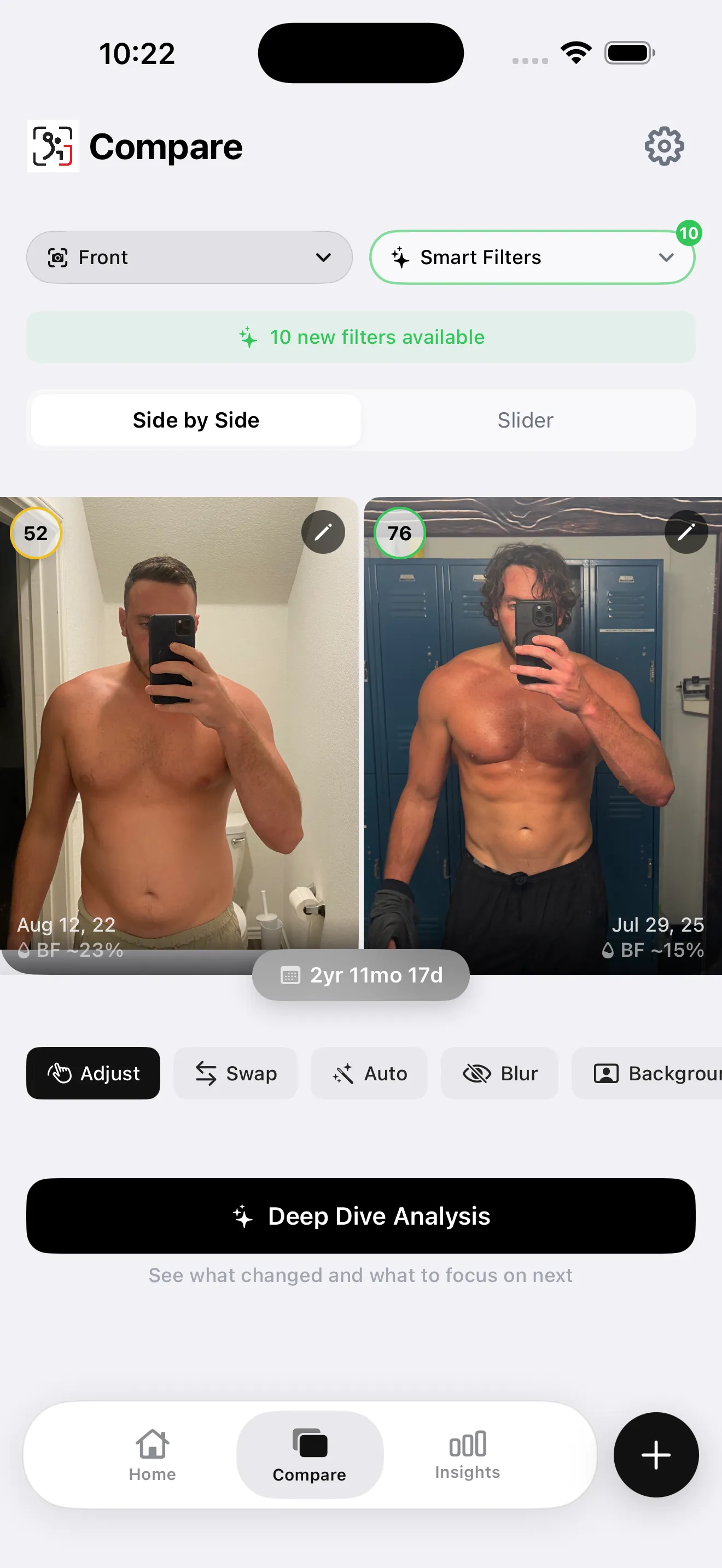
The tape says the arm grew half an inch. A scored photo comparison says whether it was muscle.
Frequently asked questions
Should you flex when taking body measurements?
No. Measure relaxed at every site so your numbers are repeatable. The one common exception is the bicep, which many lifters measure flexed because the flexed peak is easier to find consistently. Either convention works; what ruins the data is switching between them. Pick relaxed or flexed for the arm, note it in your log, and never mix the two.
What time of day should you take body measurements?
First thing in the morning, before food and after using the bathroom, is the least noisy window. Waist and hip measurements can swing an inch or more across a day of meals, water, and sodium. The specific time matters less than repetition: measuring at the same time under the same conditions is what makes month-to-month comparisons meaningful.
How often should you take body measurements?
Monthly is the sweet spot for a full 10-site session. Tape changes at most sites are slow, and measuring more often mostly captures noise. The exception is the waist during a fat-loss phase, where weekly readings are worth taking because it responds fastest. Log every number immediately; a measurement you meant to remember is a measurement you lost.
How tight should the measuring tape be?
Snug, not compressing. The tape should sit flat on the skin all the way around without denting it. If you can see skin bulging on either side, you've pulled too hard and shaved off real circumference. Keep the tape horizontal, take torso readings at the end of a normal exhale, and repeat each measurement twice.
Can you take body measurements by yourself?
Mostly yes. Neck, bicep, forearm, wrist, waist, hips, thigh, and calf are all manageable solo with a soft tape and a mirror to confirm the tape is level. Shoulders and chest are the two sites where a helper meaningfully improves accuracy, since the tape tends to dip behind your back. Solo, use the mirror and accept slightly more noise.
Pair the tape with photos that score themselves
GainFrame reads body fat percentage, muscle ratings, and a physique score from your progress photos, so the inches you log each month come with a visual verdict on what they're made of. Free to start on iOS.
Download GainFrame Free